Violence Against Women


Marco Rubio


I'm stepping outside my main mission--raising awareness of animal issues--to remind us that abuse of animals, children, the elderly, or anything or anyone without a political voice, reflects on our humanity.


Twenty-two senators voted against the renewal of the Violence Against Women Act, including Rubio, the Republicans' golden boy. First, we should ask ourselves, what about protecting women, and others, needs re-authorization? Secondly, is to remember every one of these senators in 2014, and the 27 house Republicans.


John Barrasso (Wyo.), Roy Blunt (Mo.), John Boozman (Ark.), Tom Coburn (Okla.), John Cornyn (Texas), Ted Cruz (Texas), Mike Enzi (Wyo.), Lindsey Graham (S.C.), Chuck Grassley (Iowa), Orrin Hatch (Utah), James Inhofe (Okla.), Mike Johanns (Neb.), Ron Johnson (Wisc.), Mike Lee (Utah), Mitch McConnell (Ky.), Rand Paul (Ky.), Jim Risch (Idaho), Pat Roberts (Kansas), Marco Rubio (Fla.), Jeff Sessions (Ala.), John Thune (S.D.) and Tim Scott (S.C.).


Senators Chuck Grassley (R-IA) and John Cornyn (R-TX) each attempted to tack amendments on to the Act that would annul the protections for undocumented immigrants, Native Americans and LGBTs. Each were voted down.

http://www.upworthy.com/taylor-swifts-new-song-about-feminism-is-pretty-catchy-and-blunt?c=upw1

Violence Against Women Act

From Wikipedia, the free encyclopedia
Jump to: navigation, search
The Violence Against Women Act of 1994 (VAWA) is a United States federal law (Title IV, sec. 40001-40703 of the Violent Crime Control and Law Enforcement Act of 1994, H.R. 3355) signed as Pub.L. 103–322 by President Bill Clinton on September 13, 1994. The Act provides $1.6 billion toward investigation and prosecution of violent crimes against women, imposes automatic and mandatory restitution on those convicted, and allows civil redress in cases prosecutors chose to leave unprosecuted. The Act also establishes the Office on Violence Against Women within the Department of Justice. Male victims of domestic violence, dating violence, sexual assault, and stalking may also be covered.[1]

VAWA was drafted by the office of Senator Joe Biden (D-DE), with support from a broad coalition of advocacy groups. The Act passed through Congress with bipartisan support in 1994, clearing the House by a vote of 235–195 and the Senate by a vote of 61–38, although the following year House Republicans attempted to cut the Act's funding.[2] In the 2000 Supreme Court case United States v. Morrison, a sharply divided Court struck down the VAWA provision allowing women the right to sue their attackers in federal court. By a 5–4 majority, the Court overturned the provision as an intrusion on states' rights.[3][4]
VAWA was reauthorized by Congress in 2000, and again in December 2005.[5] The Act's 2012 renewal was opposed by conservative Republicans, who objected to extending the Act's protections to same-sex couples and to provisions allowing battered illegal aliens to claim temporary visas.[6] In April 2012, the Senate voted to reauthorize the Violence Against Women Act, and the House subsequently passed its own measure (omitting provisions of the Senate bill that would protect gay men, lesbians, American Indians living in reservations, and illegal aliens who were victims of domestic violence). Reconciliation of the two bills has been stymied by procedural measures, leaving the reauthorization in question.[7]

On January 2, 2013, the Senate's 2012 reauthorization of VAWA was not brought up for a vote in the House. While the bill was not reauthorized, its provisions (as enacted in the 2005 reauthorization) remain in effect.[why?]

On February 12, 2013, the Senate passed an extension of the Violence Against Women Act by a vote of 78-22.[8] On February 28, 2013, the House of Representatives passed the extension by a vote of 286-138, with unanimous Democratic support and 87 Republicans voting in the affirmative.[9]

360 Ways to see an Elephant

Oddly, there is a scene in my novel Dolphin Sky where Buddy, my main character, is talking to Jane, the biologist about how differently we see the world. She's concerned that we will never solve any of our problems because we will never see eye to eye on anything. Here's the gist of the conversation:

Jane:
"My mother used to say there are three hundred and sixty ways to see an elephant. That was her way of saying what you just said. We all see things differently. There are three hundred and sixty degrees in a circle. If the elephant is in the center, every one, at each degree, has a different view of him."        

Buddy:
"(So that) means as long as we (are) all looking at it from a different place, we're never gonna agree on what we see.

Jane:
"We can all agree it’s an elephant.”


Doing the right thing starts with each of us.

Film from an elephant orphanage

Baby elephants bathing

  
Adult elephant visiting a pool

Just How Unique are We? Part 4

The Sleep-Talk of a Dolphin
  
Dolphins may sleep-talk in whale song, according to French researchers who've recorded the marine mammals making the non-native sounds late at night. The five dolphins, which live in a marine park in  France, have heard whale songs only in recordings played during the day around their aquarium. But at night, the dolphins seem to mimic the recordings during rest periods, a possible form of sleep-talking. And you thought your nocturnal mumblings were weird. LiveScience.com


Dolphin with a hook in its mouth and the fishing line around its flipper seeks help from human divers.
thanks, Tony


My friend, Katy Pye's, book Elizabeth's Landing will be published in April. Her blog is below.
If you love sea turtles, this one is a winner.

 
seaturtle.org


Thank a Teacher

The Lost in the River of Grass dedication reads:


This is dedicated to my husband, Doug Oesterle, to whom this story belongs, to the memory of Bob Kelley, who defined friendship, and to Oscar “Bud” Owre, who taught me to love the Everglades. I miss you to this day.


And to the real Mr. Vickers, my seventh grade science teacher.


And this is opening paragraph:
                                        

The real Mr. Vickers

Mr. Vickers takes the seat behind the bus driver. The other fourteen kids pile in behind him in pairs, like ark animals. Since I’m last on the bus, my choice is to sit next to him, or sit alone. He’s left room for me, but is nice enough not to say anything when I drag my gear to the back row.


After I heard the book was to be published, I tracked him down through the librarian at Glenridge (Jr. High School) Middle School, and wrote him the following letter in 2010.
 
Dear Mr. Vickers,
I don’t expect you to remember me, and it isn’t important that you do.  This is thank you letter, 53 years after the fact.

You were my 7th grade science teacher (1957) In all my years of schooling: grade, middle, and high school, I remember the names of only two of my teachers, yours and Miss Andrews (8th grade algebra.) I was a rotten student, so it’s not that I don’t remember their names because they weren’t worth remembering, or because they didn’t care, or even that that they weren’t good teachers. I’m sure some of them were as meaningful to one of their other students as you are to me. It doesn’t matter. You and Miss Andrews were the only two who offered me a glimpse at my potential.

You also probably don’t recall that you were on a flight of mine some 35 or 40 years ago.  After barely finishing high school, dropping out of Orlando Junior College, getting married and divorced the same year, I landed a job as a flight attendant (stewardess back then) with National Airlines. Pan Am bought us in 1980, but I think you were on my flight when we were still National.  I would have thanked you then, but I didn’t know yet how much I owed you.

It’s no coincidence that my only two As ever in those (middle & high school) years, were your class and Miss Andrews’s. Oddly, I remember you gave us an assignment to draw a floor plan. I don’t remember why, or what I drew, though I remember working hard on it. I got an A+, and you called attention to it.

This all sounds kind of ordinary, doesn’t it? But it wasn’t to me. I had—have—an amblyopic eye, but was too embarrassed to wear my glasses. When my eyes got tired, I would do anything to keep from being called on in class. To see the page clearly, I had to turn my eye in. You can imagine my eagerness to do that—especially in the minefield of middle school.  Because of my vision, I did poorly in school, and because I did poorly, no one ever paid any attention to me. I began to believe I wasn’t really all that bright, except there were those two As—in relatively hard subjects. I suppose I told myself it was because I liked math and science?  It took me awhile to realize that I liked them because the two best teachers I ever had taught math and science.

To make a rambling story mercifully shorter, in 1977, I decided I was tired of feeling intellectually inferior to everyone on the planet and went back to college. On that first day, in the registrar’s office, they noted that the GPA I was transferring in from OJC was 1.7, “Didn’t I think, I might do better in a junior college?” the twit behind the desk asked me.  I registered out of sheer bluff, then he asked me to declare a major.  “Biology,” I said—because of you, Sir.

I flew to London every weekend and went to school all week. It took me 8 years, but I graduated in 1985, with a cumulative GPA of 3.7, and a degree in Biology and English. In 1982, I wrote an editorial about a dog a friend of mine found. It was published in the Miami News. That day one of their editors called me and said if I could write like that, they publish anything I wrote. That phone called changed my life. I began taking creative writing classes, and the rest is history. I now hold an MFA in Creative Writing, and my second novel, Hurt Go Happy, was a Sunshine State Reading award nominee in 2008.

My fourth novel is coming out in March. Lost in the River of Grass, is about two kids who go for a joy ride in an airboat, it sinks and they walk out. It’s based on my second husband’s experience in the Everglades after he sank his airboat. Because I write for kids, the protagonists are teenagers, one of whom is on a field trip to the Everglades with her science class. Their teacher is you, and you do for my character what you did for me—gave me that glimpse of what I was capable of accomplishing. 

The other two men—aside from my husband—to whom the book is dedicated, were also teachers, at University of Miami, and my dear friends.

I wanted you to know, Mr. Vickers, that you impacted my life in ways you can’t imagine. I try every day to be the kind of person you are for the kids who write to me. Some of them have been writing me for years now, looking for that ounce of encouragement, or praise that will make them feel special. You were a gift to me.

*
I was in Florida in 2011, days after Lost in the River of Grass came out. The event was during school hours and poorly attended, but turned out to be the best book signing ever. Mr. Vickers and his family showed up. 

As most of you know, I've just returned again from Florida where I visited a number of middle schools. Mr. Vickers and his family were planning to attend one of my presentations. I worked extra hard on the Power Point, and arranged for him to come to Hunter's Creek Middle School.

I'm so grateful to have had the chance to say thank you in the book, in the letter, and in person. Mr. Vickers passed away on December 31st. My friend, Kellee, at the Hunter's Creek told her students, after my presentation, that she hoped to be their Mr. Vickers. I have a feeling that she is. And wouldn't this be a good time to thank the Mr. Vickers in all our lives.

*


I'm proud to announce that not only is Lost in the River of Grass a Sunshine State Reading award nominee for the 2012- 2013, but it has made the final cut and is a Missouri Truman award nominee for 2013 - 2014.

A note from an Optimistic Cynic


18 foot alligator with men proud of their kill
 For the last two weeks I've had the pleasure of meeting some really remarkable kids at a number of middle schools in Florida. As exhausting as a trip like this is/was, it was also invigorating. I came away feeling hopeful for the future of our society and our planet, in spite of evidence to the contrary. I'll do a post in a few days, once I'm caught up with mail and bill-paying. Meanwhile this is from the young man with a million questions in the front row. I'm grateful to Achutha, an autistic middle schooler, for his review. 

Lost In The River Of Grass, by Ginny Rorby, tells about an adventure in the Everglades of a girl named Sarah. While she, along with a fellow boy, Andy, and a baby duckling ,Teapot, become stranded on a small island they are forced to walk ten miles of swampland to reach safety. Unfortunately, with saw-like sawgrass, snakes, water moccasins, lots and lots of bugs, and of course, chomping alligators in the way, this may be impossible.

The author here is not just telling one story, but she is telling two, which compliments the Everglades’ beauty. Once, people thought that the Everglades will be wiped out and there’ll be lots of houses. But with conservation and preservation, the Everglades still lives to the present day. By telling Sarah’s story, the best and finest parts of the Everglades are in the finest details that attracts plants, animals and their naturalization with full glory.

Sarah is a lonely character who tries to make friends but she is disdained because her mother works in the school cafeteria. However, she does befriend Andy and is satisfied. But when Sarah, Andy, and a cute little duckling Sarah names Teapot struggle on the journey to safety, she likes and uses Teapot to conquer her fears. Personally, when I was a kid, I used Thomas the Tank Engine to understand the world around me.

I will best recommend this book to anyone who likes reading adventure stories and nature books.


INTERMISSION

I finally got to Hunter's Creek Middle School and met each and every one of Kellee's 60+ students.

Night, Night.

Just How Unique are We? Part 3

I'm offline again for a couple of weeks.

The Pigeon Brain

santabanta.com

Years ago, a friend of mine started a location-scouting business in Miami. I was the wildlife division. If a company needed an animal for a photo-shoot, I would find what they needed, manage it on location, then find a home for it afterwards. As it turned out there wasn't a lot of demand for the wildlife division.

The first call was for a parrot to take part in a Gloria Estefan video. Hopi, my yellow-naped Amazon, filled the bill. The second, and thankfully last call I got, was for a pair of white doves, to be released during a photo-shoot for a bridal magazine. I had a couple issues with that. First, the only white dove I could find also belonged to me. The same friend's daughter had found her in a cage in a schoolmate's garage, felt sorry for her, and asked if she could have her. They readily gave up Lovey (as in lovey-dovey.) I ended up with her because my friend had a bird-loving cat. (As an aside, Lovey lived for another 25 years.)

From Unlikely Animal Friends
Back to the photo-shoot: I was unwilling to toss my totally tame dove in the air and hope she found a life somewhere. I scoured the pet stores in Miami, only to discover that every white dove in the county had been recently purchased for an upcoming wedding. I did find two white pigeons, bought them, and told the director, who didn't know a bird from a bat, that they were well-fed doves. 

If you've ever watched a film being made, or a commercial being shot, you know that it requires multiple takes to get everything just right. There was no way to encourage the pigeons off the ground and expect to retrieve them for the next take, so I tied little strings around their legs, staked them out on the lawn, and sat nearby guarding them in case a hungry hawk flew by. When the shoot was over, I owed two white pigeons.

At the time, Lovey lived in a large cage on the balcony of my apartment in Coconut Grove. I brought the pigeons home (via the freight elevator) and set up a little feeding station for them on the balcony. I thought Lovey would enjoy their company, and that the pigeons would hang around until they found other digs in the wide world of pigeons. One did. The other became smitten with Lovey, who hated his guts, and his ridiculous displays--puffing up and twirling--every time he returned from wherever he went. He brought her twigs, which she rejected, snapping her wings in anger. His feelings were never hurt. He cooed softly, and napped on the other side of the wire just out of reach of her bill. It was a pitiful affair, which lasted for the next 6 years until Lovey, Hopi and Rosie, my red rat snake, and I moved to California.


baby pigeons
en.wikipedia.org
Here's the Pigeon Brain story from Livescience.com

"Gamblers in Vegas have something in common with pigeons on the sidewalk, and it's not just a fascination with shiny objects. In fact, pigeons make gambles just like humans, making choices that leave them with less money in the long run for the elusive promise of a big payout. When given a choice, pigeons will push a button that gives them a big, rare payout rather than one that offers a small reward at regular intervals. This questionable decision may stem from the surprise and excitement of the big reward, according to a study published in 2010 in the journal Proceedings of the Royal Society B. Human gamblers may be similarly lured in by the idea of major loot, no matter how long the odds."


My friend's business sans a wildlife division is

The Great Florida Python Hunt

blogs.scientificamerican.com
I'm interrupting my Just How Unique are We mini series for a post that illustrates how unique we are--as a species, I mean.


Reading this by Dave Barry required me to hook myself up to a nebulizer to recover. A warning don't drink coffee while reading. I'm not sure what to use to get Cafe Vienna off my monitor.

Python after a hearty meal
outdoorlife.com

Just How Unique are We: Part 2

mostbeautifulpages.com

An Asian elephant in a South Korean zoo has learned to mimic human words. According to Livescience.com, the elephant can say "hello," "good," "no," "sit down" and "lie down," all in Korean, of course. Though scientists don’t think the elephant knows what these words mean, I bet he does. If my cats know what I mean when I shout “no birds” at them, or “sit” before they get a treat, I’ll lay you odds the elephant has made the link between these words and the behavior associated with them. My parrot knows the difference between hello and goodbye. If I wave when I’m walking out the door, she says “Bye, bye.” Every time. This particular elephant lived alone at this zoo for 7 years, leaving him to bond with humans instead of other elephants.

The deepest calls of an elephant can be heard by other elephants over a range of 6 miles. As it turns out they make these thunderous calls the same way we talk, by pushing air across their vocal cords, which are eight times longer than ours. 

"The sounds the elephants make are off the piano keyboard," said study researcher Christian Herbst, a voice scientist at the University of Vienna, Austria. In fact, at less than 20 hertz in frequency, the main components of these ultra-deep calls aren't detectable to the human ear. 

Until now, researchers weren't sure how elephants produced such low sounds. In fact, it's difficult to study voice production in animals in general, Herbst told LiveScience. "In humans, researchers can insert cameras through the throat into the larynx, or voicebox, while people make different sounds. Animals tend to be less cooperative on that front."

There are two ways to produce sound by vibrating the vocal cords (or vocal folds, as scientists call them). The first is called active muscular contraction, or AMC. With this method, the throat muscles actively contract to vibrate the vocal folds. AMC is how cats purr. The other method of sound production is called the myoelastic-aerodynamic (MEAD) mode. The MEAD mode uses air from the lungs to vibrate the vocal folds. MEAD is how humans talk and sing.

Herbst and his colleagues were able to investigate which one elephants use when they had the opportunity to investigate the larynx of an elephant that died a natural death at the Berlin Zoo. The researchers mounted the larynx on a tube and blew humidified warm air through it to mimic breath. If this method produced vibrations that matched the low-frequency calls of living elephants, the findings would bolster the argument for MEAD-produced sounds. If the vibrations didn't match up, the sounds would have to be produced by the AMC "purring" method. The vibrations matched. That doesn't entirely rule out AMC in elephants, the researchers report in the Aug. 3 issue of the journal Science, but it suggests that MEAD is the more likely culprit for low-frequency cries.

"What is cool to me is that nature came up with a system that you can find in mammals from the very, very large — so basically we now have evidence for the largest land-based mammal — to very, very small like tiny bats," Herbst said.

That size range brings with it an impressive range in frequency, from elephants at less than 20 hertz to bats that can squeak at more than 110,000 hertz. The human vocal cords can produce sounds ranging from about 50 hertz to 7000 hertz, with most voice sounds falling between 300 hertz and 3,400 hertz.

"It still strikes me as fantastic what we humans can do with this system," Herbst said. "Comparative anatomy of the same system in different animals can help researchers understand how voice evolved in the first place. We see variations in the laryngeal anatomy," he said, "and usually, nature has a good reason to come up with slight variations."

Article from LiveScience by Stephanie Pappas

Lawrence Anthony calls up a wild elephant heard
http://www.youtube.com/watch?v=F4nvQbfQAUg 

After Lawrence Anthony's untimely death, his elephants walk 12 hours to mourn him.

And just this week, poachers kill 11 elephants for their ivory tusks, carved into trinkets
mostly to sell to newly rich Chinese.


SPEAKING CHINA. I HIGHLY RECOMMEND THE DOCUMENTARY, WILD CHINA. The scenery is stunning, it's culturally fascinating, and in spite of the wild life poached to satisfy some tastes, it is ecologically hopeful.

Just How Unique are We? Part 1

I remember catching my first fish when I was six or seven, and getting upset when my father removed the hook with a pair of pliers and put my bass on a stringer. I was sure he was hurting the fish, but he assured me that fish don't feel pain. I don't know if he actually believed that or was only trying to comfort me, but, of course, it's not true. If animals--even fish--didn't feel pain, or experience fear, they would not survive long in the wild. And any one of us with a pet know that animals also have complex emotional lives. Some scientists still argue the finer points in spite of the growing evidence that we aren't all that special. According to http://www.livescience.com we have plenty in common with other animals. For the next few posts, I'm going to look at a few examples.
This baby gorilla reacts to a cold stethoscope

Facial expressions

I love this picture of a baby gorilla reacting to a cold stethoscope. I don't think there is any other way to interpret it, but, according to an article on Livescience.com, research at McGill University and the University of British Columbia in Canada, has found that mice, subjected to moderate pain "grimace," just like humans.

 
care2.com
  Researchers said the results could be used to eliminate unnecessary suffering for lab animals by letting researchers know when something hurts the rodents.

I don't mean to discount this study, but of all the thousands and thousands of animals sacrificed on the altar of 'for the good of mankind,' and hyper-allergenic mascara, only now did they notice a reaction to pain.

This cat is expressing my reaction to the news.


studentbeans.com


The Housing Crash--on a Planetary Scale


photos.360treasure.com

As far as I know, I've never had a secret admirer--until I started this blog. For every one of my 30 followers there are dozens more who check in after every post. You live in Brazil, China, Canada, Russia, Australia, Germany, Spain, Ukraine, France, India, Sweden, the United Arab Emirates, and the UK. I'm so curious about you all, and assume you care rather passionately about the welfare of animals. Are you adults--teachers, perhaps? Or are you who I wanted to reach when I launched this blog--kids, who, with a little exposure to the wonders of what's left of the natural world, may grow up to make a difference for the other species on this planet?

A lot of hideous things have happened this year, the two most despicable of which are the massacre of little children in Newtown, and the shooting of Malala Yousafzai by the Taliban. There are no words for the inexplicable. The grief I feel is cellular--forever part of who I am as a human being.

With the exception of innocent children, I've always cared about animals the way I should care about people. It's been a safer way to live. I learned this at my mother's knee. Not my birth mother, who gave me up for adoption, but the mother who raised me. She, too, loved animals more than people, and more than at least one of her children.

sydney-hime.deviantart.com
Most humans are kind, muddling through as best we can. But there lies innate cruelty in others. I've never had my heart broken by an animal, except by its dying. And not just pets. Earlier this week, there was this story about a Clemson University student, Nathan Weaver, who set out to determine how to help turtles cross the road. What he discovered reminded me of a bumper sticker I saw on a jacked-up, big-wheeled, mud-splattered truck.
That fur on my tire is your cat.

As a species, we have ruled this planet for a few minutes in the overall scheme of things, but it does not belong to us. The stage may be ours momentarily, but bad actors always get the hook.

A kind, gentle friend died unexpectedly a couple of days ago, and I've been trying to think how to sum up a life well-lived. It occurred to me that all the other species on earth--perhaps even kudzu--deserve to be here. Many of us don't. If in the end, I can look back and believe that, for the most part, I earned the privilege, and have helped more than I've harmed, I'll be satisfied.

In spite of mounting proof to the contrary, there are still naysayers--more in America than in other countries--who are rabid deniers of climate change. I'm not one of them. I think we are possibly on the brink of planetary foreclosure, so to my secret admirers, I'm grateful that you care. Making a difference starts with us.


I wish you all a moment like the one in this video. If there is joy to be had after tragedy, it is the ability to appreciate such a blip in time. And, in the coming year, please do your best to protect the innocent--be it a turtle crossing the road, an uncut forest, or your own hope for better world.


Baby Gorilla reacting to cold stethoscope
Goodbye, Jean

The Slug Return-ith

I've been living the high (seas) life for the last 3 weeks, aboard the Celebrity Constellation. We sailed from Southampton on November 30th and arrived in Miami on the 15th of December. For 3 weeks, I neither cooked a meal for myself, made a bed, did a load of laundry, fed a cat or a bird, raked leaves, built a fire in the woodstove, or started a car engine. I'm virtually a shell of the contributing member of society that I was prior to November 30th. I played bridge every morning, and reworte an old novel in the afternoons. In between I ate 3 meals a day, leaving my dirty dishes on the table for someone else to wash. I did not go unpunished and came down with the upper respiratory infection which is still hanging on.

cruisecritic.com

I've managed to get through most of the 986 emails that awaited, and most of my mail. In a few days I will fine some wonderful animal to talk about. In the meantime, here are a few pictures.

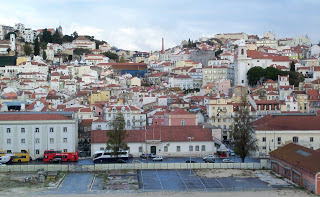
Lisbon, Portugal

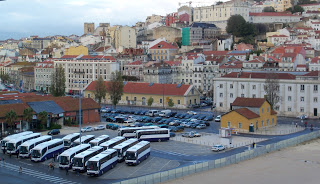
Buses waiting to take people on excursions.
I didn't bother.

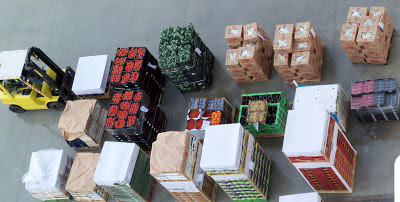
Food being loaded on the ship. I took this responsibility seriously,
and ate religiously--every chance I had.


Tenerife, Canary Islands
We met Joseph Sanchez in Tenerife, who took us on a wonderful tour of the island.
Thank you, Joseph.

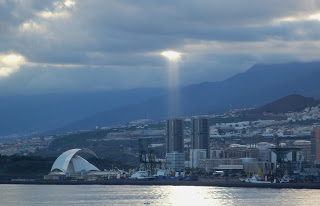
Tenerife Opera house and Twin Towers

This is terrific, inspiring video, and a reminder of how children sometimes thrive
in spite of their circumstances. 

A nice review of Lost in the River of Grass

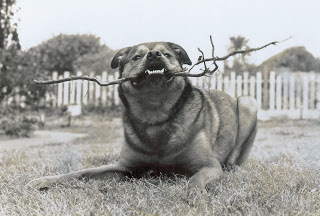
Soda-loving Shepherds


germanshepherdappreciation.tumblr
First a word from our sponsor. Fresno author, teacher, and creative writing guru, Bonnie Hearn Hill, chose Lost in the River of Grass as one of her top ten picks for Christmas giving. I'm honored and truly grateful. Here's the link.


I'm taking a few weeks off, so I thought I'd leave you with this video as a thank you for sticking with  me these last 18 months.
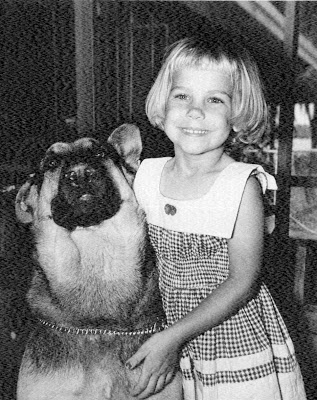
Since we had German Shepherds when I was growing up, I added two pictures of my sister with Karlo.

http://www.youtube.com/watch?v=DZRIZ7PgDso

My sister, Kristin and Karlo
circa 1952
Kristin & Karlo
circa 1953


The Plight of Greyhounds


Sao Tome Shrew

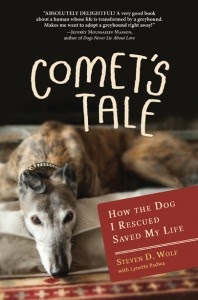
I don't normally use this blog to promote books (with the exception of my own,) but I recently participated in the Northern California Independent Booksellers conference in South San Francisco. One of the books I picked up was Comet's Tale: How the Dog I Rescued Saved My Life, not because I rescue greyhounds, but because a dear friend does and it was her birthday. What caught my eye was the subtitle. If you've read this blog more than once, you know I believe in the healing power of our relationship with animals, and the natural world in general. Animals we adopt as pets to give them better lives frequently lead us to understand it is they who enrich ours. Animals as healers is a theme that runs throughout everything I've ever written, so I carefully read Comet's Tale before giving it to Tanya. 

I'm extrapolating here, but too often the question that arises before any consideration is giving to saving a unique habitat and the species found in it--a polar bear or Preble’s meadow jumping mouse--is what purpose does it serve? How is mankind any richer for saving a Sao Tome shrew or a Pig-nosed frog? 
Pig-nosed Frog


That should never be the question. The question should be what right do we have to destroy it? However, for those who think the former question trumps the latter, perhaps greyhounds need protection because we have thousands of veterans coming back from our wars who need help, and there's a chance they might make great service dogs.
  

From COMET’S TALE, by Steven D. Wolf. © 2012 by Steven D. Wolf. Reprinted by permission of Algonquin Books of Chapel Hill. All rights reserved.

Even if a racer survives (the risks involved in racing,) the dog’s long-term prospects are grim. Hounds who never place in the money far outnumber the winners, and even the winners will start losing one day. Most of the losers are three years old or younger. Because food and care cost money, no racing kennel wants to keep them around. Since greyhound breeders produce tens of thousands of dogs ever year, it’s easy to obtain a replacement. The president of the Pensacola Greyhound Assoc. summed it up the industry attitude when he said, “That’s just a bad part of the business, unfortunately. I compare it to owning a professional sports team. If you have one of you star players who isn’t putting out, then you have to make other arrangements.”
            The “arrangements” are what lie at the end of the road for hundreds of greyhounds. Some are killed legally by veterinarians hired by the dogs’ owners…then there is the other option, known within the industry as “going back to the farm.” A man named Robert Rhodes operated one such farm—eighteen acres in rural Alabama where he admitted to shooting thousands of greyhounds during his forty-year career in the racing industry. An aerial photo revealed an estimated three thousand greyhound skeletons scattered around his property. Rhodes, a security guard at a Florida track, said dog owners and trainers had paid him as little as ten dollars per animal to dispose of their greyhounds.
            Something similar happened in Arizona. In 1992, the rotting corpses of 143 racing greyhounds were found after the bodies had been mutilated and scattered in an abandoned citrus orchard. After shooting the dogs, the killers had cut off the tattooed ears, hoping I would prevent them from being identified. Good police work led to the discovery of some of the ears, and an Arizona breeder and kennel owner was convicted for his part in the massacre. He was fined $25,000, sentenced to 30 days in jail, given 18 months probation, and ordered to perform 400 hours of community service. Compare that to the punishment of Michael Vick, the professional football player who in 2007 was convicted of animal cruelty and served a 23-month prison term for his part in a dog-fighting ring that resulted in the death of several pit bulls. The disparity in those two sentences may point to how differently ‘pets’ and ‘livestock’ are valued.
            In addition to the massacre of greyhounds, there are a multitude of documented cases where greyhounds have simply disappeared. Thousands have been ‘donated’ to medical research, and many more have been transported to other countries. Advocates for the Greyhound Protection League say that 24,000 is a conservative estimate of the yearly number of greyhound killings that occurred during the racing industry’s heyday from the mid-1980s to the early 2000s.
            ‘If there is anyone to indict here, it’s the industry because this is what they’re doing to these animals. They misery begins the day they’re born. The misery ends when my client gets ahold (sic) of them and puts a bullet in their head(s).' That is how Robert Rhode’s attorney attempted to defend his client’s actions as late as 2003. The defense was ridiculous, but his observations about the industry were on target. A racing greyhound’s misery does begin the day the dog is born. However, owing to growing public awareness, greyhounds are being rescued and adopted in ever increasing numbers. By 2003, 18,000 retired racers were being placed with families each year. Unfortunately, that still left 7000 hounds who were needlessly put to death. While the numbers might be fewer today, the percentages haven’t necessarily improved.


Needles and Jenny
adopted by Tanya Smart and Brent Wright

Tossing Sea Stars


dailymail.co.uk


I came across this story online and it reminded me of a post I did last year, which I've included again. It seems appropriate since these bizarre events are happening more frequently. We need to take better care of our planet even it's one sea star at a time. 


Mysterious stranding on Irish beach involved up to 50,000 starfish

By: Pete Thomas, GrindTV.com

It was a surreal and somewhat ghostly sight: that of perhaps 50,000 starfish that somehow had come ashore overnight, en masse, and perished on a secluded beach in Ireland. The Belfast Telegraph reports that harsh weather might have been responsible for last week's peculiar and mysterious event, on Lissadell Beach. Click on the link for the rest of the story.


Mass stranding in Japan
advancedaquarist.com


“While wandering a deserted beach at dawn, stagnant in my work, I saw a man in the distance bending and throwing as he walked the endless stretch toward me. As he came near, I could see that he was throwing starfish, abandoned on the sand by the tide, back into the sea. When he was close enough I asked him why he was working so hard at this strange task. He said that the sun would dry the starfish and they would die. I said to him that I thought he was foolish. there were thousands of starfish on miles and miles of beach. One man alone could never make a difference. He smiled as he picked up the next starfish. Hurling it far into the sea he said, "It makes a difference for this one." I abandoned my writing and spent the morning throwing starfish.” ― Loren Eiseley

May little acts of kindness enrich your lives and the lives of others. Thank you for your interest in my ramblings.
and
Happy Thanksgiving to my USA friends.  


An idiot, full of sound and fury.


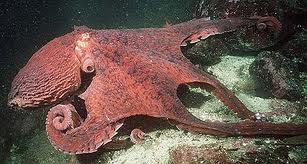
On November 15th last year, I posted the story below about my first encounter with an octopus, which was exactly this size. As you might imagine, my heart broke when I read this recent story online. What I really don't get is what makes us strut and pound our chests over taking the life of the largest fish, the oldest elk, or an 80-pound Pacific giant octopus. How demeaning to our status as humans that we have among us the likes of this young man.

 http://www.grindtv.com/outdoor/blog/40201/divers+capture+of+a+beloved+giant+pacific+octopus+sparks+outrage/

"If having a soul means being able to feel love and loyalty and gratitude, then animals are better off than a lot of humans." James Herriot


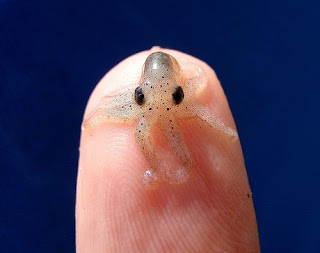
When I was 15 my parents took me and my sister on our first vacation ever. We lived in Winter Park, north of Orlando. The vacation was to Clearwater Beach on the Gulf of Mexico. I remember two things about that vacation: my sister had a shrimp cocktail and a hot fudge sundae at the Columbia restaurant in Ibor City then threw up on the drive home. The other was finding a baby octopus on the floor of the car. The baby octopus looked like a tiny mobile clump of wet sand. It came out of a what we thought was an empty conch shell we'd picked up on the beach, and would never have noticed it if it hadn't crawled out (in search of water, no doubt) and across my mother's foot.

 It died, of course.

All my life--to that point--I'd collected small dead animals and kept them in jars of alcohol. I had quite a collection by the time the baby octopus was added: snakes, lizards, baby turtles, newly hatched birds. This rather morbid curiosity about animals eventually led me to pursue a degree in biology where it was a perfectly acceptable practice to collect and preserve dead things.
I don't know what happened to my dead animal collection. I'm sure my mother put ever jar in the trash the same day I moved to Miami, but since finding that baby octopus, I've loved them. Yesterday, someone sent me this amazing video. As they say, It's awesome!

 http://www.sciencefriday.com/videos/watch/10397


North Pacific Giant Octopus


Octopus opening a jar with a screw lid

From Wikipedia

"Octopuses are highly  intelligent, likely more so than any other order of invertebrates. The exact extent of their intelligence and learning capability is much debated among biologists, but maze and problem-solving experiments have shown that they show evidence of a memory system that can store both short- and long-term memory. It is not known precisely what contribution learning makes to adult octopus behavior.
In laboratory experiments, octopuses can be readily trained to distinguish between different shapes and patterns. They have been reported to practice observational learning, although the validity of these findings is widely contested on a number of grounds. Octopuses have also been observed in what some have described as play: repeatedly releasing bottles or toys into a circular current in their aquariums and then catching them. Octopuses often break out of their aquariums and sometimes into others in search of food. They have even boarded fishing boats and opened holds to eat crabs."


"A man is ethical only when life, as such, is sacred to him, that of plants and animals as that of his fellow man, and when he devotes himself helpfully to all life that is in need of help."
Albert Schweitzer

Guest Blog by Kate Erickson

  
An Hour More or Less: Remembering Tucker
My kids were going off to middle and high school, and Wilson, our dog, was no longer a puppy. The house needed new energy, so I went looking for something little and fluffy.
            “There’s a cute dog in that bottom cage,” the Humane Society attendant said.
            I bent down to look. It was cute, but not exactly what I had in mind. As I rose to full height, I came face-to-face with a tiny hedgehog-looking puppy in the top cage. The excitement bursting from those obsidian eyes said, “I’m your boy.” And indeed he was.
            Eleven years later, I would caress his thick fur, gaze into those dimming eyes and whisper, “Sh, it’s okay. You can go now. I promise we’ll be fine.”
Our Tucker-Boy died on November 6, 2011, the day we change the clocks to standard time, the day we get an extra hour, but it gets dark an hour earlier so it’s not really a net positive.
My husband, Gary, and I are normally alert to the depressing one hour shortage of daylight, starting the morning with a brief argument over whether the clocks get turned back or forward and spending the rest of it saying things like, “It’s two o’clock, but it’s really three.”
During last year’s switch from daylight savings, our grief over watching Tucker die left us little energy to give a crap about anything, let alone a mere gain or loss of an hour.
            From the moment Tucker came into our lives, he charged the air. Our lab-border collier mix, Wilson, was an active, yet aloof dog. Tucker was eager to give affection and hungry to receive it. During that first year, the little hedgehog grew into a 60-pound moose. We never knew what breeds combined to make him, but his head was reminiscent of a Rottweiler which gave him a menacing look.
Tucker was far from menacing. He maintained the demeanor of a small, anxious dog. He bounced and danced whenever any of us got up in the morning, returned home, or offered a walk.
He needed to be close to either Gary or me, those brilliant dark eyes always alert to our movements. When I was working from my home office, he’d position himself in the narrow passageway between the edge of my desk and chair, forcing me to step over him every time I went to the filing cabinet or the fax machine. If I made him move, he’d seek out Gary.
Tucker was so adept at pretending to be small that he’d sneak into our cramped galley kitchen while I cooked dinner, moving nimbly around me. I wouldn’t notice he was breaking the no dogs in the kitchen rule until he’d start bouncing with delight when the other family members entered to serve up their plates.
He was easily spooked by thunder, fireworks, and balloons. His certainty that scary monsters haunted the landscape caused him to hesitate at the door and look up at us for reassurance before going outside.
            In the last few months of his life, his energy diminished and he appeared to be in pain. Our vet put him on medication, which helped for a while, but he quickly went from one pill a day to four.
He had a habit of lying on the bathroom floor each night while I bathed. On his final Saturday night, I was upstairs preparing my bath when I saw him struggling to climb the steep staircase to be with me. When I rushed to stop him, he looked so sad that I coaxed him the rest of the way and petted him until his heaving breath returned to normal. He followed me to the bathroom where he laid, like always, next to the tub.
At three in the morning on that Sunday, Gary woke me to say he’d been up with Tucker since midnight. Tucker was breathing heavily and unable to lie in one spot for any length of time. I took him outside to see if he had to go potty, then tried to get him to lie down on his bed, but he wouldn’t. I spread blankets on the floor, made myself a bed, and invited him to join me. He would not. I asked Gary to lie down on the sofa, and after a few minutes Tucker laid down near me and we all went to sleep.
At daybreak, Tucker seemed better, but clearly not well. I gave him a pain pill. Gary and I discussed keeping him comfortable until we could take him to the vet on Monday. By late morning, I was in my office doing some work and thought Gary was napping on the sofa until I heard him yell for me.
I ran into the living room to find Tucker standing, his breathing labored. Gary was petting him and crying. He said that Tucker had come over to the sofa and put his face near his, but when Gary reached to touch him, Tucker had a seizure.
“He was trying to tell me it’s time,” Gary said, his words choked with tears.
Our veterinarian’s answering service connected me with the on-call vet. Sobbing, I told her I didn’t think we’d be able to bring him to her office. In a calming voice, she said she would come to our house. However, she’d have to wait for her husband and he wouldn’t be home for a couple of hours.
As Gary and I waited for the vet to come put an end to Tucker’s suffering, we sat by his side with classical music playing in the background. Through tears, we petted him, thanking him for being our pal, for bringing such vibrant joy to our household, and keeping us always alert to dangers lurking outside our front door.
An hour after the vet removed Tucker’s body, I took Wilson on a walk. This would be our new normal—just him and me; we might as well get started. My heart actually hurt—as if blood was draining from it faster than it was being replenished. What I really wanted was to walk out my sadness.
I had to coax Wilson into his collar and leash. He kept looking around, waiting for Tucker.
“This will be fun, buddy.” My tone was upbeat, but he wasn’t fooled and balked at being led outside.
We headed down the alley behind our house. Every dog walk for the past 11 years had been with Wilson on my left and Tucker on my right. I felt unbalanced without him. I kept remembering how hard he’d worked to control his enthusiasm and learn to maintain a proper heel. I could tell that Wilson felt it, too, as he kept glancing over to where Tucker should be, and then back towards the house.
I let Wilson off his leash when we were deep into the cemetery where the two dogs were free to run and play, but Wilson ran back to look for Tucker.
I called Wilson, put him on his leash, and started to bawl, wiping my eyes and nose on the sleeve of my jacket. He patiently waited for me to cry myself out, then he led me home.
As the dinner hour crept up, Gary and I sat into the sinking darkness, barely able to speak. We chose a meal that held the promise of easing our grief: Jenny’s giant burgers, fries and chocolate milkshakes. Its sedative effects only lasted for the time it took to consume the food.
I doubt that Gary and I will ever forget which way the clocks need to turn in the fall or the spring. The day when we relinquish daylight an hour earlier will always be the time of year when we lost our Tucker. That loss will carry us into darkness until spring arrives and the forward turn reaffirms that grief diminishes as life goes on.


Kate writes an hysterically funny blog about small town adventures on the Mendocino Coast: www.ithappenedatpurity.com


Kate & Tucker
November 8th update: Kate just posted this on her blog and it's worth sharing.


Fido the Rescued Rat by Prudence Breitrose


freeinfosociety.com
Fido the Rescue Rat

My son, Charlie, refers to it as “Fido’s origin story,” and there was certainly something mythical about it, because of all the ways to get a new pet. . .

We were low on animals at the time. We’d lost two goldfish, our hamster had recently died, and the two box turtles–Bugs Bunny and Explorer–were not exactly sociable.

I was shopping at our local family-owned grocery store–can’t remember what it was that I needed to get, but I’m pretty sure it wasn’t a rat.

I was near the front of the store, where paper sacks were lined up waiting for delivery, when I became aware of a surge of excitement–the sort of EEEKing and squawking that tends to go along with rodents. A grocer went barreling by, yelling,  “Get it out of here!”  Another was shouting, “Kill it!”

And there, sticking his head out of one of the paper sacks, was a rat. Not one of our local roof-rats, which do look a bit sinister–so sinister that we prefer to call them ‘rabbits’ to take the edge of a visit to the garage at night. No, it was one of the prettiest rats I’d ever met, softly patterned in brown and white.

This was before I became part rodent myself–before I thought myself into the heart of mouse society for my series of books set in the Mouse Nation. But like my fictional mice, I did manage to react with lightning speed.

“Stop!” I shouted to the rampaging grocers. “Triple bag that rat. I’ll take him!”

Poor Fido! Who knows what had happened to him before he found himself in that paper sack, then triple-bagged? He seemed traumatized. We made him comfortable in the old hamster cage, then bought him his own palace, a three-story condo that sat in the corner of the kitchen where he could feel he was part of the family.

We invited him out. After closing all the kitchen doors, we would leave his cage door open. But for a while Fido wasn’t interested in freedom. Didn’t want to stick a paw outside his home. And if my son took him out of the cage he would sprint back to it at the first opportunity.

“I guess it was weeks,” Charlie remembers now, “but if felt like months before he’d come out on his  own.”

Fido’s emergence happened gradually, a few steps at a time, still punctuated by sprints back to safety. But at last he seemed to trust us, and to take pleasure in exploring his surroundings. At last he was happy to hang out with his humans, and climb on Charlie from time to time, which he remembers as kind of scratchy.

Charlie and Fido
The only down side was that my daughter insisted on rodent-parity and we bought her a pretty white mouse. Disaster! Unlike Fido, the mouse showed no interest in humans and seemed to have only one talent – to smell so bad that she had to be exiled from the kitchen.

I can’t remember what happened to the mouse, but Fido went on to achieve pet immortality, with an honored place in the rose-bed.


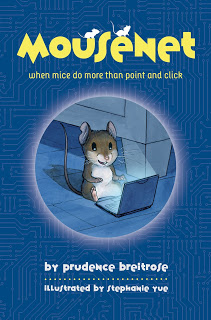
Prudence Breitrose is the author of the marvelously
inventive Mousenet

Yakity-Yak: Guest Blog by Mark Winwood

On April Fool's Day, 1989, a passenger on my flight from NY to Bermuda died of a heart attack. I did CPR for 45 minutes while we waited for a medical doctor to pronounce her dead. While this was going on, passengers in the back of the plane were robbing our liquor kits. The glitch they overlooked was Bermuda Customs, which were alerted by one of the other flight attendants. They were all in cuffs when the crew went through about an hour later.

A couple of days ago, a dear friend and fellow retired flight attendant, sent this to me. It was written by Mark Winwood, her meditation teacher. She knew I could relate.

Dharma 101:

Yakity-Yak . . .


 It was the Sunday Allegiant Airlines flight from Bangor (Maine) to Orlando. The plane was crowded, take-off had been bumpy as we broke through the heavy "Down East" rain, but soon all was calm.
  
 I was in on the aisle in the row behind the bulkhead reading my book when the motion of a flight attendant running past caught my
 attention. There was commotion behind me, something had happened.
When another attendant stepped up and stood on my arm rest to unbuckle and take the oxygen tank stored in the overhead bin, I knew someone had fallen ill, perhaps seriously so.

There was much flight attendant activity, rushing back-and-forth, and then came the announcement for any doctor or medical professional(s) on board to please identify themselves. I was not aware if the crew was successful in finding anyone who could help, and kept myself from turning around to see what was going on. My sense was to let the professionals do their job; if I could not directly help I would not interfere or distract them in any way.  But the flight was now different, charged with tension.  I found myself empathizing . . . how would it be to become stricken on an airplane . . . how frightening, disorienting . . . uncertain.

About fifteen minutes later the attendants asked the people sitting in the bulkhead row ahead of me to stand and move out, that they would be given seats in the rear because their space was now needed for a medical emergency. Shortly thereafter an elderly man was brought up and placed in the seat in front of mine.  He was wearing an oxygen mask and was conscious, but not looking so good . . . clammy, very pale and slumped over. 

The man was apparently a doctor and unable to clearly communicate what was ailing him, except to say he had heart trouble in the past and was experiencing painful tightness in his chest. His and his wife's carry-ons had been located and gone through, and a bag of prescription drugs was found.

Two nurses traveling on the flight had been found and pressed into service, and for the remainder of the flight they sat with the man, one in the seat next to him, the other in the legroom in front of him. They determined that he had not taken his meds that day, so they gave him his daily dosages. One held and rubbed his hands while the other worked to calm him. His blood pressure was taken every few minutes and was dropping. His heart beat was beginning to slow down. After a while he said he was feeling better.  

The captain came back and spoke with the nurses, who were convinced the man was out of danger enough for the flight not to be diverted for an emergency landing, which, as I heard the captain say, at that point would save just a few minutes over completing the flight into Orlando. The captain also indicated we were cleared for a direct landing, no circling or waiting in line.  

***

I am recounting this to communicate how beautifully this man in need was cared for . . . how those who were called upon instinctively came together with clear-minded kindness. It was wonderful to see, this compassionate caring for a person who needed help.  

A sweet man across the aisle reached over and stroked the man's arm, telling him not to worry, that the hospital nearest the airport was one of the best in the state and that if he were to be hospitalized there he'd be in wonderful hands.

Every few moments one of the flight attendants would visit, speaking reassuringly to him, through their concern articulating not worry but confidence and kindness. 

And the nurses -- ordinary passengers with dakini hearts -- remained with him until delivering him to the care of the medical team on the ground. 

I sat behind, watching this all take place . . . periodically visualizing the Medicine Buddha above the man's head, holding a bowl of medicinal nectar that cures all ills, hindrances and obstacles . . . this nectar streaming into the man's and his caretakers' crowns, infusing every cell of their bodies with perfect healing ability.  With this visualization I silently chanted the Medicine Buddha mantra.  

About 20 minutes from landing the captain re-emerged from the cockpit and came back to tell the man we'd be landing shortly and that there would be medical personnel waiting to care for him. He then leaned into the man and told him he'd land the plane especially softly, and smiled before returning to his duties.

I know that what occurred on that flight happens often, people do get ill in mid-flight and flight crews are trained to handle such situations, etc. But that's business, professional responsibility, and what I was witness to went beyond the responsibility of a job. It was heartfelt care and true human concern and kindness ("metta") exhibited by strangers for a fellow being in distress, and it deeply touched my heart.  

***

Upon landing the medical team came on the plane, were debriefed by the nurses and carefully removed the man on a stretcher, his wife nervously accompanying them. After a few more minutes of getting things straightened out, we were allowed to deplane.

As I was walking toward the airport exit, a woman greeted a man she had been waiting for. Aware of the delay and having seen the ambulance outside the terminal and the medical people, she asked the man what had happened.

"Oh, nothing.  Just some old fart got sick on the plane. Looked half-dead. The assholes wouldn't let us get off until he was taken away."

They kissed and turned to leave, their most recent annoying inconvenience soon to be forgotten.

Mark Winwood, founder and resident teacher, of The Chenrezig Project, a Tibetan Buddhist study and practice group in Central Florida.  Chenrezig Project www.chenrezigproject.org    
 

MY FATHER'S GARDEN


en.wikipedia.org

This October is the 50th anniversary of the Cuban missile crisis. Only recently has the speech President Kennedy wrote to inform the nation we were going to war with Russia been found--a reminder of how close we came to annihilation. My family lived in Winter Park, Florida, a small town surrounded by Orlando. This personal essay was published a few years ago in the St. Petersburg Times.


My Father's Garden
by Ginny Rorby
Daddy's garden was not this lush.

On a cool, crisp Sunday in October of 1962, just days after the first tanks and trucks full of soldiers rolled through Orlando headed for Key West, my parents loaded my sister and me in Daddy’s ’54 Ford, so there would be no mistaking us as moneyed, and drove out Highway 50 West to visit the half dozen bomb and fallout shelter sales shacks that appeared almost overnight during the Cuban missile crisis. My parents were so sure that war with Russia imminent construction began the following week on what would become the focal point of our backyard.
            Daddy was enamored of a cave-like underground model, but my mother, who was writing the check, chose from among the above-ground samples, deciding, I suppose, that if the nuclear hit was not direct, a fallout shelter was all we would really need.  
            I remember the construction clearly because the hole the workmen dug for the foundation near the base of our backyard’s only palm tree was deep enough to fill with water every night. Until the floor was poured, that was the closest we ever came to having a swimming pool.  There were paired cinder block walls—interior and exterior—with a three-foot space between them, which they filled with sand.  After the interior ceiling was poured—three feet below the top of the walls—this, too, was filled to the brim with the dirt. Within a month, weeds took hold.
             On the inside, four cots were bolted to the wall but could be raised or lowered as needs dictated. There was a small sink, a hand pump for water and a silly, little hand-operated air pump.  The shelves at one end were soon lined with water jugs and canned food. I have no memory of a toilet or a cook-stove. Even before Khrushchev backed down and removed the missiles, I think the shelter became a recognizable mistake. The effort to complete the preparations lost momentum and petered out, replaced, instead, by the need to conceal it. My father painted this eye-sore the same beige color as our house which was also cinder block. Momma had him paint the steel door turquoise, her favorite color, and she had the yardman plant an ixora hedge along the side that people could glimpse from the road.  
             As the cold war years trickled by, my parents took to quietly sparring over the ultimate possession of the shelter. In the narrow space near the foot of the cots, Momma had bookshelves built and filled them with a growing collection of Readers' Digest Condensed Books. My father installed an air-conditioner above the steel door to cut down on the mold and dampness in the summer. 

flickr.com
             Daddy, a lifelong hunter and fisherman, who suffered in Florida's heat, purchased bullet-making equipment and spent endless weekend hours shut inside the shelter with the air-conditioner running. Momma, who controlled the finances in our family after Daddy's cypress-knee lamp-making business failed, chained the bunks against the wall and began to stack boxes of old bank statements and tax records on the cement floor. 
            Soon Daddy's boxes of new bullets, jars of gunpowder, wad cutters, and empty shell casings crowded out the rusting cans of food and swollen, rock-hard boxes of powdered milk.
            My mother lowered the two bottom bunks and began to fill them with boxes of old clothes and shoes that should have gone to Goodwill. Piles of magazines accumulated: National Geographic, Life, Look, and Saturday Evening Post.
            Daddy bolted a long two by four to the wall opposite the bunks, and nailed jars full of bullet-making paraphernalia by their lids to the board. 
            Momma lowered and began to fill the top bunks.
            Then one day Daddy came home with a trunk full of fertilizer, seed packets, onion starts, and assorted garden tools. He leaned a ladder against the east side of the shelter, climbed up, pulled all the weeds and planted a garden. He bought an extra long garden hose and rotating sprinkler head. He placed a beach chair in the filtered shade of the palm tree with a left-over cinder block for a drink-stand. In the afternoons after work at the job he'd found selling business forms, he’d fix his first pitcher of martinis, stick a tumbler in his back pocket, and climb the ladder to weed. When it got dark, he’d disconnect the hose from the sprinkler, sit there among the radishes, dimly outlined in the buggy glow of the backyard light, moving just his arm from side to side, as he watered his garden.
            Daddy’s pre-dinner cocktail hour habitually lasted until very late at night. When he came in from maintaining his garden, he’d sit alone on the back porch and watch his favorite shows. I would watch television in my mother’s room, where periodically she’d crank open her jalousie-window, left from before the porch was added, and peer down at Daddy, checking his degree of drunkenness, I suppose.  “You should eat, Noel,” she’d say. “Pretty quick now,” he’d answer.  
It became his habit, as his garden matured, to harvest a little something to accompany whatever Momma had left warming on the stove. My mother's bedroom had a door that opened onto the backyard. When she heard Daddy making this final, sloppy-drunk trip to the top of the shelter, she would open her door and stand behind the screen with a flashlight trained on him as he climbed the ladder with his spade. When he made his selection, he'd come boldly to the edge and hold his prize up in Momma's light.
            I hated my father’s drinking, but have often wondered in the years since he died, if Daddy wasn't driven up there by my mother's bank statements only to find that his garden was his success. He could stand, bathed in my mother’s angry light, surrounded by his tomatoes, hot peppers, green onions, cucumbers and carrots, feel his stomach rumble with hunger, and bend and select a few things to take that pain away.


IF YOU MISSED THE POEM BY JEWELS MARCUS, SCROLL DOWN.