The Next Coming by Jewels Joyce Marcus


smashingmagazine.com

The Writers of the Mendocino Coast got together with local artists in what's called a Ekphrasis in which one medium of art attempts to relate or describe another. Sixteen writers and sixteen local artists split into two groups. Eight writers submitted a story or poem, each of which was randomly drawn by eight artists. Each artist painted or photographed a visual interpretation of the written piece. In the other group, eight artists submitted their paintings or photographs to eight writers who then wrote a story or poem to interpret the work of art. Last Saturday, at the Artists Co-op in Mendocino, the writers and artists met and saw the results for the first time. I don’t have the painting this poem by Jewels Marcus references, so I Googled American children in Poverty for a picture that would capture the emotional essence of the portrait it was written to interpret.  I hope you will share this poem with every parent you know.


The Next Coming       

I’m not who you think I am.
Days of lush lazy lawns pregnant
with carefree laughing children
are long gone.
I’m your daughter’s daughter.
The new messiah.
The coroner.
The next coming.
I’m walking on the backs of discarded plastic bottles,
across seas, in search of salvation and clean drinking water.
I’m sifting through un-majestic purple mountains of trash,
for the tainted treasure of tasteless scraps    
to fill my aching    empty    guts.
I’m roaming radiated deserts for evidence of my inheritance.
I’m your judge      your jury      your coroner
stuffing the giant cracks you left in the scorched earth
with the putrid, swollen bodies of my kin.
I’m your daughter’s daughter
needing to grow new lungs to filter the filthy air
new hands to claw over continents of blackened concrete.
I’m the one left after the last holocaust.
The one you didn’t want to notice, too busy
entertaining  yourselves          for one third of your lives.
I’m not who you think I am.   
I’m the minister       the preacher        the teacher.
My hopes and prayers like wolves sent out to devour our fears.
I’m the new messiah.               Walking on water.
The coroner.                            Burying your future.
The next coming.

Jewels Joyce Marcus c2012


For locals, all the art with accompanying stories and poems will be the program at this Wednesday's (the 17th) Writers of the Mendocino Coast meeting.
6 p.m.
in the Mendocino Hotel's
Garden Room

nataliesreblog.blogspot.com


Sand Bees II photos by Katy Pye


Point Cabrillo
You can tell it's summer. The last rain we had was in March.

Back in April I did a post about discovering Sand bees at the old, abandoned Georgia-Pacific site in Fort Bragg. When I looked up the life history of Sand bees what I found first was a way to kill them. Below is a link to that post.


A few months ago, my friend and fellow writer, sent me photographs of the Sand bees she found at Point Cabrillo. (You know--my favorite--have given 16 years of my life to--lighthouse.)


Bees' eyeview of Point Cabrillo


Revisiting Monarchs and Monsanto


When I was a flight attendant I used to fly to San Francisco often, but it wasn't until 1982 that I saw the real coast of northern California. At the time, I was working on a degree in Biology at the University of Miami with a focus on ornithology (the study of birds.) Dr. Oscar Owre, my ornithology professor, Bob Kelley, UM math professor and then President of Miami's Tropical Audubon Society, and Dan Cary, a grad student studying the Everglade kite, were all going to the ABA (American Birding Association) conference at Asilomar in Monterey, CA. I could fly free, so, as I recall, I invited myself along. 


photos.igougo.com


We took two field trips: One to Point Lobos, where I saw my first sea otter asleep in a bed of bull kelp, and a landscape that took my breath away. This Florida gal had never seen anything like those cliffs and that roiling, icy sea. I fell instantly, permanently in love with northern CA. (Nine years later I moved to the much more remote Mendocino Coast.)


hibernating monarchs
 geog.ucsb.edu

Our second field trip was to see the Monarch butterflies in Pacific Grove. It was late October.

The following is an edited version of an article I found on  this website.

Monarch butterflies go through four stages during one life cycle, and through four generations in one year. The four stages of the monarch butterfly life cycle are the egg, the larvae (caterpillar), the pupa (chrysalis), and the adult butterfly.

In March and April butterflies lay their eggs on milkweed plants. The eggs hatch about 4 days later into baby caterpillars. A baby caterpillar feeds on the milkweed until it's full grown in about 2 weeks, then it attaches itself to a stem or a leaf and transform into a chrysalis.

monarch-butterfly.com

From the outside, the 10 day-long chrysalis, or pupa, phase seems to be a time when nothing is happening, however within the chrysalis the body of the caterpillar is undergoing a remarkable transformation, called metamorphosis, to become the beautiful butterfly that will emerge.

The monarch butterfly will emerge from the pupa and spend the next 2 - 6 weeks of its life visiting flowers, finding a mate and laying her eggs before this first generation monarch butterfly dies.

 
 monarch-butterfly.com

The second generation of monarch butterflies is born in May and June, goes through exactly the same four stage life cycle, as does the third generation which is born in July and August and dies 2 - 6 weeks later.

The fourth generation of monarch butterflies is a little bit different than the first three generations. The fourth generation is born in September and October and goes through exactly the same process as the first, second and third generations except for the dying part. Instead, this fourth generation of monarch butterflies migrates to warmer climates like Mexico and California and will live for six to eight months until it is time to start the whole process over again.

Monarch butterflies are not able to survive the cold winters of most of the United States so they migrate south and west each autumn to escape the cold weather. The monarchs that over-winter in Pacific Grove and other sites along the California coast are from the population that lives west of the Rocky Mountains. These migrating Monarch butterflies use the very same trees each and every year, even though they aren't the same butterflies that were there the year before. Monarch butterflies are the only insect that migrates to a warmer climate, a migration of up to 2,500 miles.

The Monarch butterfly migrates for two reasons: They can not withstand freezing weather in the northern and central continental climates, and the larval food plants do not grow in their seasonal over-wintering sites, so that fourth generation must fly back north to places where the plants are plentiful. Visit Monarchwatch for information on tracking migrations with a color map. Monarchs Like to Hibernate in the Same Trees Every Year

The monarch overwintering sites are under threat because of people cutting down their favorite trees, but there are groups that collect money to save the important trees and educate people about monarch conservation. You can learn more about helping monarchs here.


NOW FOR THE REALLY BAD NEWS   

Twelve years ago, a study found that genetically modified Bt corn was lethal to monarch butterflies; recent research shows that another type of GM (Genetically Modified) crop is even more damaging to the beloved insect.

A recently published study says that increasing acreage of GM Roundup Ready (RR) corn and soybeans is a major cause for declining populations of monarch butterflies in North America. The paper, published in the journal Insect Conservation and Diversity, says that increased use of glyphosate herbicide with RR GM crops in the Midwest is killing the milkweed plants, which monarchs rely on for habitat and food. Chip Taylor, an insect ecologist at the University of Kansas, says the proliferation of RR crops and the overuse of glyphosate (Round-up) is the major cause.

(This following article would lead one to believe there is no impact on Monarch butterflies because it is targeting the corn borer larvae. But here's the problem: Pollen drift. Please also read the Cornell study that follows.)

Bt-CORN: WHAT IT IS AND HOW IT WORKS

To transform a plant into a GMO plant, the gene that produces a genetic trait of interest is identified and separated from the rest of the genetic material from a donor organism. A donor organism may be a bacterium, fungus or even another plant. In the case of Bt corn, the donor organism is a naturally occurring soil bacterium, Bacillus thuringiensis, and the gene of interest produces a protein that kills Lepidoptera (the Order of butterflies and moths) larvae, in particular the European corn borer. This protein is called the Bt delta endotoxin. Growers use Bt corn as an alternative to spraying insecticides for control of European and southwestern corn borer.  

Bt Delta Endotoxin

The Bt delta endotoxin was selected because it is highly effective at controlling Lepidoptera larvae, caterpillars. It is during the larval stage when most of the damage by European corn borer occurs. The protein is very selective, generally not harming insects in other orders (such as beetles, flies, bees and wasps). For this reason, GMOs that have the Bt gene are compatible with biological control programs because they harm insect predators and parasitoids much less than broad-spectrum insecticides. The Bt endotoxin is considered safe for humans, other mammals, fish, birds, and the environment because of its selectivity. Bt has been available as a commercial microbial insecticide since the 1960s and is sold under many trade names. These products have an excellent safety record and can be used on many crops until the day of harvest.

To kill a susceptible insect, a part of the plant that contains the Bt protein (not all parts of the plant necessarily contain the protein in equal concentrations) must be ingested. Within minutes, the protein binds to the gut wall and the insect stops feeding. Within hours, the gut wall breaks down and normal gut bacteria invade the body cavity. The insect dies of septicaemia as bacteria multiply in the blood.  http://www.ca.uky.edu/entomology/entfacts/ef130.asp


Toxic pollen from widely planted, genetically modified corn can kill monarch butterflies, Cornell study shows

The key statement: "Unlike many pesticides, the Bt-corn has been shown to have no effect on many "nontarget" organisms -- pollinators such as honeybees or beneficial predators of pests like ladybugs. But the Bt-modified corn produces pollen containing crystalline endotoxin from the bacterium genes. When this corn pollen is dispersed by the wind, it lands on other plants, including milkweed, the exclusive food of monarch caterpillars and commonly found around cornfields."

PLEASE VOTE YES ON PROP 37


What's in your Urine?

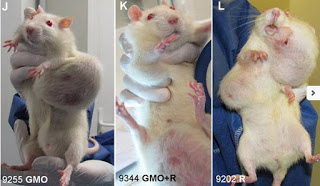
Monsanto is spending millions to defeat Prop 37, which would require labeling of Roundup Ready, Genetically Modified (GMO) foods in California. This is huge because if labeling is required in CA, so goes the nation. The FDA does not require outside studies of GMO foods. Studies are done in the hen house by the fox, and all of them so far have been short term studies. Below is a link to information about longer term studies, the results of which are quite apparent. 

Rats with tumors
 http://articles.mercola.com/sites/articles/archive/2012/09/22/superbugs-destruct-food-supply.aspx?e_cid=20120922_DNL_

Get Out The Vote: Prop 37, California's GMO Labeling Initiative, Could Mean Change For The Entire Country

What are GMOs
"Roundup Ready Crops (RR Crops) are genetically engineered crops that have had their DNA altered to allow them to withstand the herbicide glyphosate (the active ingredient of Monsanto's herbicide Roundup). They are also known as "glyphosate tolerant crops." RR crops deregulated in the U.S. include: corn, soybeans, canola, cotton, sugarbeets, and alfalfa. When planting Glyphosate Tolerant crops, a farmer can spray the entire crop with glyphosate, killing only the weeds and leaving the crop alive. However, one concern with the heavy use of glyphosate on RR crops is that it will lead to the development of glyphosate resistant weeds (sometimes referred to as "superweeds").[1] One variety of RR Corn, NK603, was linked to tumors in rats by a 2012 study.["
More about glyphosate in an excellent article
http://naturalsociety.com/monsantos-infertility-linked-roundup-found-in-all-urine-samples-tested/
"The amount of glyphosate found in the urine was staggering, with each sample containing concentrations at 5 to 20-fold the limit established for drinking water."

What I found really thought provoking about the article is that Roundup kills more than just weeds in cornfield. "Glyphosate radically affects the metabolism of plants in a negative way. It is a systemic poison preventing the formation of essential amino acids, leading to weakened plants which ultimately die from it." But what about the necessary flora in our guts? GR
The small print: There is a dissenting opinion by Steven Salzberg in Forbes magazine:
http://www.forbes.com/sites/stevensalzberg/2012/09/24/does-genetically-modified-corn-cause-cancer-a-flawed-study/ Salzberg tears this study up, while including the following statement about one of the researchers:
"Joel de Vendomois, is a homeopath, with a “Homeopathy and Acupuncture Diploma”, a double dose of quackery in a single degree."  

Personally, I'm going to come down on the side of caution and vote for Prop 37. If nothing else, I want the right to decide for myself if I want Monsanto's Roundup in my food, or killing off the lovely, hard-working flora in my stomach. GR

p.s. I would love to hear from my readers in Europe on this subject.

Humane Society update: It only gets weirder

 
Frankie
The date for the public meeting with the Humane Society has been changed to Oct. 18th, 5:30 - 7:30 at Town Hall.

AND

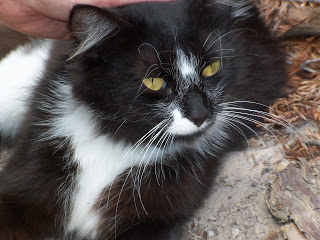
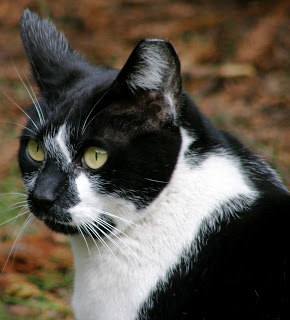
Frankie and Mow have been cat-napped.

On July 10th and again on the 18th, I did blog posts about Mow, previously advertised as strictly an indoor cat, becoming part of the Shelter's "barn cat program."  This does not include an actual barn or any other safe-haven, but that didn't stop the Shelter's director, Sharon Felkins. from evicting Mow and Frankie (an extremely friendly cat) from the Shelter to join the 15 or so cats she has deemed to be feral. Food and water are placed outside for them, but they otherwise fend for themselves in the woods surrounding the Highway 20 facility.

Believe it or not, when Frankie and Mow were discovered missing, the Shelter filed a theft report with the Sheriff's department. This is a small town, but we still have issues with gangs, drug abuse, meth labs, spousal abuse, pot farms, and petty larceny, but apparently that didn't stop law enforcement from giving the disappearance of two 'feral' cats the highest possible priority--starting with a call on one of the Shelter's volunteers, 78 year old, Lizette Weiss. 

Dear Sheriff, For the record, I don't have the cats and don't know who does.

This is a portion of the letter to the editor Lizette wrote.

September 4, I had an unpleasant visit from a sheriff's deputy . . . who accused me of stealing cats from the Humane Society's shelter. His manner was intimidating and threatening. I told him that I knew the two cats in question: Frankie and Mow, both females. I truthfully said I do not know who has the cats. (I) invited him into my home and introduced him to my cat. I also told him it was inhumane to release domestic cats into the (woods) to be preyed upon by . . . wild animals and for them to prey on the birds in the forest. The officer told me he would not stop looking until those cats were found and that the person who stole the cats would go to jail.

I have volunteered at the Shelter for more than a year and a half to socialize cats who are waiting for homes. I have been quite dependable, coming every Monday unless I was ill or out of town. I have told staff about problems I found with the cats (worms, coughs and upper respiratory illness, skin conditions, hairballs and cats throwing up for unknown reasons). 

Since the Humane Society released these cats into the wild, there has been a flurry of letters to the editor on this subject. The e-mail circuit has been kept busy with ideas for making the Humane Society more open to the community and to suggestions for democratizing its operations. This is particularly important since the group receives $2500 a month in taxpayer funds from the City of Fort Bragg, leases public land where the shelter is located for $1 a year, receives City dog license fees, and enjoys many thousands of dollars of donations from the public. The public also supports the organization by shopping at its resale shop -- The Ark.

On September 10, I went to the shelter for my regular stint socializing cats. First I found two dogs running unleashed in the area holding the outside cats' feeding station. So much for taking care of the outside cats, euphemistically called 'barn cats' by the shelter (although there is no barn for them to find safety in). After I signed in, Sharon Felkins, the Humane Society director, told me I was no longer welcome at the shelter and to leave immediately and never come back. I asked her why and she said, "You are a troublemaker."  I also asked her who made that decision and she told me the board of the Humane Society (only one of whom I have ever met) voted unanimously. There is no way to know if this is the case as the staff has a long history of being 'veracity challenged.'

She said she had called the Mendocino Sheriff to report the two outside cats had been stolen and had given them my name and address. I told her that I did not appreciate being called a thief and that she had no right to do so and had overstepped the bounds of normal behavior. One has to wonder why the Sheriff would feel an animal abandoned to its fate in the wild could be 'stolen'.  

I left the shelter when Sharon Felkins (picked up the phone to call) the Mendocino Sheriff to have me forcibly removed. I left for my own health and mental well-being . . . (but) of equal importance, I feel that public safety personnel are a very scarce resource. I feel this resource was being employed in a frivolous manner to assert one person's sense of importance.

The Humane Society, as a 501(c)(3) charity, has a board of directors that currently has 6 regular members four of whom are two married couples. Sharon Felkins and Alberta Cottrell also serve on the board. (It is highly) irregular to have two paid employees serve on a policy board since their work is overseen by the board.  It is like having a boss boss herself. This is a situation that . . . has led to an abuse of power. The board could have a total of eleven 'regular' members which would make it more representative of the area it serves and less like a 'private club.'

The Mendocino Coast Humane society is not a small operation. They reported to the IRS on their 990 form for the year 2010 submitted this past February that they had a total revenue of $477,000 and assets of just under $789,000. For this small community, this is quite a large charity. Yet the Humane Society keeps asserting that it is a private organization and they certainly strive to keep their meetings and deliberations private. As near as observers can tell they have not held a public meeting in more than nine years. When questioned they assert that the last meeting they held, the public complained and criticized (them). You think?!

I wish I had a solution.  I feel sad that the cats, who craved my attention when I visited, no longer have . . . volunteers to pet, groom and play with them.  In good conscience, I could never recommend the shelter as a place to volunteer as it is hostile and unpleasant to spend time there if one is at all sensitive to normal human interactions.  Simple things such as saying "hello" and "thank you" to a visitor are in short supply.  There is no sense of collaboration with the volunteers and woe beware the individual who disagrees with any decision or points out a problem situation.

I could have written about these problems months ago but did not because I know good hearted people are trying to come up with ways to make the Humane Society more humane. Frankly, with the present leadership, I doubt it is possible.

Lizette Weiss
Fort Bragg

(According to the Sheriff's log, animal welfare advocate, Carol Lillis, also received a visit from a Sheriff's deputy on Sept. 4th, but was not home to receive him.)

Mow

In a P.S.
Below is a copy of an email from Sharon Felkins in response to a query about the availability of 3 'feral' cats that the Stanford Inn wants to adopt. Sharon told Carol Lillis, and a second individual who inquired, that the 3 cats were MCHS property and that they were unavailable.  Clearly not understanding why cats living in the woods were unavailable for adoption, Carol contacted a board member who told her that "all MCHS cats indoors and out were available for adoption, and that it was their mission to adopt out animals." When Carol asked for confirmation that the cats were available, she was told by that same board member that she would meet with Sharon on Friday (the 14th) and would confirm by the same afternoon. When Carol didn't hear back, she again emailed to express the Stanford Inn's continued interest in the 3 cats, and was told that those cats, all three--the exact same cats--had been adopted. I (GR speaking) have it on good authority that, as of yesterday, those same three cats are still in the woods. I find it hard to believe that Sharon, and the other board members, carry such animosity toward Carol that they would prefer to let animals, with an opportunity to be adopted, continue to suffer the perils of life in the forest, but that seems to be the case.


This is the final paragraph in Sharon's email to Carol Lillis:
I do not expect, want, or need a reply to this email. There have been too many negative statements made about MCHS that have come from SOS and volunteers of SOS. I think its best that you not plan on being a volunteer at MCHS anymore. Thank you for all you've done and continue to do with SOS.
Sharon
Shelter Director
Mendocino Coast Humane Society

(S.O.S. formerly Support Our Shelter - Mendocino County Animal Care Services Fort Bragg, provided toys, treats, medical care beyond that which the county could provide. After Animal Control closed, they changed their name to SOS - Networking for Mendocino Coast Companion animals. They raised funds for surgery & got a grant to help a dog named Valen in need of a very expensive surgery. Valen had been left in need of surgery for quite some time because funds at MCHS were low and S.O.S was told, there was no money to help him. They also arranged for transport to and from UC Davis. More recently, they raised funds for Dime's surgery as well.)

A Bee Bake

organicconnectmag.com 
I love gee whiz biology--that moment when you discover something amazing that you never knew existed.

Last week a friend in Miami called to tell me that a colony of honey bees had taken over a small storage unit in her garage. We've all heard how threatened honey bees are, and how dire the consequences to our food supply if we lose our best pollinators.
http://vegan.com/blog/2012/04/07/cause-of-honey-bee-die-off-likely-discovered/

My friend has a grandson who is allegeric to beestings, so she started calling to find someone to remove the bees. At every turn she was told the bees would have to be destroyed. "They might be the africanized bees." (I've since checked this out and can find no government mandate requiring the destruction of bee colonies: No federal mandate, no Florida state mandate, nor in anything in Dade County, where she lives. However, that's what she was told.)  She rightfully insisted that if they were Africanized bees, she'd probably be dead. (She opened the storage container, saw the swarm and slammed it shut. That would have been a call to arms for  "killer" bees.)

According to my very reliable source, Africanized bees and the European honey bee (Apis mellifera) are the same species. The difference is in disposition--a zone of tolerance for having their busy work disturbed. The European honey bees (our species is from Europe) have a high tolerance; Africanized have very little.

"They react to disturbances ten times faster than European
honey bees, and will chase a person a quarter of a mile."

However, my friend refused to take the destruction of the bees as an answer; she kept calling and finally found someone to move them to a new home. While he was setting up he told her about how hornets will invade a honey bee hive and wipe it out, biting the heads off the much smaller bees. (There is a YouTube video about everything, but the one I found wasn't very good.) But here's the gee whiz part, I found this video of how some honey bees protect themselves against this kind of invasion. It's totally cool. Enjoy.
http://video.nationalgeographic.com/video/animals/bugs-animals/bees-and-wasps/killer_bee/


 When I was in Baja a few years ago there was a swarm of bees in the bushes on the trail to the camp bathrooms. It looked just like this. In addition, the only source of freshwater for the bees was the sink where we washed up in the morning and brushed our teeth. I was so proud of all of us. We shared the sinks with them, and tolerated each other, and I was lucky enough to see the moment when they suddenly departed.
texasento.net
This is a temporary swarm of bees
A hornet. Note the thread-waist.
Yellow jackets are a species of hornet
Hornet's Nest

And here's an ARE-YOU-KIDDING-ME ARTICLE
http://truth-out.org/news/item/11464-scotts-miracle-gro-to-pay-record-fines-for-poisoning-birds-and-selling-illegal-pesticides#.UE_ZoWV8COI.email

I'm headed out to turn my compost pile.

My Mother's Cat


Between my cat Risty's death and a friend's illness, I've been thinking about grief lately. I wrote this when my mother was sick.
                 
                  My Mother’s Cat
mourningclothes.blogspot.com

I always thought the Pruett women sounded like dreadful people. But my mother, for a reason it took me decades to discover, thought well of them.
            In the mid 1920s, the Pruett women were a curiosity in my mother’s town of Shenandoah, Iowa. They rarely left their house, which was a block from my mother’s on an elm-lined street. The curtains remained drawn in all seasons and only the wind made any use of the swing on the front porch.
            It was the “Roaring ‘20s,” but the Pruett women dressed as if untouched by time. In all the years since Mr. Pruett died, the only change they made from a year of wearing black, was to wearing gray—long, gray dresses with starched white collars buttoned to the throat. They wore their hair in tight buns, concealed by unadorned bonnets. When they left the house, they did so with the mother in the lead and her daughters clamped to her elbows, their heads held high, eyes straight ahead, lips drawn down into fine lines of secret disapproval. They went about their business knotted together so tightly, my mother told me, you couldn’t have split one off with a scalpel.
            I first heard the story of the Pruetts when I started school. There was a beautiful little girl in my class with thick red hair. She already knew her alphabet and could read a little, had both her front teeth and was the teacher’s pet. I didn’t like her and, at 6, found that hiding her crutches before recess compensated for my unremarkable start in first grade. Our teacher called my mother and Momma rolled out the Pruetts.
            The little girl had polio, she told me, and though she wore braces on both legs, she needed crutches. While I was growing up whole and normal and ignorant of the alphabet, this poor girl was confined to a bed with nothing better to do than practice her letters. From now on, she scolded, I was never to tease, or make fun, or do anything to make life more difficult for anyone. Think of the poor Pruetts, she said, it might have been just one person’s unkindness, one act of cruelty that caused the Pruett women to withdraw. They may have closed out the world, not because they really wanted to be isolated, but because hiding was preferable to risking the pain of exposure. I was never, she warned me, to be the one who caused a heart to slam shut.
            When I was 22, the boy I was in love with died in a plane crash. For the next three months, I left my apartment only to go to work. I stopped answering the phone calls of friends trying to lure me out, and ate canned Franco American spaghetti every night for dinner.
            Grief is a good thing, my mother said, if it helps heal the heartbreak, but if you are going to use it to become a martyr, then you need a bun and a bonnet and starch in your collars.
            When my mother was a girl in Shenandoah, people walked after Sunday supper, talked to their neighbors, and exchanged niceties. But when they passed the Pruetts’ house, they fell silent, and their eyes were drawn to the curtained windows and empty swing as if they might glimpse an unguarded moment: see the mother take a pie from the oven, spy a daughter at a dresser brushing her hair.
            On one such Sunday, my grandparents and my mother came out for their walk to find a crowd had gathered on the sidewalk in front of the Pruetts’.
            The mother and her two daughters were in their front yard. The older daughter was at the bottom of their porch steps next to a freshly dug mound of dirt. Her hair, long and full and blond, had come loose from its bun and hung over her shoulders and down the front of her dress, which was stained at the knees with dirt. She held a spade at her side. The other arm was thrown across her eyes.
            The mother and the younger daughter were on their knees by the mound. The daughter’s hands covered her eyes and she wept loudly. Her mother had crumpled into a gray heap, as if she’d been crushed and cast beside the pile of dirt. Her wispy gray hair hung in long thin strands.
            My mother and her parents joined the gape-mouthed neighbors at the edge of the Pruetts’ yard. My mother said, Mrs. Pruett saw them first, straightened and composed herself enough to pull her youngest daughter close and smooth her hair, then turned, her face glistening in the afternoon light. “It’s our cat,” Mrs. Pruett said, lifting her hands, palms up to the gathered congregation. “It’s our cat,” she sobbed.
            The neighbors nodded, bowed their heads, and went away. After that day, the people of Shenandoah spoke when they saw the Pruetts out. And the Pruetts began to respond.
            My mother told me this story long before my boyfriend died, before I’d had any experience with grief. She explained that Mrs. Pruett asked her neighbors to understand, and they did. Their loss was personal; grief is universal.  
I was in my forties, when my mother was diagnosed with breast cancer. She still managed to laugh occasionally, get her hair done, and play bridge with her friends, but I could see in her eyes, she thought only of the cancer.
            “Try not to think about it, Momma,” I said one day when she forgot what she was saying and stared off into space. “Think of other things.”
            She looked at me, tears welling in her eyes, and took my hand. “Try to understand, honey, this is my cat.”
petside.com

The Hospice Cat


Oscar the Cat
southerncrossreview.org

This is Oscar, nicknamed the Hospice Cat. He was adopted by the medical staff as a kitten and his home ever since has been on the third floor of the nursing home with the dementia patients at the Steere House Nursing Center in Providence, Rhode Island. Oscar isn't necessarily a very friendly cat; he bit a doctor and often hisses at patients he passes in the hall, but he is such a reliable predictor of a patient's imminent passing that the nursing staff will call in the family when they find Oscar curled up in bed with a patient. Born in 2005, Oscar had accurately predicted 25 deaths by the time he was 2.
 
From an article by Catharine Paddock
in the Medical News Today
"Dr. Joan Teno of Brown University, who is experienced at treating terminally ill patients, said that Oscar can predict who is going to die more accurately than the staff.
She became convinced of Oscar's "skill" while treating a patient who had stopped eating, was breathing erratically and her legs had started to look blue. She thought the patient was near death. But although Oscar called in to see her, he did not stay in the room.

As Teno later found out, that was 10 hours before the patient actually died, and the nurses told her that Oscar came back to sit with the dying patient 2 hours before she finally passed away. This was Oscar's 13th accurate prediction.

There is a commendation wall plaque at the nursing home, awarded to Oscar by a local hospice agency. The plaque reads: "For his compassionate hospice care, this plaque is awarded to Oscar the Cat."
 
"A Day in the Life of Oscar the Cat."
David M. Dosa.
NEJM Volume 357:328-329, July 26, 2007, Number 4

Click here to read the Article.
 
While researching this, I discovered this book written by Dr. Dosa.
Making Rounds With Oscar: The Extraordinary Gift of an Ordinary Cat, written by Dosa, an assistant professor of medicine and community health at Brown’s Warren Alpert Medical School, was published by Hyperion 2010. The book recounts the stories of families who got to know Oscar and his unique ability. Dosa hopes that in reading Oscar’s story, readers also will learn more about terminal dementia and end-of-life care.


The Reptilian Brain

There are two species of alligators: the American alligator and the Chinese alligator, neither species is endowed with what one would call superior intelligent. Neither are the owners of this cat.


           I grew up in Florida. We lived on a lake, swam in that lake, saw alligators in that lake--even witnessed a fight between two large male alligators. What we were smart enough never to do was feed the alligators, or let our dogs swim in the lake without someone watching for 'gators.
           Alligator are poikilothermic (cold-blooded) which means their body temperature is at the mercy of their surroundings. On cold nights, alligators stay underwater because water loses heat to the atmosphere slowly. When the air warms up, and the sun is out, gators sunbath. People mistakenly assume these large, lumbering, groggy-looking reptiles are too slow to be dangerous. Far from it. Gators are capable of alarming bursts of speed. Their main prey of small (cat-sized) animals, which they can kill and eat in a single bite, are taken in split second lunges.     

cuteanimals4you.com

           In a behavior called the 'death roll,' large prey are grabbed, and dragged under water. The gator then spins, twisting off bite-sized chunks.  
           From Wikipedia:
"Most of the muscle in an alligator's jaw evolved to bite and grip prey. The muscles that close the jaws are exceptionally powerful, but the muscles for opening their jaws are comparatively weak. As a result, an adult human can hold an alligator's jaws shut barehanded. It is common today to use several wraps of duct tape to prevent an adult alligator from opening its jaws when handled or transported. Alligators are generally timid towards humans and tend to walk or swim away if one approaches. In the state of Florida, it is illegal to feed wild alligators at any time. If fed, the alligators will eventually lose their fear of humans and will learn to associate humans with food, thereby becoming a greater danger to people."
         The laughing, happy owners of this tourist attraction are feeding the alligators which will eventually lead to the killing of this cat. You can see in the second video how close these kids are to the gators. Like any good, suspenseful monster movie, it's likely that at some point, when these gators are larger and totally unafraid of humans, a customer will be snatched off this Louisana mudback and experience, first hand, albeit briefly, the death roll.         

What I Really Think


Max

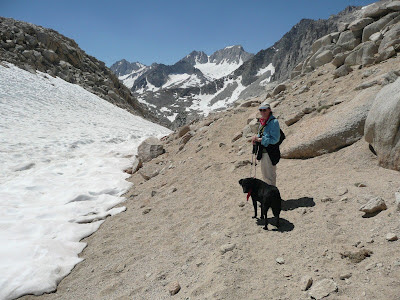
I spent last week with friends at Mammoth Lakes on the eastern side of the California Sierra mountains. While they were on daily hikes, I stayed at the cabin and worked on rewriting one of my many unpublished novels. (If nothing I’m an optimist.)
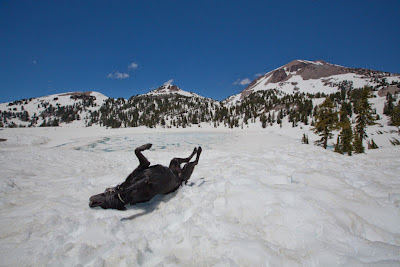
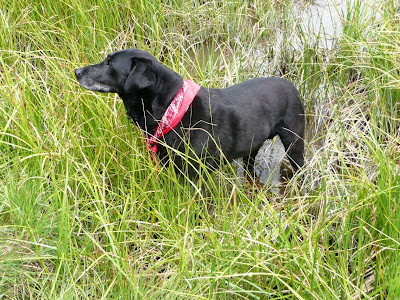
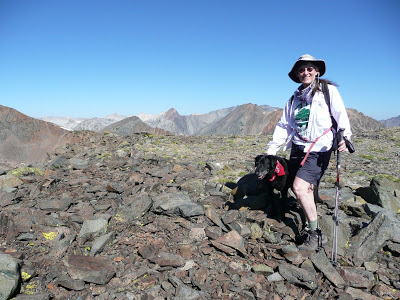
        My friend, Teresa, is Max’s mom. I’m his aunt. Max is the 14 year old black lab mix she adopted as a puppy from our local Humane Society—where he was one of a litter of 11 abandoned by their owner. We call him Max the Mountain dog because next to swimming he loves hiking. Swimming in a mountain lake is the best of both worlds.
        It was while Teresa, Max, and our two other friends were off hiking a 12,000 foot peak that I heard about the Anthony Joseph Ortolani, who abandoned his four-year-old German Shepard, Missy, at 14,000 feet on a mountain in Colorado. According to the statement he made, a storm was approaching, raising concerns for his own safety and the safety of his teen-aged hiking partner. Since his dog's paws were too injured to make it back down the mountain, he left her. Once off the mountain, he did call for help, but was told they didn’t do animal rescues, and since he needed to get back to work, he wrote her off.
       Mr. Ortolani is being charged with animal cruelty. When he has his day in court, I hope someone asks the first question that occurred to me: at what altitude did this fool realize his dog’s paws were cut and bleeding? When did he first notice she was limping—9,000 ft, 10,000 ft? At what point, before reaching his goal, were there indications that she was having trouble. And how exactly did Missy manage to get to 14,000 feet but no further? And what idiot climbs a 14,000 ft. mountain without checking the weather, as my friends did every morning before setting out.
        Eight days after Anthony Joseph Ortolani was safely, snugly back home, a pair of hikers found Missy. They managed to do what Mr. Ortolani never attempted beyond his initial call for help, they organized a successful rescue attempt and brought the dehydrated, starving Missy off the mountain.
        I tried to imagine under what circumstances Teresa would have abandoned Max. Then I tried to imagine Max leaving Teresa. Never would either of them abandon the other. What breaks my heart is the picture in my head of Missy, day after day, watching the spot where she last saw Anthony Ortolani and continuing to trust--until she was nearly dead--that the person she loved would come back for her.
        Mr. Ortolani has apologized and wants Missy back. The guy who took NO for an answer and left his dog to die of thirst on a 14000 ft mountain, needs to take NO for an answer again. He may have had a legitimate reason for leaving her there, but there is no excuse on earth for deserting her.
       Dogs are full of all the attributes we credit to a higher power: love, devotion, trust, forgiveness. I'm sure Missy would forgive him. Which makes her more humane than Anthony Joseph Ortolani will ever be.
Bringing Missy down the mountain
abclocal.go.com

"People always joke that ‘dog’ spells ‘god’ backwards. They should consider that this might it be the higher power coming down to see just how well they do, what kind of people they are. The animals are right here . . . in front of us. And how we treat these companions is a test." Linda Blair

 
Facebook.com

It just so happens there is a bill before the California state senate. SB 1500 by Senator Ted Lieu re: Seized and Abandoned Animals. Support.
   Amends procedures in the process of dealing with seized/abandoned animals to be sure the “owner” can properly care for the animal and pay the costs of being held at the animal control shelter.
   Hearing: Governor Jerry Brown.
   Write: Tell him abused/abandoned animals should not be returned to their “owners” but, if so, they must pay for their care in the animal shelters and assure the animals’ well being.
 Governor Jerry Brown and Legislators: State Capitol Building, Sacramento, CA 95814


Max enjoying a roll in the snow


Max hiking with his mom


When he's not a mountain dog, he's a water dog.


Max and Teresa last week at Virginia Lake Pass
about 12,000 feet


 If having a soul means being able to feel love and loyalty and gratitude, then animals are better off than a lot of humans. James Herriot

The Couch-potato is home from the mountains

Hi All,
I'm home from Mammoth Lakes, CA, where I was NOT hiking. I spent my mini-vacation in our cabin rewriting a novel while my friends hiked into thin air. I considered the air quite thin enough inside the cabin at 8300 feet. I'll come back to that in a few days.
Meanwhile, back in my former sea level (and below) home state of Florida, the largest python ever found was captured.  

Can you imagine, this is the old record
I need a couple of days to get back in the groove. Enjoy the autopsy.

Memories of a Couch-potato

This couch-potato has been watching the Olympics every night, reliving my own meager accomplishments on my high school swimming team where my highest level of achievement was 3rd in the County in the 200 IM. 
           I was also the second of our team's two divers. Emoke Papp was our 'star' diver. Her father, a Hungarian boxer, defected during the 1956 Olympics. Emoke always took 1st place in our diving competitions and I consistently took 3rd, because none of the other teams had a second diver. My job was to get off the diving board without killing myself, or anyone else.
           For me the highlight of Olympics was watching Oscar Pistorius, the South African runner with two prosthetic legs. He was successful in his bid to compete in this year’s—what shall we call them—able-bodied Olympics versus the Paralympics for less able-bodied athletes? Or differently-abled—a category this 3rd-place diver fell into. Anyway, in 2007, the International Association of Athletics Federations, banned Pistorius from competing in able-bodied competitions after tests showed the Cheetah blades allowed him to expend less energy than his two-legged counterparts. In fact, the blades make it harder to get off the starting blocks negating any advantage they give him. 
            Personally, I found myself on the very edge of my recliner when he ran in the qualifying round and again in the semi-finals. I was disappointed that he didn’t make it through to the finals, but he was out there giving it his all and I was there for him. I’d love to see the Paralympics be part of the Olympics, right there in prime time, instead of separate, a sometime later and ‘lesser’ series of events.
            Watching him reminded me of my second attempt at writing--a piece about a wheelchair-bound marathoner. This one was published as a real news story with a picture and a byline, unlike like my first, which was published as an editorial comment. I was living in Coconut Grove, Florida, at the time.
            Of course I kept a copy, and didn't resist the urge to noodle it a bit.
                                                                                             
The applause and shouts of the spectators reached a sufficient volume to finish any thought of further sleep, so with a cup of coffee in hand, I stood on my balcony to watch the stream of Orange Bowl marathoners pass below.
            Most of the runners, especially those early ones, were young men, followed eventually by a few women and a half dozen wheelchair participants.
            A heavy-set, elderly man, his sweater stretched tightly across his ample waist, stood on the curb with the other fans and cheered loudly for every runner who passed, but his attention always returned to watching the corner of Tigertail where the runners made the turn on to Mary Street. I found myself waiting anxiously for whoever he was waiting for. Every runner got his full attention before he'd leaned to look up the street again. The ranks were thinning, and it seemed the last of the runners were passing, but he continued to clap and whistle. When he turned from cheering for the next series of stragglers, a young man in the wheelchair was nearly abreast of him.
            “All right, Billy,“ he shouted, and leapt into the air like a man half his weight and age. “All right, son,” he said, softly.
            For a short distance, he ran along the sidewalk, dodging spectators, shouting encouragement as his boy rounded the corner on to Grand Avenue. Unable to keep up, he pounded to a stop, raised his hand in the air, then made a fist, the downward momentum of which spun him around. He was panting and laughing.
            I couldn’t see where the race ended from my apartment, but I doubt a big deal was made of Billy crossing the finish line. I also can’t imagine that it mattered to him or his dad.

veryvietnam.com

Oscar the Cat
theinternetpetvet.com

Dolphin Tail
Winter

thehandiestone.typepad.com

Riley
  I'll be offline for about 10 days, so
here's wishing you cool breezes.

A First Anniversary note about Friendship

On July 31st of last year I posted this picture by Mike Owyang, and launched Ginny's Friends. Frankly, I couldn't think of anything else to call a blog I let a friend talk me into starting. Over the ensuing months I've thought about changing the name to something like All They Need is Love, or WritingWrongs, or holding a contest for a title. But really, as mundane and uninformative as the title Ginny's Friends is, it is accurate. Since the first real post on August 7th 2011, over 20,000 pairs of eyes have read what I've had to say. That is true friendship.

What I had in mind when I started this was to give kids, who've written beautiful, heart-felt e-mails about the impact of my books on their lives, a place to continue to express themselves. A few have, but I forgot that kids move on. So while I was waiting for the next volunteer, I started filling in the gaps, always with the goal of somehow making a difference--no matter how small.

As a little thank you for your loyalty, I hope you enjoy some of my favorite pictures of friendships.

My friend Briza's dog, Trigger. She went to get a dachshund and came home with a Great Dane who couldn't keep any food down, and was going to be put to sleep. The puppy, who nearly died of Parvo, has a dream of her own.


Tanya & Brent's rescued greyhound Jenny with Needles,
who was a stray.

Not sure where I got this, but it's too wonderful not to pass on.

                           
Speaking of making small changes, this is a TED video.
Giles Duley gave up life as a fashion photographer to document the stories of the forgotten. He tells us of lives lost and found -- including his own. Watch now >>


If I had an Animal Diary, this is where it would begin.


Butch
Last week, when my 19 year-old cat, Risty, was dying, I got to ticking off blocks of time measured in pets. Butch, a wired-haired fox terrier, was my parents' dog before I was born, but he became mine. 

Though Butch was my daily companion from the time I learned to walk, only two times with him are still stark and clear--the story that follows and the day he died. That day, he ran up our front porch steps ahead of me and collapsed in a spreading circle of his own urine. It was the early 50s, and either my Midwestern parents didn't know about Florida mosquitoes and heart-worms, or there was no preventive treatment back then. I'll never know, but Butch was my first pet to die, and in my first decade of life.

At the time this portion of my memoir takes place, we lived in Maitland, FL (north of Orlando.) The Eatonville cemetery separated our rental house from one of the first all-Black towns to be formed after the Emancipation Proclamation in 1863, and was incorporated on August 15, 1887. Zora Neale Hurston grew up there. (Wikipedia) http://en.wikipedia.org/wiki/Eatonville,_Florida
.
My Dad w/ Butch on the back of his chair


Butch and my mother


It was dark and Daddy wasn’t home.
Our radio was next to the bread box, and I sat on the kitchen stool waiting for The Shadow to start.
“Who knows what evil lurks in the hearts of men.”
I lowered the volume when the scary laugh started, and reached to switch on the stove light. I felt braver with a little light. With my elbows on the counter, and my chin on my fist, I leaned as close as I could to hear with the volume so low. Momma promised to kill me if I started the baby crying again. She’d been upstairs for an hour walking the floor with Kristin.
I turned the radio off after the show ended and, for a moment, the only noise was the clock on the stove ticking, then Butch, my dog, sat up to scratch a flea, ringing his tags. He and I heard the crying at the same time. I thought it was Kristin starting up again, but Butch growled.
            “Shhhh.”
Someone was sobbing.
            Butch growled again, and I followed the sound of his toenails clicking across the kitchen linoleum out onto the back porch. My parent’s bedroom was directly overhead so I thought it was Momma crying. She always used to get upset and panicky when Daddy was late coming home.
            I stood next to the washing machine, and looked up as if I could see her through the ceiling. Butch went to the door, whined and scratched like he did when he wanted out. I had my hand on the handle, when I saw something move on the other side of the screen. Someone was sitting on the back step. My heart thumpity, thumped as I put my arms around Butch’s neck and pulled him away from the door. Whoever was there was shapeless against the glow that came from our landlord’s porch light.  
Butch broke away and pressed his nose to the screen.
            “I needs help.” It was a colored lady’s voice.
           
“Momma?” The door to Kristin’s and my room was closed. I opened it a crack. The hinges creaked.
            “Jesus, Ginny.” Momma hissed from the darkness. “What is it?”
I heard her groan as she got up, then a sliver of her face appeared in the crack.
            “There’s a colored lady crying on the back step,” I whispered.
            Momma flung the door wide. “What?”
            “She says she needs help.”
            “Oh my God. Did you lock the door?”
            “Lock what door?”
            “The kitchen door and check the front one, too. Oh my God.” She glanced back at Kristin in her crib, pulled the door closed, and ran on tiptoes to hers and Daddy’s bedroom. “Go,” she snapped at me, then disappeared into their dark room.
            “Please help me,” I heard the woman say, as I shut and locked the kitchen door, then ran through the dining room, across the living room and locked the door that opened onto the front porch.
            Behind me the stairs creaked, and I jumped nearly out of my skin. It was Momma, and she had Daddy’s 38 pistol.
            “Are you going to shoot her?”
            “Don’t be a fool, Ginny, and turn off those lamps. We’re like fish in bowl with all the lights on.”
            I darted from lamp to lamp while Momma crept down the hallway toward the downstairs bathroom. There was a window in there that looked out on the back steps. I tiptoed after her, with Butch behind me, toenails clicking on the pine floor.
            “Should I call Mr. Durham?”
            “What could that old fool do besides get himself knifed?”
            “You think she wants to kill us?”
            “She could be a decoy, trying to lure us out of the house.”
            “For what?”
            “I don’t know. To rob us.”
            “Momma, if there was someone with her, they coulda just come on in. The back door was open and the screen’s not hooked.”
            Momma shushed me, and opened the bathroom window. “What do you want?”
            “Don’t want no trouble, ma’am,” the woman said. “I just needs help. He done broke my arm this time.”
            “I can’t help you. I’m sorry.”
            “Could you call my sister to come get me? She live just down the road.”
            “Yes. I can do that.” Momma waved me out of the room, and down the hall, then called out the number while I dialed it.
Nearly everyone had a party line, but we didn’t. Momma refused to live this far out in the country without a private line when she was pregnant with Kristin. The same was not true for the colored lady’s sister. It took me four tries to get through.
            “Lordy, I was afraid this was gonna happen,” her sister said. “Whereabouts is she?”
            “She’s crying on our porch steps.”
            “And where might those steps be?”
            “We’re the white family on the other side of yall’s cemetery.”
            “Well ain’t you fine people to help. I’ll send brother right down to fetch her.”
            “I’ll tell Momma.” I started to hang up.
            “He’ll be walking,” I heard her say. “So it will take some time.”
            “I’ll tell her,” I said.
            “Can sister walk back, you think?
            “It’s her arm that’s broke; I’ll have to go ask about her legs.” I put the receiver on the table and skipped down the hall.
            Momma was sitting on the toilet seat with the side of her head against the wall. The gun lay on the floor by her right foot. I stepped up on the side of the tub. “Lady,” I whispered, trying not to wake Momma. “Your sister wants to know if your legs are okay? Can you walk back home with your brother when he comes?”
            “I’ll try,” she said.
            I tiptoed back to the phone, and told her sister.
The phone was on a table under the stairs. From where I stood I could see the lake out the front windows, and a car’s headlights coming along the road. We had the only house at this end of the lake, beside the Durham’s. People wanting to go into the town of Eatonville, which was a half mile to our south, didn’t come this way. Our road was dirt; the main road into Eatonville came in from Winter Park and was paved. Even though there was only the colored cemetery between us and Eatonville, our address was Maitland. Momma made sure of that.
Daddy’s car whizzed by the turn off to our garage. Out the dining room window, I saw his brake lights as he stopped the car, reversed and backed up. He turned in, just missing the grapefruit tree and followed the two ruts into the garage. I went through the kitchen, and unlocked the back door. I wanted to see his expression when he found the colored lady sitting on the step. I pulled the string to turn on the light bulb in the porch ceiling. It shone right through the screen onto the back steps. She was gone. 
Daddy had half our backyard to cross as he wove toward the steps. He shaded his eyes against the light. “Is that you, Ginny?”
“Shhhhh, Daddy. You’ll wake the baby.”
He lifted an index finger and waggled it through the air until he found his lips to press it against. “Don’t wake the baby,” he said.
“Did you see the colored lady?”
He stopped. “What colored lady?” He swayed and squinted at the light. 
I wondered if maybe he ran over her out on the road when a floorboard creaked and I turned. Momma was behind me watching Daddy with her arms crossed, the gun in her apron pocket.
I remember thinking ‘poor Daddy.’ But then I was only seven. The tampering with my love for my father was still incomplete.  


Me w/ severely permed hair & Mom, Dad & Butch


I heard from dozens of you that you signed that petition, and I was especially happy to hear from some of "my kids" who remember Sukari, and continue to speak out against the ongoing abuse of chimpanzees.

The Writers Conference is going well. Today is the last day. If I still have a pulse, I'll find something uplifting to write about next week. Meanwhile, here are a couple pictures from Ron LeValley. You know what a fan I am.

Black-footed Albatross by Ron LeValley
Here's an albatross coming in to land behind the boat.


Black-footed Albatross by Ron LeValley
 When albatross come in to land on the water, they use their feet as air brakes.
This photograph was taken offshore from Fort Bragg, Mendocino County, California on July 15, 2012. The camera was a Canon EOS 7D with Canon 300mm f4 lens
To get on Ron's List to receive a free natural history Picture of the Day in your e-mail, go to http://www.levalleyphoto.com/gallery/omw.php
Check out http://www.levalleyphoto.com/gallery/ archived OMW photos!

The Rockville 15

I don't do this often, but you know how near and dear the subject of chimpanzees in labratories are to my heart. Here's an opportunity to stop the continued torture of 15 chimps, which are now at the New Iberia Research Center in Louisana, an institution under investigation by the United States Department of Agriculture for an incident in which the decomposing bodies of three monkeys were found trapped in a metal chute. In addition, between 2000 and 2008, 14 infant chimpanzees died as a result of traumatic injury at New Iberia.
Please sign this petition the Director, National Institutes of Health (NIH) (Francis S. Collins, M.D., Ph.D.,)
Ginny

Started by: Elizabeth, Washington, District Of Columbia
We request that you use the considerable influence of the National Institutes of Health (NIH) to ensure that the fifteen young chimpanzees used at BIOQUAL, Inc., in Rockville, Md., are released to a sanctuary.

We request the 11 chimpanzees, who were leased by NIH and housed a BIOQUAL, until recently to be transferred from New Iberia Research Center, Louisiana, to Sanctuary and the four remaining chimpanzees (Loretta, Ricky, Tiffany and Torian), being housed at BIOQUAL, Inc, be transferred directly to sanctuary.

These chimpanzees, collectively known as the Rockville 15, range in age from just 2 to 7 years old and were likely born in violation of NIH's own 1995 breeding moratorium.

Considering that they are unnecessary for human health research, as detailed in the recent Institute of Medicine report, they should be released to sanctuary where it is cheaper for you to house them, and a much better environment for these chimpanzees to live. Why condemn these intelligent beings to lives of misery when scientists have clearly stated the benefits of alternative research models?

They must not live out their days in a laboratory that has repeatedly violated the Animal Welfare Act.

We ask you to please ensure that the Rockville 15 are retired to a sanctuary immediately.

You can also check out other popular petitions on Change.org by clicking here.

My death watch for Risty


Risty with her little brother, Blue

The Mendocino Coast Writers conference starts on Thursday and the committee is in a whirl. I've spent the weekend on a death watch. My 19 year old cat is dying--gently--the way she lived.  She caught one bird in her life --by accident. It landed right in front of her, and she let it go when I told her no.

Risty was one of three kittens found living under a dumpster outside Papa Birds (locals remember PBs!) in Mendocino. A woman trapped all 3, and I gave them a home. Risty is the last.

About 6 or 7 years ago, I lost her the first time. That was also during the Writers conference and Suzanne Byerley, co-director of the conference with me, was in town for our final event together. While she was here, Risty disappeared. I searched and called, checked with Animal Control and the Humane society, but the days ticked by, then the weeks. She'd been gone for 50 days when I heard her come through the cat door. I didn't move, afraid to frighten her away but as soon as she saw me standing there, she began to purr. (She weighed only 5 pounds.)
  
Six or eight months ago, she put her right eye out. I have no idea how, and we tried to save it, but in the end it had to be removed.

Today, we sat first in the sun, then in the shade. I reminded her of her life: how she played with twin fawns, made friends with a wild turkey, and loved to stalk Gilbert, the Canada goose I raised. I told her how much I've loved her, and that her sisters are waiting. She'd been lying very still, which tricked me into thinking the end was near. I went inside for some cream cheese, her favorite thing and, though she can barely walk, when I came out she'd vanished. She's done this every day since taking this turn last Thursday, only to show up again in the evening. This time I saw where she was headed and tried to follow, but her trail is no more than a tunnel through the sword ferns, and the terrain is almost perpendicular to the creek below. I got as far as the first of two downed trees and had to turn around.

On one level, I'm afraid tonight she won't come back. I wonder if that's where Halley went to die four years ago. It is where I found Gooey's body. Perhaps I was right to tell her they are waiting.

I don't have any pictures of Risty when she was young. Back then I only took slides, and I don't have a way to convert them. Here she is, elderly and decayed, missing an eye, deaf as a post. and sincerely loved.


Postscript: July 23rd.
I had dozens of emails this morning, kind, caring, loving notes. I can't tell you what that means. I'm not going to make you sit this watch with me, so I'll just let you know that she's still here. She climbed back up from the creek. I found her lying in a patch of late afternoon sun, and carried her into the house. She even ate a bite or two, then slept in my arms for the next three hours. I put her on her heating pad around 11, then woke at 2 and came downstairs to check on her. This morning she is still mobile.

I am going to have to have the carpets shampooed. For a week, she's managed to get to the side of the sandbox, but not in it. I put down plastic sheeting and lots of newspapers. Now she gets as far as the doorway to the room with the sandbox. Life's best investment, when you have pets, is a portable carpet shampooer.

I got this note from Carol Lillis:
"... an extended finger of cream cheese, a head that looks then slowly turns away. Memories of happy times, then bracing oneself for what the end of life may look like. And then an hour of renewal and appetite. I call this the NIGHT OF THE LIVING DEAD SYNDROME, when our little friends die a thousand deaths, only to pop up and live again. (Finally) when they use up 13 of their 9 lives, they offer false hope and that is when they often choose to die. Maybe it's a lesson for us to remember, life is just a series of moments, and any one of them can be our last. What matters is that we, like lucky cats, find our way into into open hearts and arms that love, support, nourish and accept us for who and what we are. And that our final hours are blessed with the kind of friends we are to our cats."

I don't know why this is centering the text against my express wishes.
I don't plan updates. There is such hideous stuff going on in the world--larger scale and small scale losses. Mine, in the scheme of things, is very small, which makes all the kind messages more meaningful. I found this quote to share. You, my friends, live up completely to these standards.

Animals are reliable, many full of love, true to their affections, predictable in their actions, grateful and loyal. Difficult standards for people to live up to.
Alfred A. Montapert.
July 25th

Thank you all for your kind emails. Risty passed yesterday afternoon, the 24th. It was an overcast day. She tried to go outside, but when she saw there was no sun to lie in, I think that kind of did it for her. I'm lucky I was able to spend these last 4 days entirely with her. Now all I have to do is figure out how much to feed 3 cats with Risty's voracious appetite missing from the mix. And there's all that cream cheese.


TNR Part 2


Frankie
My mother was a self-proclaimed coward. She refused to stay alone in our house in Winter Park, Florida, for even a single night. When my sister and I were little and Daddy was traveling, she’d hire someone to come spend every night that he was gone. It’s not like we lived in a high crime area. There was no crime in the 1950s. Besides we had guns in the house, which Momma knew how to use, and we had Karlo, our German Shepard.
            When Daddy died in 1985, my mother moved out of their home of 34 years within 72 hours. She’d been planning for this eventuality, and had been looking at apartments in a residential care facility--which my father called equivalent to an outside cell at Sing Sing--in downtown Orlando.
             T
o be out of the house before I had to return to work in Miami, she moved at lightning speed. The day before Daddy’s funeral, she purchased the apartment, and called the movers. She packed the necessities, while I focused on what to do with her pets: two small dogs, and two cats, none of which were permitted to go with her.
Jamie was a Yorkshire terrier, and Sydney was a Silky. The vet she’d gone to for years, kept them kenneled free of charge and found homes for both within two weeks—though not together as they’d always been. The cats were a different story. Both were feral when Momma started feeding them but eventually became tame enough to live in the house. By this time, they were adult cats, who adored my mother, but were shy around other people.
            I lived in a no-pets-allowed apartment building in Miami, and my sister was expecting her second child. The Humane Society was our only recourse.
            To be honest, I didn’t have the emotional wherewithal to give the fate of those cats a lot of thought. It was the Humane Society. Built into the name was the assumption they were humane. All I remember is my mother let her fear of staying alone completely overwhelm the love she had for her animals, something I swore never to let happen to me.
            There’s a reason this memory has surfaced.
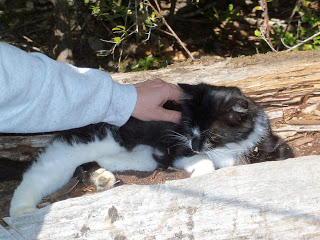
            Last week I wrote about our local Humane Society releasing cats into the woods that surround the Shelter. Following that editorial, I interviewed someone who was there the day the two specifically named cats, Mow and Frankie, were ‘freed.’

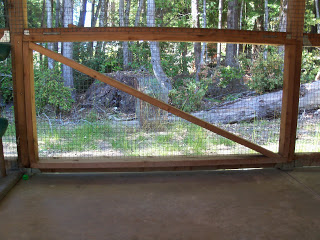
The hinged screened panel
Approx. 3 X 6 feet
Both sides of the Kitty Cottage have huge hinged screened panels, which aren’t noticeable unless you are looking for them (and a curious feature for an indoor cat facility.) The plan to remove Mow and Frankie had evidently been decided long before the actual night they were released, since each had the tip of one ear removed, marking them as feral cats, and those wounds had healed.
The night the Director (I was told it was Sharon’s decision) decided to release them, they were isolated from the other cats, their collars and tags were removed, the screen door was propped open, and staff left for the night. The person I interviewed was the last to leave and he/she (gender left a mystery to protect this person from retribution) stopped by to check on Frankie, one of his/her favorites. Both cats were still inside, as was a third cat, which was hiding in one of the dome-covered sandboxes. This cat was wearing its collar and tags. I asked if he/she considering closing the hatch when she/he realized there was a third cat. The interviewee answered, no. The decision had been made and volunteers who wished to continue working with the animals did not go against the Director’s decisions.
            The next morning, Frankie and Mow were outside. The third cat--a short-haired, gray and white--was also gone—completely gone, as in missing. It is not among the growing outside cat population.
            This week the Board of the Humane Society submitted a rebuttal to my comment. This is a single paragraph from that rebuttal:

“The cat Frankie was allowed to make a choice—to live in the Kitty Cottage or live outside: Frankie is doing well outside. Our staff will continue to monitor and care for her as they do for all our barn (my emphasis) cats on a daily basis. This includes medical care throughout their life (sic) by our veterinarian.”
           
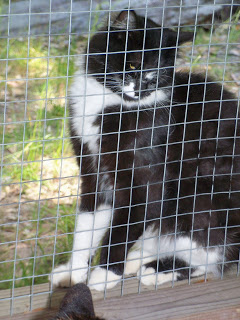
To administer medical attention to the 11 to 15 cats that are now living in the woods, the vet would have to shoot most of them with a tranquilizer gun. In the two weeks since this situation came to my attention, Mow, who was not mentioned in the rebuttal, has become unapproachable, but Frankie, whom they claim “likes to be petted by her friends, but is fearful of others” comes running when visitors stop by, and lets herself be tickled and picked up. There was no mention of Mow in the rebuttal for good reason.
            Commitment number 2, in the MCHS's Summer 2012 newsletter states: “Finds Homes for Family Pets When the Unforseen (sic) Happens.” And on page 2: “We never give up on the animals in our care.”
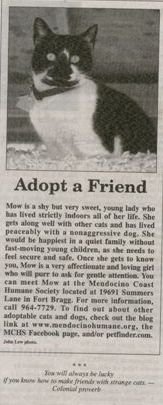
            My recent interview uncovered another detail. I knew Mow was one of the adoptable cats featured in our local paper, but what I didn’t know when I wrote the comment, which is also my July 10th blog post, was that Mow was given up for adoption by her owner.
            That’s when the memory of trying to do the best I could for my mother’s animals came back. Think how heartbroken Mow’s owner must have been when forced to give up her pet. How would any of us feel when we put our trust an organization, which claims to ‘never give up on the animals in our care’, only to discover they have given up on our pet, the one raised from a kitten to live its life safely inside? This is the cat, who on March 1st was advertised as a sweet, young lady, a strictly inside animal, but in June was ‘freed’ to live, hiding in a log and terrified—for as long as she manages to survive in the forest surrounding the Shelter. 
                        

MOW by Frankie Kangas
note the clipped ear


Mow on March 1, 2012
 

Connie Korbel, editor of the Fort Bragg Advocate News and the Mendocino Beacon has invited your comments. advocatenews@mcn.org

Frankie visiting friends on the inside
Frankie getting a tickle from a stranger

What We Leave Behind

 
Rhododendron occidentale
tjhsst.edu
is the only native azalea that grows naturally
west of the Rocky Mountains in the United States

Someone said the 3 Bs of inspiration are Bed, Bath, and Bus. I sleep with a pen and pad by my bed; for an inspirational quick fix, I soak in the bathtub. For a leg up on a novel, I prefer a train to a bus.            
      
Another quick fix is watering my plants. Yesterday it was my poor pitiful native azalea, Rhododendron occidentale. It’s been in the ground for about 15 years, has never bloomed, and is leggy.
           
In the wild they grow in riparian areas, tolerate sandy soil and periodic flooding. I planted the poor thing in my clay-based soil and, when I think about it, supplement winter rains with a good soaking.  
           
The blooms can be white, with a yellow petal, the buds are a coral color—not that I’ve ever seen one on my plant. They are deciduous and smell heavenly.
         
When I brought the azalea home 15 years ago, I planted it near a red alder, another riparian species. Over the next decade the azalea languished and the alder grew and grew. Clumps of sword fern took hold in semi-circle around them, and eventually dwarfed the azalea.
           
Last year I had the alder taken out, only to have wild onions invade and cover every square inch of exposed soil. I spent hours digging them up, one tiny bulb at a time. I cut back the sword ferns, mulched and fertilized the azalea, and watered it all through our dry summer. This year the onions were back with a vengeance, but the azalea also has new growth. The leaves are green and supple. There are no flowers, but for the first time, I’m hopeful.
           
While I watered, I remembered all the care I’ve taken to keep it going. I don’t think there is another plant in the yard, I’ve held as high hopes for which reminded me of house-hunting 22 years ago.
           
Thirty-two years ago, I discovered and fell in love with the Mendocino Coast. From that brief visit on, my goal was to live here. I took an early retirement from my airline job, went to graduate school, and used one of my last free passes to fly out and look for a house. 
           
I created a rating guide for each place the real estate agent showed me. I assigned stars for places based on whether they possessed what I considered most important: trees, the ocean, a lake, pond or creek, a view, a garden, and remoteness from neighbors. What the house itself looked like was way down the list. I didn’t care as much about what I lived in as what I would be surrounded by.
           
One of our stops was a house near Pudding Creek. It was a plain little place, well inside my price range. This was late June so, although the yard was full of large robust rhododendrons, none were in bloom.      
           
An old man met us at the door. Inside was dimly lit, so it took a minute for my eyes to adjust, and to see his wife lying on the couch. She was pale and clearly quite ill. She’d lain there for some time, I guessed, since the sofa was made up with a sheet, pillows and blankets.
           
I nodded and she nodded, then her husband showed us through the house, often with his hand on a wall for balance. It was a small, tidy, dull little house, full of family pictures, dated furniture and assorted mementos. It wasn’t going to get more than a single star: too close to its neighbors, not enough trees, no to-die-for view, but I muttered ‘nice, isn’t this lovely,’ at each doorway.
           
After the tour, the old man led me to a stool at the kitchen counter, turned on a little lamp and opened a photo album.
           
“I . . .,” he said, and corrected to “we have 26 species of rhododendrons.” The pictures were of each species in full bloom: pinks, purples, reds, and whites.
           
I thought my heart would break.
           
This old couple had reached the end of their time together in the home they’d shared for 50 years. She was going into hospice, he into a nursing facility, and the house to a stranger. He wanted me to appreciate all the care and love they’d put into their rhodies, the only truly priceless things they had to pass on to the next owner. I looked at every picture, and when I got back to the realtor’s car, I started to cry.
           
Even if I had loved that house, if it had scored five stars, I don’t think I could have bought it. I didn’t want to be the one who made them move out, and away from their flowers.
           
I remembered all this while watering my poor azalea. I looked around. In the 21 years I’ve lived here, I’ve protected every tree, removing only 4—a dead bishop pine, two Doug firs to make room for an addition, and that alder. The forest that surrounds me is virtually intact. And I realize I was wrong: that old man wanted to sell to someone who would love his rhodies the way he had, and I would have been that person. I hope that whoever comes after me will love this forest, filled—at that very moment with the song of a winter wren—and will take care of my azalea.
           

My 15 year old azalea


tjhsst.edu
Some day