Is TNR TMI?

TNR is Trap Neuter and Release. Last week I wrote an editorial comment for our local paper about our local Humane Society shelter's program of TNR. This will be the longest post I've ever done, which may be the TMI --too-much-information part.

Cat eating bird
ABC
GIMME SHELTER

 
Late Monday afternoon, a friend and I went out to the Mendocino Coast Humane Society to photograph the “feral” cats that they have been releasing from the shelter. Coincidentally, Monday’s mail contained the MCHS’ fundraising newsletter with their mission statement printed boldly at the top of the first page. It reads: “—we are here (to find) secure, loving and permanent homes for the homeless pets in our community.”
For a community the size of ours, we should be proud of our Mendocino Coast Humane Society (MCHS). The main facility is nice and the “Kitty Cottage,” which I saw for the first time on Monday, is truly beautiful.
            I’m always saddened by the plight of animals, especially those at our mercy, so I was there after-hours with an ulterior motive. Friends in this community, who have dedicated their time and a great deal of their financial resources to help stray and deserted animals, alerted me to the fact that as good as our shelter is, it has a policy related to abandoned cats that I find appalling.
            Also from their newsletter: “We are a No Kill Shelter. We provide shelter and food for all medically treatable animals for as long as it takes to find them a loving home.”
Apparently, there a few holes in this policy.
            It has been creditably rumored that to maintain this no kill policy, animals deemed un-adoptable are routinely transported to a kill facility—like animal control. I understand this on one level. Some animals have been so abused and traumatized by their relationship with humans that we’ve destroyed any chance of successful rehabilitation.
            I said “creditably rumored” because our Humane Society is a secretive, closed-door, autocratic organization. However, since they are licensed by the city and get some of their funding from the city (our taxes) they are required to hold one public meeting a year. The last one was over nine years ago. Their Board goes to great lengths to keep out anyone who doesn’t agree with their policies—including volunteers, some of whom are routinely threatened with denied access if they dare to raise concerns.
 I am not a volunteer, and have had limited, but very negative experiences with their policy-makers. Most of my encounters have been with staff, and research-related. Those times, the Shelter Director and Board member, has always been helpful, and appears dedicated to her job of many years.
As a city licensed, publicly-funded, 501(c)(3), non-profit facility, the community served by the Humane Society has a right—and an obligation—to know what is going on with regard to their “Barn cat” program—which, by letting nature take its course, is another way of keeping their no kill numbers at a minimum.
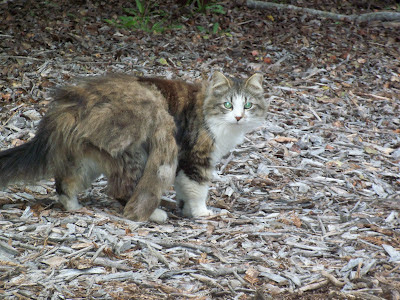
  Cats deemed feral are routinely released into the woods that surround the facility. These cats are first kept in the Kitty Cottage to bond them to the location, then set “free.” One of the cats, Mow, was recently advertised in the Fort Bragg Advocate (3/1/12) as “a very sweet young lady who has lived strictly indoors all her life.”  This “strictly indoor” cat is now living in the woods with the tip of an ear cut off, the shelter’s way of marking a feral cat.
            A week ago, I sent out an e-mail about the release of Frankie, a cat advertised in a March 2011 “Take Me Home” flyer, as “a handsome 1 year old boy who has overcome his shyness as a kitten to become a really friendly feline.” Frankie was adopted as a barn cat but was seen killing birds. He was returned to the shelter and subsequently “set free.” I’ve gotten a couple of responses to that email informing me that Frankie is happier outside at the shelter. Perhaps he is, but that isn’t the issue. There is an excellent facility in Sonoma County called Forgotten Felines. They deal almost exclusively with feral cats. (As does the national organization, Alley Cat Allies.) Here is how Forgotten Felines defines feral:
  • Total Feral: A wild cat with no previous human contact or only negative contact.
  • Semi-Feral: A shy or fearful cat that has had some positive human contact.
  • Converted Feral: An abandoned domestic cat that has reverted to semi-feral behavior.
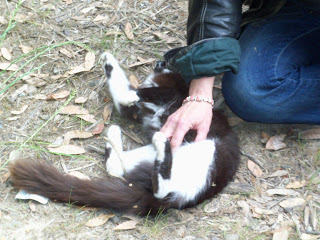
Monday afternoon, when my friend and I arrived at the shelter, two cats came running. We could pet them, pick them up, and tickle their bellies. There was nothing feral about either of them.
From the parking lot, we walked around the Kitty Cottage. Other cats appeared: some were indeed too frightened to approach—which made me wonder if this was result of conversion to feral from living in the wild where, out of necessity, their survival instincts take over and they become hyper-vigilant.

Overall, I counted eight cats. Three were untouchable, but five came close enough (4 to 6 feet) to receive a treat, and three of those (including Frankie) let my friend pick them up and tickle their bellies.
At the back of the Kitty Cottage, we found food and water—guaranteed to attract raccoons, possums, and skunks if left uneaten. (Since staff had gone home and we were there until nearly , it’s unlikely that it all gets eaten before nightfall.) This is also means that once their vaccinations expire, these cats are exposed to diseases including rabies.
            Mow, the cat advertised as adoptable in the paper on 3/1/12 was not approachable, but stayed nearby. This population will, over time, live up to the tag the shelter has given them. In the meantime, they are living in a diminishing habitat. They are killing the wildlife and, in time, the wildlife will kill them.
            MCHS is calling this is a “barn cat” program, but there is no barn, or any other way for these cats to get out of the elements, or escape predators.
            The larger issue remains: who is making the decision to release these cats, and what guidelines are they following? Of course there are cats that can never live with a family, or are inappropriate house pets, but there are other recourses beyond opening up the Kitty Cottage door and shooing them into the woods.
            Cats are territorial. Problems can arise when a new cat is introduced to an existing colony. A new cat can find itself picked on by the other members of the colony, or the new addition can pick on an older cat and chase it from the territory.
            While researching this article, I had a long and informative conversation with a representative at Forgotten Felines. On their website are guidelines for successfully turning an un-adoptable cat into a barn cat. There are protocols for this but it means keeping the cat in a cage in the barn for a month before releasing it. (All that information is out there, if the Board and staff of MCHS didn’t bristle at suggestions from outsiders.)
            Another suggestion from FF was to fund-raise for fencing. Releasing un-adoptable cats into an outside sanctuary would be okay, if they were truly inappropriate for adoption, and were released into a space safe secure from predators. If the Humane Society pursued that option, they might well set the gold standard for dealing with truly un-adoptable cats.
            The MCHS needs a more transparent governing body with an open mind to help from the community, and someone able to tell the difference between a frightened cat and feral cat. The cats might all, with a proper chance, become wonderful pets, good barn cats, or at the very least, live out their lives in a safe environment.


The Challenge (from the American Bird Conservancy website)
There is no question that birds are better off when cats stay indoors. Exact numbers are unknown, but scientists estimate that every year in the United States alone, cats kill hundreds of millions of birds, and more than a billion small mammals, including rabbits, squirrels, and chipmunks. Feline predators include both domestic cats that spend time outdoors and stray cats that live in the wild, sometimes as part of a colony.

Life for outdoor cats is risky. They can get hit by cars; attacked by dogs, other cats, coyotes or wildlife; contract fatal diseases, such as rabies, feline distemper, or feline immunodeficiency virus; get lost, stolen, or poisoned; or suffer during severe weather conditions. Outdoor cats lead considerably shorter lives on average than cats kept exclusively indoors.

Free-roaming and feral cats also pose a health hazard to humans from the spread of diseases such as rabies and toxoplasmosis. In April 2010, the Volusia County Health Department in Florida issued a rabies alert for 60 days following two unprovoked attacks on humans by feral cats within a month. Two cats had tested positive for rabies in the area. The CDC states that “Unvaccinated dogs, cats, and ferrets exposed to a rabid animal should be euthanized immediately.” Even in ‘managed’ colonies all cats cannot always be vaccinated, and infected animals may be even harder to catch in a timely manner before they infect other animals or humans.

This interesting American Bird Conservancy video was filmed in my old stomping ground. My husband has a house at Ocean Reef, and I was on the Board of  the Tropical Audubon Society when I lived in Miami. GR

There are a many companies that supply kits for building outdoor enclosures for cats.
This is just one of them. http://www.purrfectfence.com/

This is Mow, originally advertised as
"strictly a housecat"
This is Frankie, returned to the Shelter for killing birds, deemed unadoptable,
and released into the woods behind the Shelter

I don't know the name of this cat, but the 'dreadlock'
hanging from her side will eventually
come off leaving an open wound on her side.

“Holding this soft, small living creature in my lap this way. . . and seeing how it slept with complete trust in me, I felt a warm rush in my chest. I put my hand on the cat's chest and felt his heart beating. The pulse was faint and fast, but his heart, like mine, was ticking off the time allotted to his small body with all the restless earnestness of my own.” Haruki Murakami

“I hated cats. I was a dog lover," Des says with a shrug. "What's the point of a cat? They're not affectionate. But that's because it's not my cat. I mean, your wife wouldn't jump on my lap. That's because she's your wife, not mine. Until you have your own cat, you really don't understand.”
Rescue Ink, Rescue Ink: How Ten Guys Saved Countless Dogs and Cats, Twelve Horses, Five Pigs, One Duck,and a Few Turtles


Igor celebrates 25 years of safety

Shirley McGreal, directory of the International Primate Protection League, did my first guest blog back in August 2011. Shirley was instrumental in helping me when I first started researching Hurt Go Happy, and has been working to save primates from research facilities, protect them in their natural habitat, and conduct investigations into illegal trafficking in primates for decades. The IPPL is headquartered and operates a sanctuary in Summerville, SC. Shirley sent this beautiful story by Jim Tatum. I thought you might enjoy it.


By Jim Tatum
Summerville Journal Scene ®
Published Thursday, July 05, 2012 3:54 PM

 
Igor, the oldest and most popular Gibbon in residence at the International Primate Protection League’s sanctuary in Summerville, recently celebrated a happy milestone – his 25th anniversary of coming to the sanctuary.

From more than two decades of lonely, abusive existence to a life of peace, contentment and worldwide popularity is a long, rough road.

But Igor, the oldest and most popular Gibbon in residence at the International Primate Protection League’s sanctuary in Summerville has successfully made the journey -- with a little help from a lot of friends.


IPPL


IPPL recently celebrated a happy milestone in Igor’s life: his 25th anniversary of coming to the sanctuary. To look at Igor, one would not be able to guess either his age or the circumstances of his former life. He’s gentle but a little guarded, meticulous and deliberate in his movements, but still possessed of the poetic grace with which gibbons are so gifted.

Yet a look into those liquid brown eyes belies a peace hard fought and well earned from sheer survival of living in hell for more than two decades.

READ THE FULL STORY

Please visit the International Primate Protection League website

IPPL on a rare snowy morning


Dr. Shirley McGreal

"Recognize your phylogeny. You are a Great Ape. We're more related to gorillas than most warblers are to each other."

Audrey Schulman; Three Weeks in December; Europa; 2012.

Quick word from our sponsor: I'm so honored


christinaspets.com

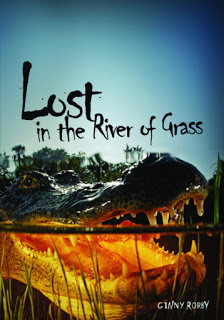
 Lost in the River of Grass is the book of the month selection
for this 900 member group on Goodreads.


YA Reads for Teachers (And Any Other Adults!)


For the entire month of July, I will be answering questions (and telling the true story) about stealing my husband's adventure and giving it to Sarah and Andy. I hope you will pop in occasionally during the month.
 
pbs.org
 

Guest Blog: Buster Brown by Natalie

When I started this blog 11 months ago, I envisioned stories like this one, sent by the kids who've written to tell me about their pets. This one is from Natalie, who is 13 and will be entering the 8th grade in the fall. I hope it will encourage the more reticent. GR
Buster Brown

Buster Brown is my sweet, 13 year old, dun fjord/welsh mix (we think). Together we do eventing but both really love to jump! He's come a long way since the Buster my mother bought when he was 6 for my sister. Buster couldn't be a sweeter, or better, pony! 

My family bought him from a horse dealer who had bought him from a cattle farm where he lived with the cows. He was green (inexperienced) and stubborn but my sister brought him up well, (teaching) him all he knows. Jumping was just a blast for him from the start! I think he too loves the feeling of flight that comes with it! Dressage, on the other hand, is still hard coming because of his squat pony body (I do love your figure, Buster) but we try and still love it.

Natalie and Buster


We have changed each other, for sure. I know that I am a far better person because he is always there for me and I believe he is a better pony because I am always there for him. He lives on our property with our retired appaloosa mare, Calypso. The two are such a sweet pair! My sister has ridden many horses, learning a little from each, but Buster Brown taught her the most of them all, as he did for me, too. Through all of the heartache of gaining then loosing so many horses, he and Calypso haven't budged and seem to offer all they (can) to help us and make us feel better. Sometimes, I will stand beside him and he will lick my hand like a really big dog for what seem like long stretches of time (honestly, it's probably just until he decides that there's more salt in the salt block then on my hands). Nonetheless, it always cheers me up! So, for always, he will be my little man!

Calypso
Buster Brown


Moment of Nature by Mike Petherick


Big do'ins at the zoo! Last night Penelope Skunk moved her 4 down into the canyon (we think and hope) and Rosey Raccoon brought us a treat--her kit. She seems to have only one. High mortality of these little ones from other critters, including male raccoons. Rosey immediately covered her/him when she thought the skunk was threatening. Skunk was headed down into the tunnel when Rosey was coming up. 

by Mike Petherick

I've been working on a story about our local Humane Society under a bit of a deadline. I will share it when it's finished. In the meantime, enjoy the moment of nature from the Mendocino Coast. GR

Guest Blog by Katy Pye

Learning Acceptance by Example

Ginny’s blog piece about the gay-bashing video struck a deep chord. Bigots hate by dividing a person into irrelevant parts of genetic coding, like skin color or sexual nature. Parts unrelated to the quality and life of the person carrying the DNA. The only counter to mob hatred is the truth, often one example for one child at a time.
Ed and Bob
1947

I’m the product of a 58-year, gay union between my father’s brother, Ed, and his partner, Bob. While not our parents, “The Uncles” loved my brother and me as if we were their own children.

My parents were physicians but they never talked about sex. Nor about Uncle Ed and Uncle Bob living together, year after year. If their relationship, or what it implied, bothered my conservative parents, they never said. We were family. Inclusion was a value.

We celebrated family birthdays and Thanksgivings, chorused, “Christmas gift!” as my uncles disembarked in our driveway each Christmas Eve. My brother and I stayed with them in San Francisco once-a-year, delighted by exotic charms of the big city: toy shopping on Union Square, dinners in Chinatown, classical music, Grace Cathedral for Sunday service, rides in the Fairmont Hotel’s glass elevator with its stunning views. Dull for today’s kids, but it was a chance for us to be special and safely away from home.

When Ed and Bob grew up there was no “Out and Proud.” Gays and lesbians lived quietly and carefully. Ed was almost 80 when the dam broke and he came out to his sister, then the rest of us. He and I collected the family’s history. My uncles’ lives bulge the files, but there is little about being gay. Living openly was BIG for Ed and I was proud of his coming out and their new activism. He and I talked about his sexuality, but more important was their model of love and commitment.

The gay backlash my uncles faced was from the ignorant and socially frightened. Early in Bob’s psychiatric career, his boss announced he and Ed must live separately so any scandal in their lives wouldn’t reflect back on the institution. I’m not alone in claiming shy, gracious Bob rarely said an unkind word to, or about, anyone. He told his boss to, “go to hell, ” and retired 30 years later, an honored and beloved emeritus professor and director of Clinical Services within U.C. San Francisco’s Medical School.

During World War II, Ed knew being outed meant dishonorable discharge and an end to his career in social work. His first, post-war job, ironically, was with the Veteran’s Administration, counseling emotionally damaged soldiers. In the late 1950s, he pioneered state legislation, securing short and long-term support for struggling parents and their developmentally disabled children. For eleven years he was their advocate as the first director of San Francisco’s Golden Gate Regional Center. When he retired, his involvement in the Episcopal church kept him busy. He started a one-stop-shop at Grace Cathedral, helping the elderly navigate confusing government programs. He devised weekly, senior-centered markets where children from the Cathedral boys’ school sold bread and produce to local elders, some of whom had no family.

In the mid 1980s, Bob and Ed applied for an apartment in a San Francisco retirement home. They were rejected. No one used the word “gay,” but two men living together wasn’t allowed. They were turned down twice by an Episcopal home in a nearby city for the same reason.
           
            “What happens if you split up?” they were asked.
            “What happens when any couple splits up?” they answered.


Bob gardening at the nursing home

{Eventually accepted}they became the home’s first gay couple. Initially, shunned by some, Ed and Bob did what they’d always done--be themselves. They gave parties, inviting singles, couples, the whole darn building at times. Bob’s green thumb transformed the dull garden outside the large dining room windows so, three meals-a-day, everyone looked out on beauty and life. He gave tours and wrote in the newsletter about what was growing, volunteered to take care of residents’ plants when they went on vacation, even diagnose ailing greenery. Ed joined the home’s boards, rousting residents out of complacency. He helped start the first LGBT, low-income, retirement home in San Francisco, giving the “non-straight” elderly a decent place to spend their declining years. When Bob fell victim to Alzheimer’s in the early 2000s, he and Ed helped the hospital unit be more responsive to these patients’ needs.

Uncle Ed & Katy
Uncle Bob passed away in 2005 and in 2010 Uncle Ed created The Pye/Harris Legacy Project to continue funding their interests in the environment, developmentally disabled minors, and the gay and lesbian community. The first project is a set of four “Coming Out” films, each a series of interviews by gay and lesbian students with gay and lesbian elders. The purpose is to “reassure young, gay people they are not alone and that living with pride and dignity creates a powerful political statement.” The pilot film, “Coming Out in the 1950s,” (http://pyeharrisproject.org/) premiered to acclaim at the Frameline Film Festival in 2011. DVDs and a teacher/counselor curriculum were distributed to 130 middle grade and high schools throughout California.

Pye/Harris Legacy Project: http://pyeharrisproject.org/ 
THIS IS SO WORTH WATCHING / GR

A month ago, I sat by my Uncle Ed’s side as we eased toward his death and the end of 62 years, accepting and celebrating who they were, and we were as a family.

Hyperlinks to use or not:


California’s Regional Centers: http://arcanet.org/regional-centers.html

OpenHouse-LGBT senior resources and housing project: http://openhouse-sf.org/


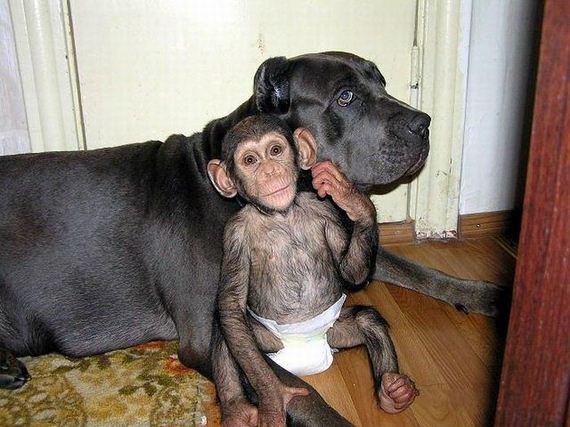
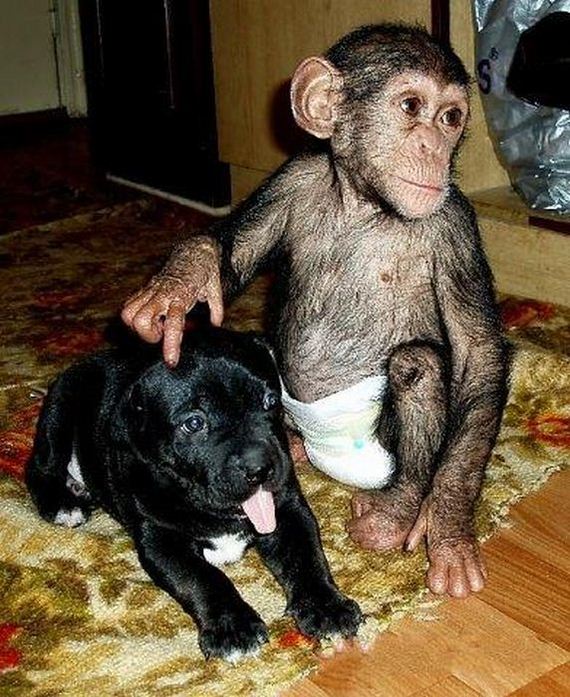
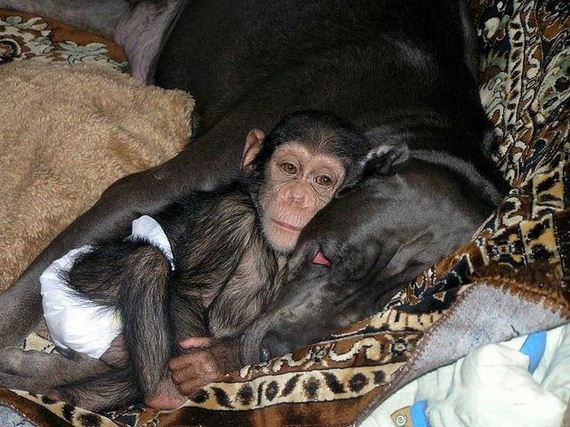
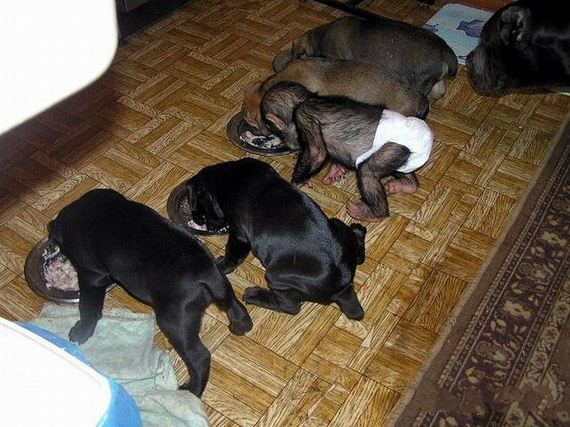
Baby chimp adopted

I'm sure some of you have seen these pictures but if you haven't I consider your life incomplete.

B692

B692B692

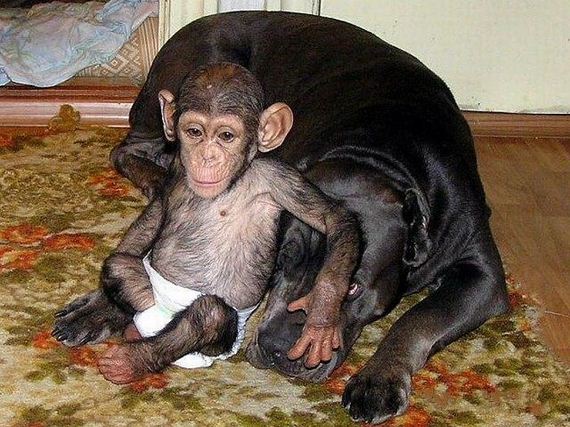
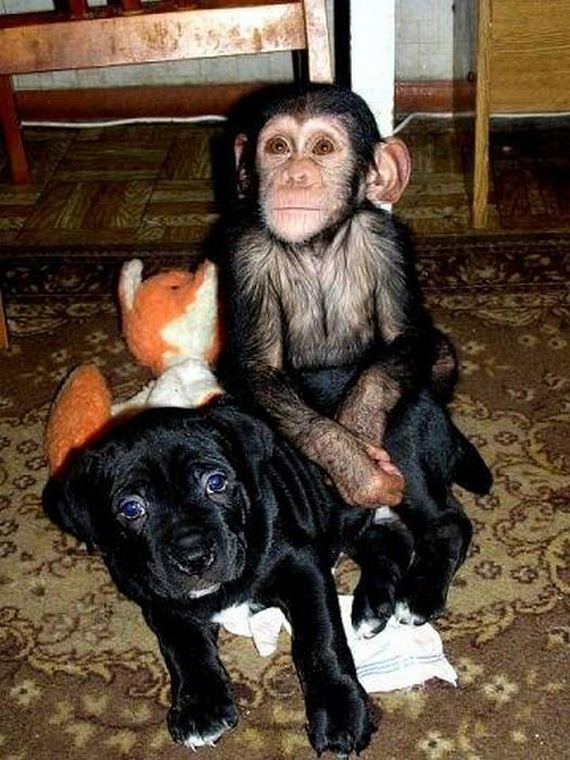
This baby chimp, born in a Russian zoo, was taken home to be raised by one of the keepers after its mother died, (or in a different version of the story, she abandoned her infant.) The keeper's mastiff had recently given birth and adopted the baby chimpanzee, too. 

(I will say the world needs another baby chimp born in captivity like it needs a hole in the ozone. . . however these pictures make it a better place.)

B692chimpanzee mastiff dog friends 23 A baby chimpanzee is adopted by a Mastiff dog    Amazing (25 Photos)

B692B692
B692
Thanks, Chet and Sherri

Cat Love


I'm home from a lovely, relaxing week at my friend's 'cabin' near Yosemite. My computer is all clean, virus-free and happy.

The cats only threw up twice on the carpet I had shampooed two weeks ago, but they left me a half eaten rat to let me know they were sorry, or maybe was it to welcome me home. At least that's how I plan to interpret it. They could just as easily mean, 'leave us again and it will be a disemboweled possum.'


 This link is to a blog post I did for my friend Norma Watkins. She's the author of the prize winning memoir, The Last Resort.


Adorable children singing in church: What could be wrong with that picture?


I grew up in the segregated south, the daughter of parents who believed whole-heartedly in the separation of the races. If this video used the n-word instead of "homo," there would hell to pay. There should be hell to pay.


I'm sure these whooping, cheering and hollering adults consider themselves Good Christians when, of course, they are neither .


Beyond our ideas of right-doing and wrong-doing,
there is a field. I'll meet you there.
When the soul lies down in that grass,
the world is too full to talk about.
Ideas, language, even the phrase 'each other' doesn't make sense
any more.

Mevlana Rumi
1207-1273

POST SCRIPT
You can go to YouTube by following this link, subscribe, then flag this video as offensive. They say they review daily, so if enough people complain, perhaps they will remove it. I'm actually torn between having it removed, or letting it stay and hope it creates a backlash.
http://www.youtube.com/watch?v=ZA22WSVlCZ4&feature=player_embedded 


The Bible contain 6 admonishments to homosexuals and 362 to heterosexuals. That doesn't mean that God doesn't love heterosexuals. It's just that they need more supervision. ~ Lynn Lavner

Homosexuality is god's way of insuring that the truly gifted aren't burdened with children.  ~Sam Austin

You could move.  ~Abigail Van Buren, "Dear Abby," in response to a reader who complained that a gay couple was moving in across the street and wanted to know what he could do to improve the quality of the neighborhood


War.  Rape.  Murder.  Poverty.  Equal rights for gays.  Guess which one the Southern Baptist Convention is protesting?  ~The Value of Families

What is straight?  A line can be straight, or a street, but the human heart, oh, no, it's curved like a road through mountains.  ~Tennessee Williams, A Streetcar Named Desire, 1947

Odd couples


mfnmac053.naturkundemuseum-berlin.de
See the crab's eye stalks?

One of the first classes I took when I went back to school was Biology 101. That was 1978, and I still remember how the professor opened the class. He told a gee-whiz biology story, and I’ve been hooked ever since.

It was an example of a symbiotic relationship between two unrelated organisms—in this case a hermit crab and a sea anemone. A symbiotic relationship is one that is often, but not always beneficial to each organism. Sea anemones, which are related to coral and sea fans, are usually found attached to rocks. Hermit crabs, on the other hand, scuttle about wearing someone else’s abandoned shell.

itsnature.org

Sidebar:
ocean.nationalgeographic.com
 A Symbiotic relationship is a close association of animals or plants of different species that is often, but not always, of mutual benefit

Mutualism advantageous relationship between species: a relationship between two organisms of different species that benefits both and harms neither. For example, lichens are a fungus and an alga living in mutualism: The fungus provides a protective structure, and the alga produces a carbohydrate as food for the fungus. The relationship between the hermit crab and the sea anemone is likely mutualism.
 .
Commensalism is symbiosis between unrelated organisms: the relationship between organisms of two different species in which one derives food or other benefits from the association while the other remains unharmed and unaffected.

Sea anemones are named after the terrestrial flower because they look like flowers, but they are meat eating animals. Anemones have a central mouth surrounded by tentacles with stinging cells, called nematocysts, that entangle and paralyze small marine animals that drift into reach of its tentacles. They do have some mobility, moving a few inches an hour.

My professor told how the hermit crab, using its little pinchers, teases an anemone off a rock, then lifts and places it on its shell. It needs to be gentle and careful not to arouse the anemones defenses.(I think there is a YouTube of everything. I couldn't believe I found this one of an anemone eating a hermit crab.) http://www.youtube.com/watch?v=by1S-kZ4gN4 

AND
another of a hermit crab acquiring an anemone

Once suitably situated, my professor told us, the hermit crab feeds itself by plucking bits and pieces of this and that from the rocks, but every so often, it tosses a little something up to the anemone. A true symbiotic relationship: the hermit crab wears a hat of stinging tentacles; the sea anemone gets fed on a regular basis. And who knows, maybe it enjoys the faster pace, waving its tentacles joyfully at its grounded cousins as its busy little ride trundles about.

Phylum: Cnidaria
Class: Anthozoa
Order: Actiniaria


Postscript: I have to take my computer in for maintenance and will be offline for a week or so.

Clyde's Story

The school year is ending and I'm lucky enough to still be doing 2 or 3 classroom interviews a week. (Lucky because Hurt Go Happy was published in 2006--a long life for any book.) The calls come from teachers around the country who continue to teach it in their classrooms. This morning's call came from Ms. Romeika's 4th grade class in Pennsylvania. One of the questions asked during the hour we were on the phone was do I still like chimpanzees? I told them about this blog, and that if it were up to me every story would include either a chimpanzee, a horse, or a dolphin. Of course, it is up to me, but after awhile, who would read it?
Clyde's home
for 40 years


However, since you asked . . . I've been saving Clyde's story. This was sent by Patti Ragan, Executive Director of The Center for Great Apes in Wauchula, FL. http://www.centerforgreatapes.org/

"It's hard to believe that chimpanzees are kept in such horrid conditions, but last week we rescued a 44-year-old male who has lived in an indoor dungeon-type cage in the Midwest for decades.

"We heard about Clyde a couple years ago, but did not know much about his owner or his situation until the owner himself, a man in his 80s, asked us to take him to our sanctuary. We agreed, and with the help of our colleague April Truitt and her husband Clay Miller of Primate Rescue Center, Clyde was moved to Wauchula last week.  

"Clyde is skin and bones. His cheeks are so sunken in that they are hollow. With very little muscle and no fat on his legs, you just see bones and tendons when he walks. Clyde is covered with bedsores, and every protruding bone where he sits or lies down has a large sore on it. And, a surprising thing is that after spending four decades indoors in a very small garage cage, his skin is mostly white. . .

 
"When our staff carried his shipping crate into our quarantine area, he was calm, almost motionless. For a long time he wouldn’t come out of the crate into the bigger nighthouse area. When he finally did, we saw that he was very shaky and could not walk well.

"The next day, we opened the door to the outside enclosure, and he slowly came out and sat for a long time before he walked unsteadily around the small area. He tried to climb up on a shelf, but could not do it. 


"Only one week here now, we have started to see changes in Clyde. He is fed 5 small meals a day, being careful not to overdo it with his starvation condition. He is beginning to walk with a little more fluidity, and he allows the staff to put ointment on his sores. Our maintenance team built staircases for Clyde so he can now walk up the stairs to get on the shelf and lie on a thick bed of blankets.
  
 
"We are finding Clyde sweet and intelligent, and his eyes are beginning to show a little more life and interest in his surroundings. In fact, just a few days ago, he “head-bobbed” to the caregiver (a sign of play) and put a blanket over his head while he kept bobbing. This was momentous for us! 

"Not since we rescued Linus, the orangutan, have I seen a great ape in such deplorable condition, but miracles happened for Linus, and I believe they can for Clyde, too. With a change of diet & nutrition… and with physical therapy, sunshine, and lots of patience Clyde can experience peace, dignity, contentment, and better health for however many years he has left." Patti Ragan

 To read more about Clyde and Linus and the other apes at the Center for Great Apes, follow this link
http://www.centerforgreatapes.org/
 

Clyde making a nest


a nap in the sun
 End note from Ginny. Clyde was a wild-caught chimpanzee. A question I often get during these interviews is would I like to own a chimpanzee? I did not hear that question from Ms. Romeika's students, which means they understood why I wrote Hurt Go Happy, and the suffering owning a chimpanzee would cause the chiimpanzee.

Postscript:
Lost in the River of Grass is the July selection for  http://www.goodreads.com/group/show/19451.YA_Reads_for_Teachers_And_Any_Other_Adults_
to join and get in on the free book drawing, please follow this link. I'm honored.

Sneezing Monkey et al

Sneezing Monkey
Rhinopithecus strykeri


Carl Linnaeus, the Swedish botanist responsible for the modern system of naming and classifying plants and animals, is often called the Father of Taxonomy. In his lifetime, Linnaeus, who would be 315 years old, named some 10,000 organisms. Modern scientists believe a good estimate of the number of living species on the planet to 12 million--give or take. We have identified about 2 million, and discover only about 18,000 new species every year. At that rate is will take another 500 years to find them all.   

One of this year's discoveries was the Sneezing Monkey in northeast Myanmar . . "(It) has a nose so upturned that the animals sneeze audibly when it rains. To avoid inhaling water, the monkeys supposedly sit with their heads tucked between their knees on drizzly days."

Another of this year's discoveries was a fungus that looks like a sponge. You can't say scientists don't have a sense of humor. They named it Spongbob Square Pants Fungus.  "It belongs to the family of Boli fungi that have pores instead of gills under the caps of the mushrooms. But this one looks very much like a sponge, both macroscopically and microscopically." (From an interview with Quentin Wheeler, an entomologist at Arizona State University and directs the Species Exploration Institute.)

Spongebob Squarepants Fungus
Spongiforma squarepantsii
(Photo: Thomas Bruns)


 The Bonaire Banded Box Jelly
Tamoya ohboya.
(Photo: Ned Deloach)

Then there is this gorgeous box jelly which is unfortunately as toxic and venomous as it is beautiful. Apparently they found out the hard way and gave it the name Tamoya ohboya. O Boy Ya!

WOOD CHIP SCULPTURES

 A friend sent this to me, and since I've been out of town for the last few days and have over 130 e-mails to deal with, I'm stealing the story.

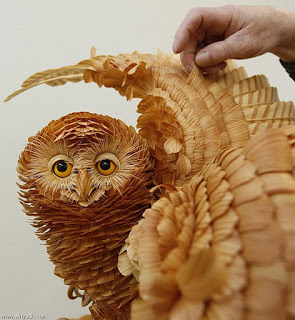
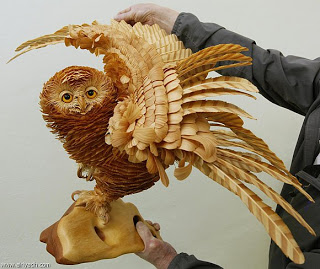
Sergei Bobkov, 53, has patented a unique technique for creating sculptures out of Siberian cedar wood chips.    
    
“It’s not very interesting to do what others can. To create something out of nothing in a completely new way is far more inspiring.” This is how Sergei Bobkov explains the unique form of art that he created. He says many people compare his artworks to taxidermy, because they both look so much like the animals they replicate, but Sergei believes they are as different as light and darkness. Whereas taxidermy is all about death, his wood-chip art symbolizes life.

     This resident of Kozhany , Russia , has developed his very own technique that prevents wood-chips from falling apart in time. After creating about 100-150 chips, from 2-3 inch long cedar stick, he puts them in water for several days. Then, making use of his surgical precision, he carves the chips into any shape he needs.

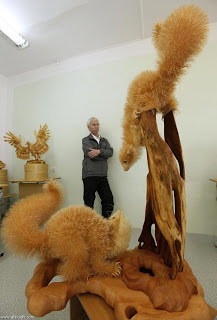
     Sergey has been doing this for some time now, but he has only created 11 wood-chip sculptures. That’s because just one of these incredible artworks takes around six months to complete, at a work rate of 10 to 12 hours a day, with no days off.  Sergei Bobkov focuses on wildlife creatures, and he studies their anatomy for months before starting work on a sculpture.

     Even though he was offered $17,000 for his wood-chip eagle, Sergei’s Bobkov declined, saying his art is not for sale.


Guest Blogger: Nona Smith


Missy


Point, Counterpoint

Karma, kismet, destiny, they say there’s no escaping it. I believe that’s true. My name is Missy Cat and here is my story.
 My brother and I were born in a shelter in Ft. Bragg, California.  Our mother, the slut, abandoned us at a tender age to start a new life of her own, leaving us to fend for ourselves.  Some experts believe that birth order is everything, and I’m the older sister. Which turned out to be a good thing for my brother because I’m the responsible, affectionate and patient one. And lord knows, he required patience.
But I was also a kitten in my own right, all girly- girl feminine with long fur, pale blue eyes, and the loudest purr you’d ever want to hear. And smart.  I’m very smart. Always have been. Especially in comparison to (nod of the head) you-know-who.  

Buster


I guess she’s talking about me. My name is Buster (middle name The) Cat. It wasn’t always so.  I started life as Oscar. That’s what they named me at the shelter where I was born.  They don’t often name kittens there, but I was special.  I was the runt of the litter. My Elizabeth-Taylor-blue eyes were crusted with muck, my sinuses filled with snot when I was born.  I was a mess.  But I was also really cute. I had latte-colored fur and chocolate brown ears and muzzle.  The staff made a Big Deal over me, even took turns taking me home so they could medicate me during the night and keep an eye on me when the shelter was closed.
He’s a Big Deal, all right.  Full of himself.  Entitled. Not overly bright.  He thinks he can get by on looks alone. I, on the other hand, figure stuff out. I know just where to patiently wait to catch the mice that come into my garage. I’ve trained my people to give me treats when they want me to come inside. But, wait! I’m getting ahead of my story. Let’s just say, I wanted to be more than a big sister.  I wanted a home of my own, far away from Oscar.
(Lick, lick, groom, groom, snuffle, snort.)  Whatever.
One day, the shelter was abuzz with talk of a “mobile adoption,” the staff all excited about finding some of us homes. My ears, always finely tuned, pricked up. This was my chance! When they loaded the van, along with some others of my species and a few noisy dogs, I was on it.  Oscar was not.  He was deemed too small and sickly to be ready for adoption.  Much to my delight, he was left behind.
They took us on a car-sickening ride to an empty lot in Mendocino where they unloaded us and stacked our cages three high. Tiny me, only eight weeks old, was on the top tier. It was a cold, windy day so I huddled in the blanket at the back of my cage, shivering.  People came by and poked their faces in at me. This was a new experience, and I was alarmed by it. One couple asked if they could hold me, so I was taken out of my cage and put into the woman’s arms.  She was nice enough, gentle, and she held me securely, but I trembled.  Perhaps I didn’t make the best first impression.
“She’s a cutie, but she’s too timid,” I heard the woman say. They put me back in the cage and walked away.
 Back at the shelter, (snort, sneeze) things were quiet.  Most of the staff went to that mobile adoption thingy, leaving me behind.  I was considered too sick to go along. Perhaps I’d overdone the sneezing, snorting bit. But, I was sure my sister would come back and tell me all about it.
Actually, that wasn’t my plan at all.  My plan was to never go back to that shelter.  Oscar and his sick kitten act were beginning to get on my last nerve. My idea involved getting myself adopted that day. So when oh boy! the couple that held me earlier came back for a second look, I knew what I had to do: I had to channel Oscar.  Be out there.  Demand attention.
 I gathered my courage together, loped to the front of my cage and, stuck my dainty paw through the metal bars, snagging the woman’s sweater. Maybe not the best execution of the plan, but I needed to get her attention.  I wanted to prove I was more than her first impression of me.
“Awww,” she cooed.  I made loud, purry-chirpy sounds. “She seems to have gotten used to being here.  She’s not as timid as she was earlier. Can I hold her again? “  My plan was working.
It was okay that I didn’t go to the mobile adoption that day. My staff at the shelter had little else to do so they played with me. Of course I had to sneeze a time or two to get their attention. They picked me up and cuddled me.  And I so deserved to be cuddled. I was adorable.  You can still see that, can’t you? Look at these blue eyes.  Look at my handsome nose. (Sneeze.)
I got adopted! I rode home (such a nice word) snuggled deeply into the woman’s arms, my purring motor going full throttle.  But once we arrived there, I got scared again.  I’d never been in so much space.  No cages to confine me, just freedom.  Whoa.  I decided the safest place was under some poofy cushions piled high in a window seat where I could look out but still feel hidden and secure.  I stayed there until I heard the pinging of something familiar: crunchy food nuggets hitting the bottom of a dish.  That was worth coming out to investigate
At the end of the day, when the van came back, the yappy dogs were put into their cages and the disinterested-acting older cats were put into theirs.  I waited for my sis, the know-it-all, sure she would tell me what I’d missed. But she didn’t return.  Wow. (Sneeze. Snort.)
“Poor Oscar,” said a staff person. “You’re going to be lonely now,” But she took me home with her and I wasn’t.
One dish of food led to another and not one of them had Oscar’s snot in it.  I had my own litter box, my own toys, my own people and my own name. They called me Missy, a name befitting the dainty thing I was. This was the home I’d dreamed about. I was petted, fed and played with during the day.  At night, the three of us sat companionably on the couch and watched TV.  When we went to bed, I slept in the middle.
My sister didn’t come back all night. Or the next. Or the one after that. It looked like she was gone for good and I was gonna be on my own from now on.
That was cool.  I could handle it. (Groom, groom. Sneeze, snort.)  Oh look!  My staff is coming to see what I need.  Maybe a little salve in my eyes, a little fresh food to keep my strength up.
My people were so proud of me they invited their friends over to meet me.  I was beginning to understand Oscar’s addiction to attention.
One day, they invited a neighbor over, Ronda. Ronda was known to be an animal collector.  She shared her house with five cats, three dogs---one with a severe over-bite—ten chickens, a mean rooster and a beta fish.  I was glad not to be living at Ronda’s house.
Holding me in the crook of her arm, she gushed, “Isn’t she adorable? I wish she had a twin.”
“Actually,” my people told her, “she has a brother.”
I had a bad feeling about this conversation.
Two weeks after my sister left, a lady showed up at the shelter asking for me. I had no idea my reputation had spread throughout the community. But there she was. She held me and petted me and made a big fuss over me. Frankly, everyone does. (Sneeze.) And then she asked to adopt me!
“He needs to finish this course of antibiotics and put on a few more ounces before he can be adopted,” my staff person told the woman. “But you can come back for him next week, Ronda.”
Whopee!  I was gonna have a permanent home. No more sleeping around night after night. I’d have one person looking after just me!
Pleasant days passed into pleasant nights.  I was living the dream I’d imagined when I was back in the cage with Oscar. I strolled from lap to lap, collecting caresses, purring, and feeling very fortunate in my new home.
It was sad to leave my staff at the shelter. They’d taken good care of me all my life. But…it was time for me to move on.  After a while, they’d miss me less.
Ronda came to pick me up in a car smelling of…something I couldn’t exactly place. But then, with my sinus issues, I still don’t pick up scents very well. She cuddled and cooed at me just like she’d done before, and I was thrilled to be going to a home of my own.  Or so I thought it would be.
When we arrived at her house, she scooped me up and carried me to the front door, bypassing three dogs (one with a severe over-bite,) ten scratching chickens, and a mean-looking rooster who chased us briefly.  Inside, there was the all-too-familiar scent of cat pee.  This was not what I’d expected.  And it got worse.
Life was good for me, what can I say?
Three days and two nights passed, nights during which I had to share the bed and Ronda’s attention with six or seven other creatures.  (Snort.  Sniffle. Sneeze.) On the third morning, Ronda didn’t get out of bed.  She didn’t feed me…or any of us…and had forgotten to give me my medication. (Sneeze, sneeze.)  I was worried. 
My family and I spent another agreeable day and now we were cuddled together on the couch watching Masterpiece Theater. Outside the night grew dark and the wind whistled. But inside we were warm and cozy. I was lap napping when a shadow passed the windows and the light from the motion detector flashed.  I woke to a tapping at our front door. One of my people rose to answer it. 
“I’m so sorry to bother you at this late hour,” said our neighbor, Eleanor. She carried a squirming, dirty towel in her arms.  “Ronda’s been taken to the hospital by ambulance.  I went over to make sure her house was locked up, and I found this, shivering in her backyard.” 
She pulled back the towel to reveal a pair of Elizabeth-Taylor-blue eyes and the chocolate-colored muzzle and ears of a kitten.  “I heard you have his sister.”
And so it was.  It’s true what they say: you can never escape your destiny.  Once again, I’m the big sister.
Snort. Sneeze. Groom, groom. 
Missy (left) Buster (right)


Al B. Tross

  
Laysan albatross
by Ron LeValley
http://www.levalleyphoto.com/ 

I've lived here for 20 years, and for as long as I can remember, starting in mid-November, we on the Mendocino coast of California wait for news of Al B. Tross' return to Point Arena. 

"Al B. Tross is a different sort of critter," said David Jensen, President of the Mendocino Coast Audubon Society. "He's unique among vagrants. To the best of my knowledge, he's the only Laysan Albatross anyone can see while still standing on the shore of this continent.

To read more, here is the Paul McHugh story about Al B. Tross

    
At length did cross an Albatross,
Thorough the fog it came;
As it had been a Christian soul,
We hailed it in God's name.

It ate the food it ne'er had eat,
And round and round it flew.
The ice did split with a thunder-fit;
The helmsman steered us through!

From the Rime of the Ancient Mariner
by Samuel Taylor Coleridge.
nhptv.org

  
In the early 1980s, I did an Earthwatch project http://www.earthwatch.org/ on the Hawaiian island of Kauai. The project used albatross decoys in an attempt to encourage the Laysan albatross to establish a breeding colony at the Kilauea Light Station. I see on Wikipedia that the project was a success, and it is now the Kilauea Point National Wildlife Refuge. http://en.wikipedia.org/wiki/Kilauea_Point_National_Wildlife_Refuge 

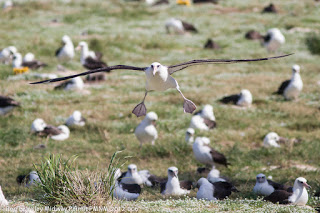
The Laysan Albatross is best known for its gliding flight, awkward landings, and elaborate courtship rituals. These birds spend nearly half the year at sea, not touching land until breeding season. Though large for a seabird, the Laysan is small for an albatross. They may live more than 40 years. These birds are named for Laysan, one of their Hawaiian island breeding colonies.

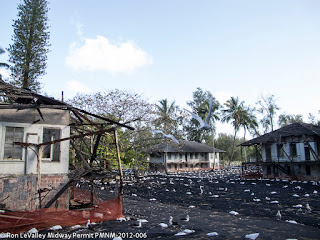
Japanese feather hunters decimated many Laysan colonies at the turn of the century. Colonies at Volcano, Wake, and Marcus Islands have never recovered. Between 1958 and 1964, thousands of albatross were killed by collisions with antenna towers and aircraft strikes during landings and take-offs at Midway. Tens of thousands of albatross were intentionally killed in order to reduce such collisions. Today, eggs and birds continue to be removed at Hawaiian island airfields, in order to discourage nesting and ensure aircraft safety. On land, introduced predators, and lead poisoning from abandoned military buildings on Midway kills thousands of Laysans annually. At sea, the species is vulnerable to oil pollution, and the ingestion of floating plastics; tens of thousands also die in gill-nets, drift nets, and long-line fishhooks annually. Alternative long-line fishing techniques now being developed include weighing lines down, setting them at night, and using "screamer lines" to scare birds away.
 
Another beneficial human activity—the importing of topsoil and grass to Midway's Sand Island—has stabilized the sand dunes and increased albatross habitat. This coupled with the diminished human presence on Midway have led to increased Laysan populations there. At Kilauea Point National Wildlife Refuge on Kauai, protection by fencing and wildlife personnel has helped establish a breeding Laysan colony.
Source: http://birds.audubon.org/species/layalb 

Ron LeValley
http://www.levalleyphoto.com/ 

Ron LeValley
Albatross landing
http://www.levalleyphoto.com/ 

Ron LeValley
Midway Island
Albatross Colony
http://www.levalleyphoto.com/ 


Laysan Albatross & Plastics

The Problem

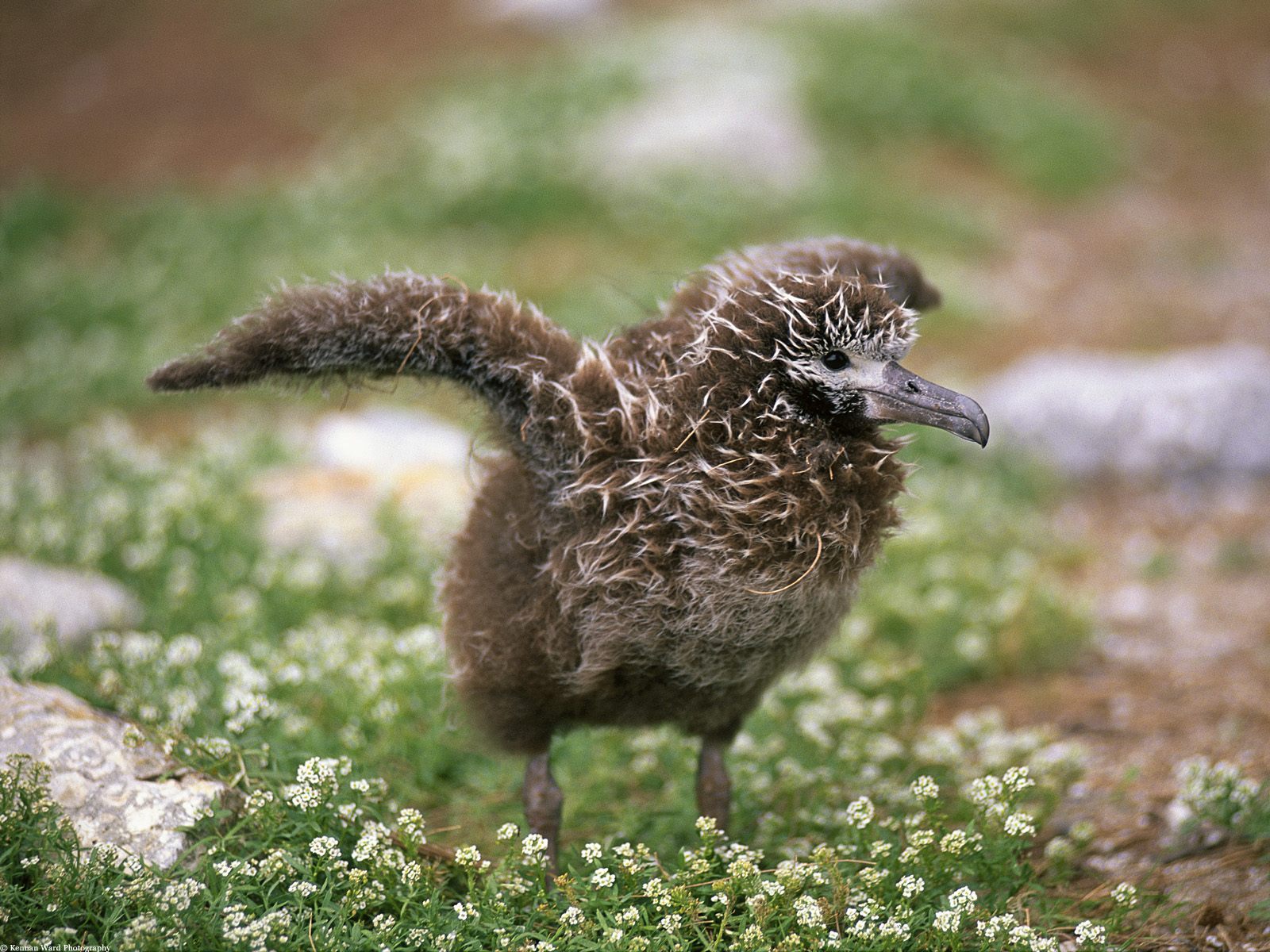
In the middle of the North Pacific Ocean, on a tiny island 1,000 miles from the nearest big city, many Laysan albatross chicks die each year because their bellies are full of bottle caps, toothbrushes and other plastic. One study found that 97.5% of chicks had plastic in their stomachs. Many people think that the biggest source of pollution in the oceans is oil spilled from ships, but most marine pollution is litter that starts out on land. By making changes now, we can reduce the amount of plastic that gets into our oceans in the months and years to come.

A Deadly Diet

Albatrosses fly hundreds, sometimes thousands of miles in search of food for their chicks. They look for squid and fish eggs floating on the surface of the water. Unfortunately, plastic floats, and Laysan albatross are particularly attracted to it. They eat it, mistaking if for food, then they fly back to the nest and feed bottle caps, lighters, fishing lures and other pieces of plastic to their young. The chicks starve to death, with stomachs full of plastic.

Trash Travels

Trash that's dropped on the ground doesn't stay put. Even hundreds of miles from the ocean, trash is washed by rain into city storm drains and out into streams and rivers that lead to the ocean. From there, wind and currents carry our trash far out to sea. Scientists estimate that around the world, up to one million seabirds and 100,000 marine mammals and sea turtles die each year from eating plastic. We can help keep trash from traveling by recycling and putting trash in trash cans.
Source: http://www.montereybayaquarium.org/cr/oceanissues/plastics_albatross/

b-e-a-c-h.org
A Laysan Albatross Chick full of plastic debris
Ah! well-a-day! what evil looks
Had I from old and young!
Instead of the cross, the Albatross
About my neck was hung."
*
`Is it he?' quoth one, `Is this the man?
By him who died on cross,
With his cruel bow he laid full low
The harmless Albatross.
 
 
hubil.free.fr
Laysan Albatross Chick

The Sloth and I

A friend sent this wonderful video of sloths at a sanctuary in Costa Rica. You know how I hate being hot, but this (almost) made me want to go, especially since the older I get the more I think I might be related to this species. 
mrnussbaum.com


http://www.youtube.com/watch?v=dL-&feature=related
If the link doesn't work, copy and paste it into Google or one of the other search engines.

Range and Habitat
This three-toed sloth species is found from southern Honduras through Panama and western Colombia through the Amazon to northern Argentina. It prefers tropical evergreen forests at low elevations that have continuous canopy cover.


Physical Description
The three-toed sloth has long coarse hair over dense underfur, a white face with a brown stripe on each side, a brown throat, and a body that is pale brown to yellowish. Each adult male has a unique pattern of yellow hair on its back with a black stripe through the center. As the name suggests, the three-toed has three toes on each of its front and hind feet. (Its relative, the two-toed sloth (Choloepus hoffmanni) also has three toes on the hind feet, but two on the front feet.)

Interesting Biology

The three-toed sloth is active during the day, unlike the nocturnal two-toed sloth, and so is seen more often. This sloth only eats leaves from trees and lianas (a type of climbing vine found throughout tropical rainforests. They have thick, woody stems and come in various lengths up to 3000 ft) (SRL.caltech.edu) but may feed on fifty individual trees of up to thirty species, eating leaves of different ages. Sloths live, feed, mate, and reproduce near the upper levels of the forest canopy. They move to a new tree often enough to balance their diet, or about once every 1.5 days. Home ranges of different individuals may overlap considerably and females tend to be more social than males, but usually one adult (or female with young) will occupy a tree at any given time. Sloths may use different food sources depending upon what their mothers taught them to eat.

Though large for an arboreal mammal, the three-toed sloth must also be light for its size to live in the treetops, so it has reduced muscle mass. They also have an enormous gut capacity-nearly 30% of their body weight! The sloth's diet of leaves is digested very slowly, so they need a large capacity. Sloths consume a significant amount of leaf material in a forest (about 2% of total annual leaf production in Panama). They have a slow metabolism, though, so they have thick fur to insulate them when their body temperature drops at night; their temperature peaks during the day when they bask in the sunlight.

About once a week, the sloth descends from its lofty living space, digs a small hole with its stubby tail, defecates and urinates in the hole, then covers it with leaves using its hind legs and return to its preferred heights. This ordeal lasts less than 30 minutes, but during this time the sloth is vulnerable to predators. While mortality of young sloths is high, individuals that survive to adulthood suffer low mortality rates; they are recorded to live as long as 9 to 11 years, and are thought to live as many as 20 to 30 in the wild.

Several kinds of arthropods live as adults on these sloths. These arthropods leave the sloth to deposit their eggs on the sloth's dung; the hatched larvae feed on the dung, pupate, and after they emerge as adults, fly in search for a sloth to live on. A single sloth may carry nine hundred or more beetles and three species of mites.

An adult female spends half the year pregnant and the other half rearing her single offspring. Young sloths can begin eating leaves when they are two weeks old. As the mother carries the young with her, she shows it which trees and lianas are fit to eat within their home range. When the baby is 6 months old, the mother suddenly leaves the young to her home-range and moves to a nearby range. The young and mother maintain contact through vocalizations, and the young continues to use this portion of her range for a while and then departs.

Diet
A three-toed sloth consumes large amounts of leaves from up to thirty species of trees and lianas; the particular species chosen by an individual sloth vary, and are largely affected by what its mother taught it to eat.

Sources http://www.anywherecostarica.com/flora-fauna/mammal/three-toed-sloth


Range of the Three-ted sloth
Wikipedia map


I'll never complain about Squirrels again

I've left my last post up longer than usual because it's so important to get the message out to women (of a certain age) and the number of hits hasn't diminished. If you haven't read it, or have read it, but haven't forwarded it, please do. In the meantime, a little amusement.


A friend sent this series of pictures to me years ago.
I think it begs the question...


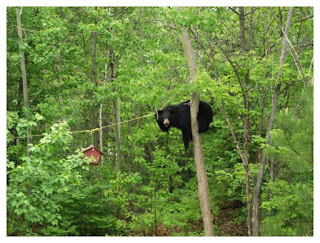
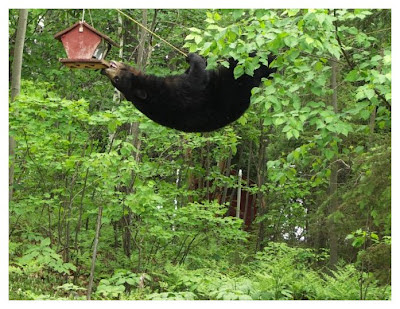
WHAT IS THAT ROPE MADE OF?

Post-menopausal hell for horses


Mare with urine collection bag

For a while, after the warnings about increased rates of breast and other cancers in women who took hormone replacement therapy, the use of Premarin and/or Prempro dropped. Enough that a few of the Premarin mare rescue facilities closed down. Not so anymore. Baby-boomer women by the thousands are entering the hormone-replacement therapy market. I was once one of them, but the minute I discovered that, Premarin, the brand I took, was made from horse urine, I switched to a plant-based synthetic.

Horse urine? Seriously?
PRE (pregnant) MAR (mare) IN (urine)

As you might guess, if you've seen this blog more than once, I didn't stop taking Premarin just because it was made from horse urine. I stopped because the production of it had to be torture for the horses. It turned out to be worse than I imagined.

Premarin mare on the "pee line" is confined to a narrow stall that restricts all movement. She is fitted with a urine collection bag, and stays that way nearly full-time for six months of each and every year for as long as she is productive. She is provided plenty of food, but water intake is limited in order to concentrate her urine.

Mares in a pee-line

For those six months, she can't lie down, roll as horses love to do, or get any exercise. They are not groomed, which leaves them susceptible to sores and infections. The normal lifespan of a horse is 20 to 30 or more years. On average a Premarin mare lives 8 or 9 years.
 
If the mare produces urine well and can be impregnated again, she will return to the pee line. Once she is no longer productive, the mares are sent to slaughter, destine for dinner tables in Europe and Asia, often with her last foal at her side--especially if it is a colt. Only a lucky few are purchased at auction to be rescued and adopted.  

What happens to the foals of mares that return to the pee lines? A Premarin mare's foal is a 'waste product' of urine farms. "We are talking around 40,000 to 50,000 foals a year from the US and Canada. (The number would be higher, but there is a higher than normal mortality rate among these foals, usually due to exposure or starvation.) Those that survive are sent to feed lots and then to Canadian auctions that cater almost exclusively to the horse meat trade to be sent mostly to Europe and Japan."


The drug and You
by Kym Lambert

"Premarin is marketed as an "organic" or "natural" estrogen...well, yeah it's natural, if you're a pregnant mare! But mares have a multitude of estrogens that humans do not have, do not need, and can potentially be harmed by.  

The risks involved include but are not limited to increase in breast and uterine cancer, stroke and abnormal blood clotting which can lead to death, gall bladder disease, rising in blood pressure, gastrointestinal problems, (and) memory loss. Personally, as a soon-to-be menopausal (possibly perimenopausal as of recently) woman those risks seem too high for me...if it were the only replacement therapy you couldn't pay me to take the stuff.  

But it isn't the only option, there are alternatives! Safer for you, for the horses, and for the environment (you think that processing all that urine is without waste?). These alternatives are "synthetic" although many are made from plant estrogens and most more closely replicate the human hormones you are replacing than Premarin can.

If you are menopausal, post-hysterectomy, or transsexual and you are on Premarin please consider contacting your doctor immediately to change your therapy. If you aren't convinced that you are swallowing horse urine (and you are not alone, a woman told me a nurse who was on Premarin had no idea how it was made, your doctor might not even know!) then crush one of your pills and sniff it. Yup, that's what it is all right! You'll smell it. Talk to your doctor, make sure s/he knows that you do not approve of the torture and death involved."

What is the most important information you should know about
(an estrogen mixture)
WARNINGS TAKEN FROM THE PREMARIN WEBSITE
http://www.premarin.com/?source=google&HBX_PK=s_premarin&o=47364519|223603789|0&skwid=43700003252793214
  • Estrogens increase the chance of getting cancer of the uterus.
  • Report any unusual vaginal bleeding right away while you are using these products. Vaginal bleeding after menopause may be a warning sign of cancer of the uterus (womb). Your healthcare provider should check any unusual vaginal bleeding to find out the cause.
  • Do not use estrogens with or without progestins to prevent heart disease, heart attacks, strokes, or dementia.
  • Using estrogens, with or without progestins, may increase your chance of getting heart attacks, strokes, breast cancer, and blood clots. Using estrogens, with or without progestins, may increase your chance of getting dementia, based on a study of women age 65 years or older. You and your health care provider should talk regularly about whether you still need treatment with estrogens
WHAT YOU CAN DO
  • Stop taking Premarin /or Prempro. There are synthetic alternatives. "In 1990, Wyeth had gone before the FDA requesting the label to their hormone replacement drugs be changed to include it to say their product protects against heart disease. Hormone replacement therapy skeptic, Cynthia Pearson, found not only did their claims appear to be too good to be true, but also "each time there was anything negative about the drug, a new claim arose to keep it alive." In every instance, Pearson continued to be unconvinced wondering how a drug was ever approved for women lacking a randomized clinical trial. It was not until 1991, after lobbying women's groups and criticism by congresswomen about the lack of attention paid to women's health that money was found, leading to the recently halted study." http://www.estrogen-replacement-side-effects.com/html/lawsuit.html
  • There are numerous horse rescue sites, specifically for Premarin mares and Premarin foals. Simply Google Premarin Mare Rescue to find one near you.
  • Forward this to friends who are on hormone replacement therapy.

Premarin mare and foal


A question of morality; Ours not theirs

In 1988, I read an article in the Houston Chronicle about Lucy Temerlin, a sign-language using chimpanzee raised as if she were human. The very next day, I began the 15 years of research that would lead to the publication of my second novel, Hurt Go Happy.

A few days ago a friend sent me this TED video. Frans De Waal is renown behaviorist who has been studying chimps at Yerkes in Atlanta for decades. I love TED videos. I've posted others, and I liked this one. It's about moral behavior in animals, specifically the ability of chimps, monkeys and elephants to show empathy, compassion, and work cooperatively. It's amusing in places, and the audience laughs. That's the part I hated. It lets us almost but not quite take the intelligence of animals seriously. I know. I'm overly sensitive about this, but all these strides in understanding how closely our emotions mimic the emotional state of animals were experiments done on captive animals. Caged animals. We are performing experiments that show that animals can suffer just as deeply as we can. Anybody with a pet dog knows that. So how much more testing do we need? THEY HAVE FEELINGS AND A MORAL CODE. SO STOP ALREADY.


Then a few nights ago CNN did a segment on removal of the last of the chimpanzees from the Coulston Foundation in Alamogorda, NM, to their new home at the Save the Chimp sanctuary in Fort Pierce, FL. The Coulston Foundation was where used up circus chimps, chimps from movies and commercials, and all the chimps from our space program were sent, and where, for the next 3 decades, biomedical experiments were conducted on them. (In Hurt Go Happy, the Coulston Foundation is the Clarke Foundation. My publisher made me change the name.)

There are series of videos, including portions of the CNN broadcast on the Save the Chimps site.


Chimpanzees as medical test subjects (source CNN.com)
The United States is one of two remaining countries--the other being Gabon--that legally allow chimps and other great apes to be used in invasive biomedical research, according to the Humane Society of the United States. However, other countries still contract the services of research centers that use chimps, according to Dr. Thomas Rowell Director of the New Iberia Research Center in Louisiana.

There are more than 930 chimpanzees at U.S. medical research facilities, most of them used for hepatitis testing, according to a report by the Institute of Medicine issued in December. The report stated that chimpanzees are not necessary for most biomedical research. The institute recognized two possible uses for chimps: one for cancerous tumors that are already part of ongoing investigations, and the other for a hepatitis C vaccine.

A panel of experts advising the National Institutes of Health on how to implement the the Institute of Medicine's report is expected to issue its recommendations by the end of the year.


A wake for a dead chimp
My question is, if chimps suffer, feel pain, show empathy, work cooperatively, fall in love, and mourn their dead, what kind of society are we to still perform experiments on them?  Human?  Inhumane? Inhuman

 http://pcrm.org/news/doctors_federal_complaint_halt_transfer_alamogordo_chimpanzees_100922.html