Guest Blog: Cheryl Gillmore

A couple of days ago, I mentioned I was in St. Louis on a panel reviewing writing samples of 8th and 12th graders. I've since heard from a number of you wanting to know more. As it happens, this morning I got this blog post from a fellow panelist, Cheryl Gillmore, also a writer, and she said everything I would have said, only better.
 
      This past week in St. Louis I had the pleasure of serving on a federally funded NAEP panel to set up and review writing samples of 8th and 12th grade students. Our job, after two days of training, was to establish the "cut scores" that divide the three levels of achievement...advanced, proficient and basic.  

      Seventy percent of the panelists were teachers or non-teacher educators representing nearly every state in the union--including Hawaii and Alaska. The other thirty percent of us were "general public," with nearly all of us writers.
   

      We stayed at the Ritz-Carlton in Clayton, Missouri, a suburb about 20 minute from St. Louis and enjoyed great rooms, great service and great food! Those incentives seemed to balance the long brain-draining hours of hard work each day in our training and subsequent scoring sessions.

      I was reminded of the love and dedication of teachers this week as I had the chance to talk and socialize with them again. It didn't matter what part of the country they came from, they were all equally concerned for the success of each of their students. I will always be proud to be a forever teacher.

      I will always remember this great week spent with truly wonderful and dedicated people. I'm so glad I was chosen to be on the panel and that I was open, accepting and positive for this opportunity and experience to come into my life.   

Once again, I am reminded... 

"A page turned...new chapters begin. The sequel yet to unfold.  
Never forgotten and never to end. Images etched on each soul." 
C. L. Gillmore is a retired special education teacher for whom writing has always been an important part of life. "My second grade teacher was a big influence," Gillmore says. "She was instructive and encouraging and made me love putting my thoughts on paper."

A transplant from Muscatine, Iowa, Gillmore resides in Surprise, Arizona with her husband Mike. She has two adult children and five grandchildren. She is writing a sequel novel to Uncommon Bond sure to please her growing fan base.

Home again, Home again, Jiggity Jog


For the last week I've been in St. Louis on a Federally-funded panel set up to review writing samples of 8th and 12th grade students. Our job, after two full days of training, was to establish the "cut scores" that divide the three levels of achievement.

I'm a better person today than I was last week. I, and 59 other panelists, worked from 8 a.m. to 5:30 p.m. every day for 4 days, and a half day on Saturday, before shipping out for our home states. I've never been so exhausted, and was reminded how lucky I am to be "retired."

If you are interested in looking at what I was doing here's the website. Seventy percent of the panelists were teachers representing nearly every state in the union--including Hawaii and Alaska. Thirty percent of us were "general public," but of those panelists, nearly all of us were writers, and predominately middle grade and young adults novelists.
 
http://nces.ed.gov/nationsreportcard/

I'm going to spend a few days paying bills, and clearing my emails, then I'll be back to looking for interesting issues to share, or wonderful animal stories. Meanwhile, a little self-promotion. This is the most wonderful review of Hurt Go Happy I think I've ever read. It brought me to tears.


 http://www.books4yourkids.com/2012/02/hurt-go-happy-by-ginny-rorby-256-pp-rl.html

Guest Blog: Ronnie James

Owlets in Triplicate


It was early June when someone brought in three one week old Western Screech owls. My first reaction, as always, was to return them to their parents who would have happily continued to feed and care for them. It seemed, however, that not only was the nest tree destroyed, but the acreage in all directions had been leveled and plowed in preparation for an illegal agricultural use. The finder wasn’t about to tell me the location.

The owlets were little ping-pong ball sized bundles of gray fluff; the food of choice, minced mouse sprinkled with vitamins and calcium. They ate every three hours, gained weight and grew rapidly. Within a week I was able to sleep through the night without feeling guilty.

Owls, like ducks and geese, readily imprint but not until they’re about 3 weeks old when they’re finally able to focus their eyes clearly. Then whatever they see feeding them is how they will visualize themselves for the rest of their lives. To prevent them from imprinting on me, I hid under a hood so they could only see each other, and the picture of an adult Screech owl I held near my feeding hand. Funky, but it worked.

By week 5 they had grown feathers, could handle whole dead mice, and were ready to be released into a 12’ x 12’ outdoor cage built around a tree. I put them in an owl nest box and fed them there for a few days until they came out on their own. Owlets normally will come out of the nest long before they can fly. This is referred to as the brancher-stage. One day I found them sitting on a nearby branch, and my presence frightened them—a good sign. Two dashed back into the box, but the biggest spread its wings, and I had the pleasure of witnessing its first flight to a nearby branch. Landing was a bit of a challenge—it always is the first few times.

I installed a small, plastic swimming pool, stocked it with 2 inches of leaves and dirt, and left them live mice and mealworms so they could learn to hunt for themselves. I knew they were catching the mice because the next day the mice would be gone, and there were three owl pellets on the bottom of the cage. Owls eat their food whole, and when the nutrients are digested, they spit up a pellet of fur and bones.

Owl nest boxes were installed in the woods in sight of the owlets’ cage, and at 11 weeks I opened their door, and watched the owlets fly into the woods near the boxes. I haven’t seen them since! I know from experience they haven’t gone far, and there is plenty of food around. There is no way to know if they’re using the boxes, or have moved on, since they would snuggle in the bottom of the box during the day, and coming out and returning only at night, when I am gratefully asleep. Such are the frustrations and joys of doing wildlife rehab. 

 
Ronnie James is the founder and operator of a small wildlife rescue facility located on the northern California coast near the town of Mendocino. She has been doing wildlife rehab for nearly 30 years, and recently published a book about her experiences:  Touching Wings, Touching Wild available at TouchingWings.org.  This is one of her experiences that isn’t in the book.


To learn more about Screech owls
http://en.wikipedia.org/wiki/Screech_owl


Palm Oil Free Valentine's Day!

Your shampoo, your ice cream, your margarine, your lipstick -- all contain palm oil. Demand is still growing, as are oil palm plantations... but at what price to tropical forests and the biodiversity found there?   

A message from Patti Ragan and The Center for Great Apes:

animal-wildlife.blogspot.com

Are you planning to give a gift of Valentine's Day candy?  You really never know what you're getting in that box of chocolates unless you read that label and check the ingredients for palm oil. Palm kernel oil is produced mainly in Southeast Asia where millions of acres of irreplaceable rainforest are destroyed each year to establish palm oil plantations. Hundreds of orangutans are killed each year as a result of the palm oil business, so please avoid buying products containing palm kernel oil. This special rainforest habitat is not only the last home to orangutans... but to many other endangered animals as well.


You can help. Take the time to make sure that the product you buy with Palm Oil is on the list of RSPO members. Roundtable on Sustainable Palm Oil


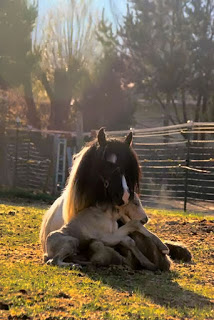
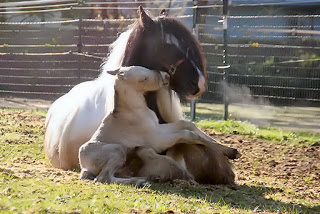
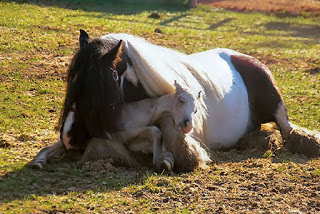
Pony Skin Foals


While I was in Florida, I received this letter from one of my readers:

“My name is Elle, and I absolutely loved your book, the Outside of a Horse! I was wondering if you could let me know where you obtained the statistics in your Author's Note? The statistics about the number of foals born annually (and being killed to avoid the stud fee), and the deaths per every 1,000 starts are the stats I am specifically interested in. I am writing a paper on how to improve the horse racing industry, and I would like to include the appalling statistics of cruelty to help persuade readers. Thanks so much!”


The statistic—about foals being killed to avoid a stud fee—came from a very well-known, downright famous writer friend of mine. Her sister worked in the racing industry and told her about “standing foal,” the practice of deeming a newborn foal unsuitable, by racing standards, and killing it before it stands, thus avoiding the stud fee. I found my notes from that interview, but deemed them too “word of mouth” since I couldn’t re-locate the online site I used to confirm the practice. Lucky me (and you), I came across another, just as despicable.
Using a nurse mare is a common practice in the thoroughbred industry, partly because horse racing rules dictate that mares have to be bred by live cover. (Not artificially inseminated.) This has created an industry of nurse mare farms that breed mares, and replace their newborn foals with expensive, thoroughbred foals to nurse. This frees the thoroughbred mare to be shipped for re-breeding or, if she’s racing, right back to the track.

What happens to the nurse mare’s foal? They are left to die, shot or clubbed to death, or fattened up, and at age six months, can legally be sent to slaughter. (There are YouTube videos of this, if you can stomach watching.) The meat of young horses is prized in many countries, such as Japan. (Tempted to cast stones; we eat veal.)
   
This is just one of the rescue groups dedicated to saving as many of these ‘by-product” foals as they can.  http://www.mountainviewrescue.com/NMF.htm

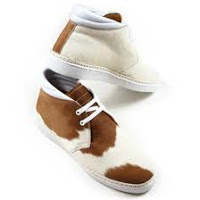
A pony skin foal is another name for a nurse mare foal born so a mare can provide milk to a thoroughbred foal born for racing, or for show. The nurse mare industry is huge, but I couldn't find any statistics on how many foals are produced, and killed annually. A lucky few are rescued, some are sold at auction, others are killed on the spot with a bullet or a club. Whether they end up on a dinner plate in Japan, as dog food, or are killed and skinned for high-end leather products, the nurse mare industry is a disgrace.

And here’s a site with more info on nurse mares


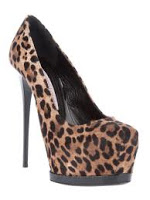
www.shopstyle.com/browse?fts=pony+skin+shoesCached
You +1'd this publicly. Undo
Pony skin shoes at ShopStyle. Shop popular brands and stores to find pony skin shoes on sale - all in one place. Create and share looks based on all your ...  


And are you proud of your genuine shell Cordovan leather couch, or in your car? Most leathers come from cows, but Cordovan comes from horses. It improves with wear and polishing, and is tough as a horse’s butt.
Do you take the Premarin brand of hormone replacement? Pregnant Mare Urine. The fate is the same for their foals, unless a filly is born. She might be permitted to live and follow her mother into the "pee line" where the hormone rich urine is collected during the last six months of pregnancy. Six months tied in a stall, standing in your own feces, with a bag and hose attached to your ureatha.

http://www.youtube.com/watch?v=2I-WYOIx7Ug
http://www.savinghorsesinc.com/PMU_Nurse_Mare_Foal_Rescue.php
And for Elle's paper, here is the site that tracks racetracks deaths. http://www.horsedeathwatch.com/


The Real Reason for my trip to Florida

I'm just home from 2 weeks in Florida. Each time someone asks what I was doing there, I've answered--taking a houseboat out into the Everglades. That was to be the highlight of the trip, but it was two days of the two weeks--an excuse to go. What I was really doing was traveling across country to see, and be with, if only for a day or two, the people I love most in the world.

My women friends:
Jane Kelsey Phinney, 1962. 
Judy Rowe McCully, 1967.
Kathy DeLorenzo, 1970-ish
Janice Grimes, 1981
Joanne Mansell, 1981
Johanna Moran, 1983-ish (I didn't get to see her this trip.)
Kathie Graham, 1980-ish
Teresa Sholars, 1992
Norma Watkins, 1993

Why didn't I just say this was the reason for going? Because it didn't occur to me, not until this morning when I read Emily Rapp's essay on the power of female friendship. Memories of all the joy, laughter, heartbreak, births and deaths that I've shared with these friends nearly overwhelmed me, and it made me realize that what I really wanted to do in Florida was to hug and laugh, and drink a little wine, with the most important people in my life.

http://therumpus.net/2012/01/transformation-and-transcendence-the-power-of-female-friendship/#more-95368  by Emily Rapp

Guest Blog: Jeannie Stickle on Cat Communication.

I'm back, and after 2 weeks in Florida, I'd like to curl up in a sink, too. It's not Florida. The weather was perfect (To me that means cool to downright cold) and I got to see many of my friends, some of whom I haven't seen in way too long. It's the flying there and back that I HATE.

While I was away, I got this blog post from my friend, Jeannie Stickle. It made me homesick for my coast and my cats. She said I could share with you. Enjoy.

Solomon in the sink

Cat Communication

I had to sneak out of the house today. I slipped on my rubber boots, and trudged through our long grass on the back side of our fence to avoid our cat, Solomon. Well, I didn’t actually have to sneak out but Solomon has developed the habit of following us on our walks to the headlands. I’ve seen enough signs of missing cats in our neighborhood to know I’d rather have him stay safely within our fenced yard. He started this new habit over the holidays when our family took a long walk near the ocean. At the time, he was enjoying all the togetherness and didn’t want to miss out. At first he followed some distance behind but soon he was leading the way.


Solomon


Solomon enjoying the view

Our cat is approaching 15 years, so he’s rather old for a cat. He’s never been too excited about exercise and he was panting like a dog before we got home. (We tried to carry him back but he would have none of that.) This made me think of how important relationships are to all creatures. Solomon was making a sacrifice to keep the family together. He can’t communicate using words, but he communicated through his actions. And when you think of it, we humans also communicate volumes to the people around us through our actions. Research has long shown that the majority of our communication is nonverbal. That includes body language, facial expressions, tone of voice, gestures, eye contact, posture, and proximity to others. Some children, especially those on the autism spectrum, need help with this area of communication so they can develop and grow in their relationships with others. Many adults, as well, need reminders about to use nonverbal cues effectively.

And that brings me back to my excursions through the long grass behind our home.  I wonder what my body language was communicating to the neighbors when they saw me sneaking around the back fence?

Jeanette W. Stickel


I am a licensed speech-language pathologist and have worked in this field for over thirty years. I can’t imagine a better profession – I love this job! For the last twenty years, I’ve been employed in public schools. Previous to that, I worked in speech clinics in California, Alaska and Guam. During my clinical years, I provided in-home speech therapy and parent education to children 0-3 and their families. I authored Talking Time, a book of speech and language activities for young children. Originally published by Speech Bin as a resource for professionals, I recently revised and released a second edition for use by parents, grandparents and other care-givers. I am also a member of the Society of Children’s Book Writers and Illustrators and write stories for children. Currently, I am creating books to encourage pre-reading skills, while giving children practice in pronouncing specific sounds. Thank you for visiting my blog!

http://speakwellreadwell.blogspot.com/

A New Year's Wish

Dear Friends,

Baby River Otter
When I started this blog 5 months ago, I wondered what I would find to write about. That probably sounds odd coming from a 'writer' but maintaining a blog is different from working on a novel. So in a conversation with Susan Bono, who helped me set this up, I bemoaned my ability to think of anything to say on any regular basis. She asked a really simple question: "What do you care most about?"

Any one of the nearly 5000 people who have since read this blog could tell me that, but I said, "Well, I don't know. I do save all the animal pictures and stories people send me, and I'd like to publish some of the letters I get from kids."

DUH!


So all I've really done is recycle. 
(And steal from Google images.)

  
Apparently, a lot of you are willing to take a moment to wallow with me in my affection for animals: the joy they take in life, and the concern we share for their plights. They, like us, are emotional beings, capable of love, grief, joy, and pain. My goal has always been to try to expose that to the kids who read my books--allow them to connect with nature and the beings with whom we share this planet, as I did when I was a child.

People ask why my novels are categorized as books for teens when so many adults read them. I don't know. We are a species who needs to put things in recognizable boxes. We are human; they are not being the ultimate crate we've stuffed full with the rest of the planet's species. So, here is my New Year's wish for you. May you be given the gift of experiencing life like this animal and this child playing together, and may you never let the glass we see each other through turn to stone.

http://www.youtube.com/watch?v=n9APqLA2YKs

I'm going out of town for a couple weeks. If I can figure out how to blog from afar, I will. Otherwise, HAPPY NEW YEAR
     Thank you my friends.     
 

Nancy's Orcas

This is one of my favorite paintings by my friend Nancy Collins. I should have thought to include it in the blog about orcas, but it's not too late, is it? Consider it a teaser for what might be coming next. She's been working on a painting for me that I hope to share with you in the next couple of days.
Nancy Collins's Orcas        


The Eye of an Orca


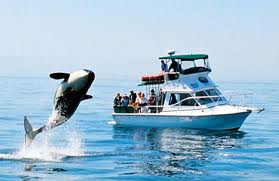
  A friend sent me her cousin's short story about canoeing with Orcas. It's really lovely and reminded me of a trip I took to kayak with Orcas in Johnstone Strait, British Columbia. I've been twice, but the most memorable was early one foggy morning when the water and the sky were both steel gray. The Orcas in the Strait are residents, and eat salmon, not mammals. We had positioned the kayaks near the steep rocky shore, and were waiting in total silence. The first indication we had they were coming was the distance whoosh of air as one then another then another surfaced to exhale. Moments later we were ducking salmon as they leapt out of the water to escape the Orcas. I had a split second to consider the insanity of positioning a line of tippy kayaks, bobbing in freezing cold water like so many pieces of driftwood, directly in the path of a feeding pod of Orcas, when we were surrounded. Orcas in front of us, behind us, under us. Salmon leaping everywhere.

Since I posted this last December, I've heard about this company. There is great whale footage on the site. Makes me want to book another trip.
2009 Recipient of National Geographic Adventure Magazine's "Best Adventure Travel Companies on Earth"
2009 National Geographic Traveler Magazine's "50 Best Trips of a Lifetime"
2010 National Geographic Travel.com "Best Deals for Adventurous Travelers"

2011 National Geographic Traveler Magazine's "Best Whale Watching Locations"
"Photo by Gary Luhm. (c)
Sea Kayak Adventures, Inc."

There was one other moment on that trip that I will never forget. We were back on the "mother ship" and I was standing on the stern watching a female orca attempt to control a rambunctious baby by making what can only be described as watery raspberries. Every time she blew a bubbly raspberry, I imitated the sound. With the baby in tow, she dove and came up at the stern of our boat, turned on her side and looked directly at me. I'll never know, of course, but I had the feeling she was telling me to back off, which I did.

 
This is my friend's cousin reading his winning short story. It's seven minutes long, and worth listening to.


Tossing Starfish*


My scanner is on the blink so I'm not sending what I planned to send, but the sentiment is the same


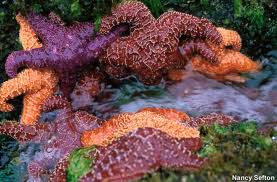
“While wandering a deserted beach at dawn, stagnant in my work, I saw a man in the distance bending and throwing as he walked the endless stretch toward me. As he came near, I could see that he was throwing starfish, abandoned on the sand by the tide, back into the sea. When he was close enough I asked him why he was working so hard at this strange task. He said that the sun would dry the starfish and they would die. I said to him that I thought he was foolish. there were thousands of starfish on miles and miles of beach. One man alone could never make a difference. He smiled as he picked up the next starfish. Hurling it far into the sea he said, "It makes a difference for this one." I abandoned my writing and spent the morning throwing starfish.”
Loren Eiseley

 *FYI because I can't help myself. Starfish are properly called Sea Stars because they are not now, nor have they ever been fish. :-)

May each of us remember the value of a single act of kindness every day  
HAPPY HOLIDAYS TO YOU ALL

The Bat in my Bathroom

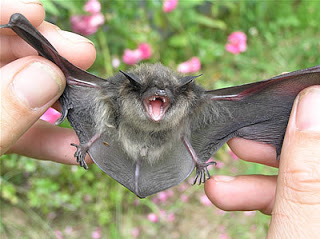
Little Brown Bat (from www.mammalwatch.com)
 My first clue that I had a bat in my bathroom was bat-poop in the sink. I'd go upstairs at night to find lots of little black, mouse-like droppings in the sink, but no bat. Then one night, sick with a cold, I went to bed early and was just drifting off when a small shadow circled the room, illuminated by the light from the TV, and flew into the bathroom. (I should add that nothing about bats scares me. I adore them.) I waited a few moments before getting up and turning on the light. There he was, hanging on the wall above the sink--preening.

Mystery solved--sort of. If this was his nightly roost, why hadn't I seen him before now? Was he a he? Was he/she the first of a colony? Where did he go to sleep?

The ceiling in my bedroom and bathroom is beamed, and to my astonishment, when he'd finished cleaning up, leaving a litter of insect legs and wings, he wedged himself between the beam and the ceiling planks. It doesn't look like you could slip a sheet of paper between them, but he had no trouble at all.

That was six years ago. And Johnny, my bathroom bat, is still my summer guest. He disappears in late fall, but occasionally shows back up in mid-winter. Three years ago, he over-wintered in my bathroom and a friend of his found refuge behind a painting in my stairwell.

Johnny is a male. Males are, thankfully, more solitary. It's the females that form colonies. I've very fond of Johnny, but not nuts about the idea of an entire colony of bats in my bathroom. (For another story, keep reading.)


 This link is to a wonderful story about a baby bat.
http://www.huffingtonpost.com/2011/12/10/lil-drac-orphaned-bat_n_1141191.html

For more information than you might want to know.
From Wikipedia:


Habitat and roosting

The little brown bat lives in three different roosting sites: day roosts, night roost and hibernation roosts. Day and night roosts are used by active in spring, summer and fall while hibernacula are used in winter. Day roost sites are typically found in buildings, trees, under rocks, in wood piles and sometimes in caves. Nursery roosts are found in hollow trees and other natural crevices as well as around buildings. Night roosts tend to be in the same buildings as day roosts, however these roosts tend to be confined spaces with many bats packing themselves together to increase roost temperature. Bats congregate in night roosts after feeding in the evening. Thus night roosting could result in the accumulation of feces away from the day roosts which could make the latter less conspicuous to predators. Northern populations of bats enter hibernation in early September and end in mid-May while southern populations enter in November and ends in mid-March.

Diet

Little brown bats are insectivores, eating moths, wasps, beetles, gnats, mosquitoes, midges and mayflies, among others. Since many of their preferred meals are insects with an aquatic life stage, such as mosquitoes, they prefer to roost near water. Brown bats feed along the margins of lakes and streams, zig-zagging in and out of vegetation 2–5 cm above the ground. Later in the evening, they usually forage in groups over water staying within 1-2m above the surface. They echolocate to find their prey. They are very effective predators when the insect are in patches and at close range. As with other insectivorous bats, little brown bats catch prey by aerial hawking and gleaning tactics When taken in flight, the prey is taken by swooping or dipping maneuvers. When above water, prey is taken by the mouth. Brown bat do not claim feeding areas like a territory, however individuals frequently return to the same feeding sites. When hunting swarms, brown bats focus on one or two species to feed on. When insect are more scattered, they are less selective and will feed on multiple species. If they do not catch any food, they will enter a torpor similar to hibernation that day, awakening at night to hunt again. A bat will eat half of their body weight per night with lactating females eating more than their body weight per night.

If your curiosity about bats got you to read this far, I have a fun story to tell. I do a bit of wildlife rescue, mostly birds, but I did get a call one day to come fetch three bats. They'd been found in an attic, and the attic's owner wanted them gone. The only thing I had to transport them in was a birdhouse. Wearing gloves, I pressed each of the three bats to the inside wall of the birdhouse, replaced the wooden access bottom, and put one of my gloves in the entrance hole. The birdhouse was on the seat next to me as I drove home. See that gap in the front, right at the top?
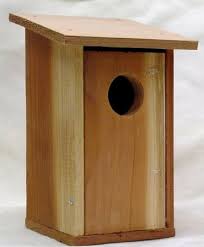
The first I was aware that the bats were no longer in the birdhouse, was when one of them landed on the dash. That's when I noticed the gap. By that time, all three bats were flying around the inside of my car. The windows were up, so to an echo locating bat they were solid walls. At a four way stop near my house, I looked over at the person stopped to my right. She smiled then saw what was happening inside my car. The expression on her face made me start to laugh, looking maniacal, I'm sure since I was sealed in a Ford Explorer, laughing hysterically with three bats circling. But once I started laughing I couldn't stop. Tears were streaming down my face as I pulled away from the stop sign.

Once I got home, I simply lowered my windows and they all flew out into the woods. That's the same summer Johnny first showed up in my bathroom. Who knows, but I'm looking forward to year seven.


Another guest blog from Tanya: Petting Whales

Tanya wrote this after her first trip to San Ignacio Lagoon, one of the gray whale birthing lagoons on the Pacific Coast of Baja. These lagoons were discovered in the 1800s by whalers who nearly wiped out the species. One of the lagoons, is named after Charles Melville Scammon (1825-1911) who was a 19th-century whaleman, naturalist, and author. He was the first to hunt the gray whales of both Laguna Ojo de Liebre and San Ignacio Lagoon

The lagoons were discovered in 1852 and by the early 1860s had been 'swept clean of whales.' 

Read more by clicking on this link 
http://en.wikipedia.org/wiki/Charles_Melville_Scammon 

The good news, is they are back and apparently have forgiven us as a not-so worthy species.

Petting Whales
by 
Tanya Smart

This story is really about fulfilling a very long dream so be warned.  It is sappy and probably long.  Just thinking about the amazing phenomenon of the friendly whales makes me cry. 

On every trip out (into the lagoon), there was one spot where a whale spy hopped each day. We decided this was the sentinel whale who announced to the others that we were coming. The first trip out we didn’t get to touch. The whales were feeding (so much for the books that say they only eat in Alaska). We tried to tell ourselves that we weren’t disappointed (really) that we had been closer to whales than ever before (and it was magnificent) and besides we got to have lobster for dinner that night. However, we woke up the next day just hoping that maybe, maybe, maybe—. Our hopes were realized. A mom and baby came up to the boat and we all got to pet the baby. Petting a whale for the first time—how does one describe it?!  Amazing, magnificent, humbling, fascinating, joyful, mind boggling?  All of these words fall short. I tried to stay composed, but then rather lost it. The naturalist came to see if I was OK and I said “never better.”  Then the boat captain came forward and gave me a huge hug. “Thank you for loving the whales.” Needless to say, that didn’t make me stop crying.

From there it only got better. The next day we had a Mom and Baby stay with us for an hour. Mom actually got under the boat upside down, and held the boat on her stomach and her baby on her flipper so we could touch it. We touched, scratched, hugged, kissed, got snotted on, got bubbled on—you name it. Rinsing whale nose stuff off your glasses is not a bad thing. Whale spit in your ears makes you laugh. Watching Mom deliberately make sure EVERY PERSON on the boat touched and scratched her baby was amazing. We talked about it later: why was she doing this?  Here’s a big brained animal that has a huge energy demand—migration, pregnancy, birth, nursing—and she is using precious energy and time to make sure we touch her baby. It was clearly important to her and it was pretty clear we were fulfilling her agenda. The baby was just enjoying him/herself.

The next day the Mom and Baby took their time checking us out, but once we got Mom’s approval, the Baby (we called “Bumper” since he liked “bumping” the boat) came steaming in and wanted throat pleat scratches, tongue scratches, gum and baleen scratches and belly rubs. If it weren’t for my dogs waiting back home, I’d still be there.  Mom kept an eye on us for about 20 minutes, occasionally moving her offspring away from the motor. We must have proven trustworthy as after that she backed off and took a snooze while we babysat.

Our trip was with Kuyima Ecotourismo. This company is owned and operated by Mexicans and staffed primarily by the local people of Baja Sur. In this way, the ecotourism benefits the people who are saving the lagoon from development. They were happy to see us even if we were Americans whose government was building a wall (between our countries.) The Kuyima camp is comfortable, clean and respectful of the fragile desert environment. We kayaked in mangroves, beach-combed on shell beaches and hiked on salt flats, walking over local burro and mule tracks. The coyotes are not tame, but not terribly afraid either, even when you fall down while trying to take their picture. The organization for San Ignacio Lagoon is amazingly efficient and respectful. Only 16 pangas (small boats) are allowed in the whale watching area at one time so the different companies cooperate. Each boat is limited to 90 minutes in the area. No mobbing of whales, no feeling that what you are doing is hurting them at all.  It is completely up to the whales to be friendly or to ignore you. We were ignored by some, and others saw us coming and practically charged the boat. 


Bumper

Brent (Tanya’s husband) took more than 300 photos (not counting the ones he deleted each night). I couldn’t throw any away—even the out of focus, out of frame photos show the amazing phenomenon of forgiveness. I’ve come away thinking that Momma Whale knows exactly what she is doing when she brings her precious baby up for a rub. Touch is important in Cetaceans. By letting us touch her baby; maybe she is bonding us to them and training humans to respect her species. 

Bullying: Be part of the solution

A few months ago, one of the teachers with whom I communicate sent this to me, and I forwarded it all the parents and teachers on my "friends" list. Since then I've heard back from at least a dozen teachers telling me that they tried it in their classrooms with remarkable success. Two other teachers wrote to tell me that it has been adopted as standard practice by their respective schools. We all know teachers--or are teachers. If you shared this, perhaps we can make a difference.


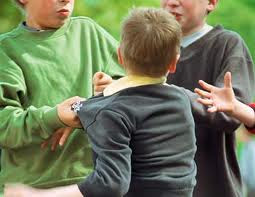
A teacher in New York was teaching her class about bullying and gave them the following exercise to perform. She had the children take a piece of paper and told them to crumple it up, stomp on it and really mess it up, but do not rip it. Then she had them unfold the paper, smooth it out and look at how scarred and dirty it was. She then told them to tell it they’re sorry. But, even though they said they were sorry and tried to fix the paper, she pointed out all the scars they left behind. And that those scars will never go away no matter how hard they tried to fix it. That's what happens when a child bullies another child, they may say they’re sorry but the scars are there forever. The looks on the faces of the children in the classroom told her the message hit home.


How are my daughters? Part 2

Zipi "Longstocking"
Age 13


I don't have children, except my fictional daughters, whom I have launched into the world with the hope they will amount to something, impact other people's children in a positive way. A few weeks ago I wrote about how much it means to me to hear from kids who have read one of my books, and connected to one of my girls. I told you then that I get the occasional letter home in the form of a royalty check, but I don't really know how they are faring out there in the world with millions of other fictional characters. Are they making the kind of difference I'd hoped they would make?

I got this letter a couple days ago. Zipi told me it was a school assignment to write to an author. I'm so pleased she chose me, and I'm very proud of my daughter, Joey. 

P.S. With kids like Zipi in the world, we shouldn't be too worried about our planet.

  
Dear Ginny Rorby,
      The first thing I would like you to know is that I despise nonfiction and am not a fan of realistic fiction either. However, because of a recommendation from a friend, I read Hurt Go Happy when I was in the fifth grade. I fell in love with it. It was the first realistic fiction book I enjoyed and loved (followed by only a couple others).
The second thing I would like you to know is that I am a proud vegetarian; I have been one all my life. I love animals and at one time, I had thirteen pets! Hurt Go Happy showed me the horrible truth behind animal research testing labs. There is a saying, “cruelty free,” which means that a cosmetic or other product is not tested on animals. My cosmetics and toiletries are all cruelty free, which is something that Hurt Go Happy made me realize I needed to do. I am trying to get my parents and even my friends to live cruelty free lifestyles also.
Dictionary.com (not the best resource, I know) says that meaningful is, “full of significance, meaning, purpose, or value”. Hurt Go Happy is full of all of those things. While the main topic of the book seems to be about how thirteen-year-old Joey deals with her deafness, I felt that for me personally, the book was more about the significance of animals on people’s lives and how much animals can understand. When Sukari signs to Joey near the end of the book, “Hurt go. Happy,” (this is translated into “the pain has ended”), it shows that Sukari is able to sense Joey’s feelings and know when she is upset. I believe this provides a wonderful insight because my pets always seem to know when I am upset too, which is one of the reasons I believe animals to be amazing. They may not have the same sized brain that we humans have but they are unique in their own way – they can tell our feelings. Another reason that Hurt Go Happy is meaningful to me is that it explores two topics that are not usually written about for young readers: deafness and animal testing.
Hurt Go Happy inspired me to possess products that do not test on animals, before I fully knew what animal testing and cruelty free even meant. The relationship between Sukari, Joey, and (Mr.) Charlie has helped me discover the meaning of true friendship. Friends can be any gender, age, or species. Hurt Go Happy also inspired me to learn how to be able to sign “Hurt go. Happy”.
Extend the index fingers of both hands, pointing them towards each other. Then, spin them in an outwards circle. (Hurt.) Next, bring your index fingers close to your body, pointing upwards. Then, in a sweeping motion, bring them up and out, pointing with both fingers at something in front of you. (Go.) Finally, place one or both of your hands in front of you. Use flat hands, palms facing your body. Circle your hands forward, down, back, up, forward, down, back, up. Move your hands at the same time and in the same direction. On the upward swing, the hands are very close to your chest or touch your chest. On the downward swing, your hands are further away from your chest.
(Happy.)
This is how to sign “Hurt go. Happy” in American Sign Language. This means
“the pain has ended”.
 Sincerely,
Zipi "Longstocking"

Sukari


Lost and Found update

Another Sammie look alike

I'm sorry to report that "Sammie" is now at the Mendocino Coast Humane Society. The couple who took him have two other Second Chance rescue dogs, and a cat from the Humane Society. Sammie got along fine with the dogs, but was a little aggressive with the cat, though nothing that wouldn't have worked out over time. The problem was, he's terrified of men, and it just broke the husband's heart to see him quaking at the very sight of him.  

I've sent out messages to the friends here on the Coast, but haven't found anyone to take him.

I'll let you know if this has a happy ending.

Seriously? Just $270,000?


I was 9 when I made the decision to never, ever attend a circus.

I grew up in Winter Park, FL, and the summer I turned 9, Momma took me to watch the Ringling Bros. circus come through town then, as a birthday present, we were going to go to the circus. 

August in Orlando is about as hot and humid as it gets. We were standing with the crowd lining the sidewalks of downtown. My mother loved elephants, and for that reason, so did I, even more than the cowgirl in me loved horses. I remember how excited I was to see them lumbering down the street--legs in shackles, trunks swaying. I didn't see it happen; the elephants had passed us when one of them collapsed in the heat and died, but we were part of the crowd that surged down the street to see what happened.

Then Mom and I went home.

Lately, this adorable video has been circulation: http://www.youtube.com/watch?v=Od7U9GhZg_g
I've watched 2 or 3 times, but since yesterday, my eye has been drawn to the behavior of the adult elephant behind the bars just to the left of babies.

Why yesterday? I received this from a friend. It's a message from PETA.

"I'm thrilled to tell you about a historic breakthrough. It has to do with elephants who are beaten with bullhooks by Ringling Bros. and Barnum & Bailey Circus. Feld Entertainment, Inc., parent company of Ringling, will now pay a penalty of $270,000 for violations of the Animal Welfare Act dating from June 2007 to August 2011. It is the biggest penalty paid by a circus in the history of the United States."

And this: http://www.ringlingbeatsanimals.com/bound-babies.asp?utm_campaign=1111%20Ringling%20Bound%20Babies&utm_source=PETA%20E-Mail&utm_medium=Alert
Ringling Bros. personnel training a baby elephant
  If you can't stand watching the slide show, at least let these 3 pictures infuriate you enough to send this to everyone you know, post it on your Facebook page, whatever you can do to stop your friends from every spending a dime to see a circus.

Seriously? Only $270,000? Let's really hurt them.

It took one young woman closing her account and circulating a petition to back Bank of America down from raising ATM fees. Surely we, if we send this to everyone we know, can break the back of Ringling Bros. circus. 
Training a baby elephant to sit on a stool


Lost and Found

On Sunday morning, my Yellow-naped Amazon parrot started her warning grunt, which means she sees something in the yard: a deer munching my hydrangeas, or the neighbors riding by on their horses. Ocassionally, it's been an escaped cow or two on the road, once a bear, once a mountain lion. Her alarm always alarms the cats. They jump up on the back of the couch or a table for a better view. This time, two of them shot out the cat-door, taking them straight into whatever danger lurked. The third cat crawled under my desk and up into a drawer. The fourth is 19. She slept on. Such a panicky reaction usually means a stray dog, which could really be trouble to the fools who fled outside.

However . . .

Found dog look-alike
I don't have a dog, but before the day ended, I was truly tempted. The chihuahua was wet, cold, and terrified, but hungry enough that I quite easily lured him into the house with cat food. I gave him a little dish of food and called the Humane Society. We have a 'no-kill' shelter here on the Coast, but they weren't open, and the message said I would have to call the Sheriff. Our local Animal Control facility closed down a couple of years ago in response to budget cuts. Now all animals picked up as strays are taken to the Sheriff's department to be transported to the county animal control facility in Ukiah. This was not a well-cared for dog. He was not neutered, wouldn't let me touch him, had ticks and fleas, and a ruptured boil on his side. I called my friends at Second Chance Rescue instead.

Second Chance Rescue began in 2003. At that time there were very few small dogs available for adoption on the Mendocino Coast, but more and more older people were moving here to retire; people who would love the company of a small dog. In the San Francisco Bay Area there were many small dogs looking for good homes but stuck in overcrowded animal shelters. Jeanne Gocker and Steve Sapontzis started bringing the supply to meet the demand. They brought older, small dogs and found homes for them on the coast with folks who wanted a mature little dog. In four years they found homes for over 100 dogs.

I asked Steve to give me more background for this post.

"In the 1990s, even before we were doing the rescue work, we started bringing up hundreds and thousands of pounds of dry dog food to the Ft. Bragg Food Bank to distribute to its dog-owning clients. We are continuing this program, especially in these tough economic times, when many folks can barely afford to feed themselves, much less their pets. The Food Bank does a great job of distributing the 250 pounds of food we bring every week. In 2010, we started also supplying food to Ft. Bragg’s Lighthouse Church and Willits’ St. Anthony’s Church to give to dog owners at their free kitchens.

In 2007, working with the Mendocino County spay/neuter clinics, we started providing free canine spay/neuter for coast dog owners trying to make it on a limited income. In 2009, we added the Mendocino Animal Hospital in Ukiah to this program. Preventing the birth of puppies for whom there are no homes is crucial to reducing animal suffering.

In 2008 we began helping low-income coast pet owners with vet bills for their pets. We can’t always afford to pay the whole bill, but we can provide enough (maximum of $100) for folks to get their sick or injured pets seen by a veterinarian and to get treatment started.

In November 2008, we started providing free Frontline flea/tick treatments for the dogs of clients of the Food Bank. We continue to do this, and are up to 140 dogs monthly. We now provide free collars, leashes, and sweaters, treats and toys for those dogs. October 2010 was our first annual free shots and microchips clinic at the Food Bank."


You can guess why I called Steve and Jeanne. I caught them as they were headed out the door to go to the Bay Area for Thanksgiving. Jeanne called me back ten minutes later, and had found someone willing to foster my little stray for a couple of weeks. All I had to do was catch him.

Nothing to do with this story, just too cute not to include.

I didn't want to keep feeding him for fear he'd fill up and I'd never catch him, but I needed to get him into a confined space, small enough to get a leash on him. I got a package of 'pill-pockets' (which never tricked a single one of my cats) and went to sit on the floor of my tiny bathroom. He was way to smart for that and won't cross the doorframe. After an hour or so, I gave up and went back to work on the computer. Desperate for kindness and companionship, he came and sat by my chair, and eventually lay down with his chin on his paws, his eyes rolled up to watch to me. But even moving my hand from the keyboard to the mouse was enough to cause him to leap up and run into the other room.

I finally called the woman whose number Jeanne had given me, to let her I would be there. Someday. I didn't tell her the trouble I was having, for fear she'd bail on the deal.

He had a habit of running in front of me, and glancing nervously over his shoulder. It eventually occured to me that I could corral him a room at a time. When he ran into my office, I closed the door behind us. He darted into the bathroom, where I manage to get the door closed before he could get back out again. I slipped the leash on him, and began to pet him, expecting him to growl or snap at me. Instead, he trembled and cowered, as if expecting to be beaten. It was really heartbreaking.

His foster mom and dad have two other Second Chance rescue dogs, a cat and a parakeet. We named him Sam, and from the report I got yesterday, he's doing fine.

                                                                                   *

Second Chance is a project of Hayward Friends of Animals Humane Society.  HFoA was founded by Jeanne Gocker and Steve Sapontzis (author of Morals, Reason, and Animals) in 1985 and has worked throughout northern California to help animals. They are a tax-exempt, not-for-profit, public-benefit, 501(c)3 charity. We are an entirely volunteer organization, even our office space and most of our administrative expenses are donated, so that all the funds we receive can be devoted to helping animals. All donations to Second Chance qualify as itemized deductions on both your federal and state individual income taxes. And all funds donated to Second Chance are spent to help animals on the Mendocino Coast. We welcome your help and support."

Steve Sapontzis is emeritus professor of philosophy at CalState, East Bay. He is the author of Morals, Reason, and Animals, and numberous scholarly articles and the editor of Food for Thought: The Debate over eating Meat. Steve's most recent book is Subjective Morals. They are doing a little fundraising for Second Chance Rescue with the book, so instead of ordering from the publisher, folks can get an autographed copy by sending a donation of $30 (or more, of course) to Second Chance, P. O. Box 2622, Ft. Bragg, CA  95437.


In honor of a special Chimpanzee


There would be no Hurt Go Happy (American Sign Language for the happily the pain has ended) if it weren't for Patti Regan and her Center for Great Apes. When I was researching HGH, Patti and her small group of chimps and orangutans lived just down the street from my house in Miami. When we met in 1988, I was stumbling around trying to become a writer, and had this sketchy idea for a book about a sign language using chimpanzee and a deaf child. Patti took me seriously and let me hang out with her and her chimps, probably to the point of exhaustion. The Center for Great Apes is now located in central Florida and her work of giving a home to chimps and orangutans from the entertainment industry and unwanted pets, goes on.

There is a line in Hurt Go Happy where Joey turns to the lab tech at the research facility, after she rescues Sukari, and says, "Genetically chimps are over 98% human; that's more human than you people are."


Here's Sam's story which only goes to prove that point.


 Chimpanzee Sam, a dignified elder
1968-2011
  
Sam at Christmas time
Once again we have the very sad news of the loss of a dear chimpanzee, our 43-year-old Sam.  He was found early in the morning this past Babies tickle SamMonday curled up in his nest of blankets with his head on a pillow and all of his covers pulled up over his shoulders.  He had gone to bed the night before and appeared to have died peacefully in his sleep.
A longtime friend of Bubbles (Michael Jackson's chimp)(my note), both in California and in Florida, Sam also lived for Sam in aerial trailwayyears in a group with his companion Oopsie and her daughters Boma and Jessie and her grandbabies Kodua and Bobby-Stryker.  Sam was a wild-caught chimpanzee born in Africa around 1968 and was captured for the exotic pet trade.  He spent his first years as a pet in Los Angeles and then later lived at a Hollywood compound.  He never sired any offspring, but was a guardian and playmate to many young entertainment chimp babies who were kept with him for socialization.
Sam arrived at our sanctuary seven years ago when his owner/trainer decided to stop working great apes in the entertainment industry.  Sam was a gentle and sweet male who enjoyed sitting at the top of Sam tickles Koduahis 40-foot high tower in the dome gazing out over the orange groves surrounding the sanctuary.  He loved to play with the kids, Kodua and Stryker, having daily games of "tickle and chase" with them.  But most of the time Sam, Oopsie, and Bubbles would sit for hours high-up in the cupola relaxing with each other.  Sam was protective of his group (especially 37-year-old Oopsie), and he was fatherly and playful with the Sam and Bobby Strykeryoungsters. Sam was our dear old boy...after Marco, the oldest ape here.
On his last day, Sam spent the entire time with his family - being groomed by Oopsie, Boma, and Jessie and tickling and grooming little Stryker and Kodua.  He ate well and seemed to be content to lounge around with them in the aerial chute system.
Chimpanzees in the wild have been observed gathering around a deceased group member for final inspection and farewells.  So, Monday morning, after his group went outside, our caregivers carried Sam's body down to the floor and first let Oopsie alone back inside the nighthouse. She went to Sam, pulled the blanket off of him, and very gently lifted each leg and arm as if trying to wake him up. She patted him and groomed him for awhile, and she sat next to him for about 20 minutes. Then Oopsie got up and walked back outside. We then let the rest of Oopsie, Sam, Kodua, Jessie, Stryker and Bomahis group back inside to see him. The two chimp kids poked at Sam and seemed confused, but Oopsie pulled them away. Boma and Jessie very gently touched Sam and sat near him. They all stayed with him about 45 minutes and then eventually left the nighthouse together appearing to have had thier closure.  
It's been difficult for our staff to experience this sadness once again so soon after Grub's untimely passing, but we are grateful that Sam had some happy days before he died and that he went so peacefully in his sleep. He was a sweetheart, and he will be greatly missed...not only by his chimp group, but also by the humans who loved him.
  
  If you would like to make a contribution in memory of Sam, please click here. 
Your donation will help continue the care for Oopsie and her chimp family and is always appreciated.
Sam, 1968-2011 
Center for Orangutan & Chimpanzee Conservation, Inc. P.O.Box 488 Wauchula, FL 33873 | A not-for-profit organization