Where did it go?

 
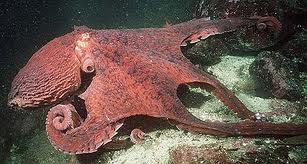
North Pacific Giant Octopus

When I was 15 my parents took me and my sister on our first vacation ever. We lived in Winter Park, north of Orlando. The vacation was to Clearwater Beach on the Gulf of Mexico. I remember two things about that vacation: my sister having a shrimp cocktail and a hot fudge sundae at the Columbia restaurant in Ibor City then throwing up on the drive home. The other was finding a baby octopus on the floor of the car. The baby octopus looked like a tiny mobile clump of wet sand. It came out of a what we thought was an empty conch shell we'd picked up on the beach, and would never have noticed it if it hadn't crawled out (in search of water, no doubt) and across my mother's foot.

 It died, of course.

All my life--to that point--I'd collected small dead animals and kept them in jars of alcohol. I had quite a collection by the time the baby octopus was added: snakes, lizards, baby turtles, newly hatched birds. This rather morbid curiosity about animals eventually led me to pursue a degree in biology where it was a perfectly acceptable practice to collect and preserve dead things.
I don't know what happened to my dead animal collection. I'm sure my mother put ever jar in the trash the same day I moved to Miami, but since finding that baby octopus, I've loved them. Yesterday, someone sent me this amazing video. As they say, It's awesome!


Octopus opening a jar with a screw lid
 
From Wikipedia
"Octopuses are highly  intelligent, likely more so than any other order of invertebrates. The exact extent of their intelligence and learning capability is much debated among biologists, but maze and problem-solving experiments have shown that they show evidence of a memory system that can store both short- and long-term memory. It is not known precisely what contribution learning makes to adult octopus behavior.
In laboratory experiments, octopuses can be readily trained to distinguish between different shapes and patterns. They have been reported to practice observational learning, although the validity of these findings is widely contested on a number of grounds. Octopuses have also been observed in what some have described as play: repeatedly releasing bottles or toys into a circular current in their aquariums and then catching them. Octopuses often break out of their aquariums and sometimes into others in search of food. They have even boarded fishing boats and opened holds to eat crabs."
Guest Blog: Ronnie James with a little help from the Cornell Lab, and Google images, and yours truly


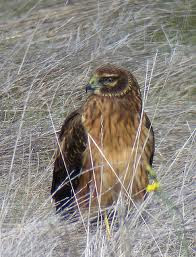
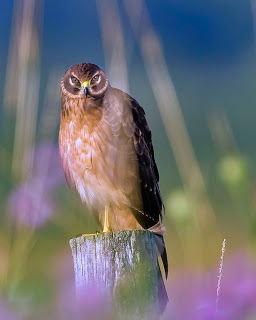
You might mistake this hawk for an owl

For me, the Northern harrier, formerly known as the Marsh hawk, was always the easiest hawk to identify. It forages by flying low and slow over open marshes, meadows, prairies, pastures and grasslands. If the manner in which it forages isn't a dead giveaway, wait for the moment it rocks one way or the other and you see that white rump patch. Bingo.

The northern harrier is also the only sexually dimorphic hawk I can think of. Dimorphic? Oh, please. It means the sexes don't look alike, except for matching white rump patches. In this case the male is pale gray and the female is a mottled brown. Dimorphism in birds often means that the males have multiple partners, and lo and behold, that is true of this hawk. The male may have more than one mate, possibly as many as five in a season.

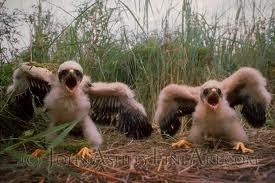
Why are so many female birds drab and homely? Mostly because they need to be inconspicuous, especially if your nest is open and exposed. As you might have guessed by the female northern harrier's coloration, they nest on the ground.

So how come this hawk looks like an owl? For the same reason owls look like owls. They rely on hearing to find prey (mostly mice and other rodents) and so does this hawk. The stiff feathers of the facial disk direct sound to their ears.


Two baby harriers in their ground nest

SUCCESS STORY  
by
Ronnie James

In July, someone noticed a fledgling Harrier standing in a meadow eating a dead rodent held tightly in its talons. The young bird was so intent on its meal, a man walked up, grabbed it and stuffed it into a box he had with him. The man suffered a few nasty puncture wounds to his hand in the process. Then he brought it to me because he was sure there was something wrong with it since it did not fly away when he approached. 

There was absolutely nothing wrong with the bird. Harriers nest and feed on the ground and this one was a juvenile, intent on his meal, which he refused to give it up--even to a giant predator. 

I fed it for a few days, then volunteer Elly and I took it back to the meadow where it was found and released it. It stood on the ground for a long time. Just as we turned to leave, we heard a distant cry. The young hawk replied, and as we watched, it rose into the air and was last seen flying behind its mother screeching and begging for food.  It’s so rewarding when something works right. We follow rehab protocol, but never know if it really works. In my 30 years of releases, this was the first time I’ve actually witnessed a reunion.

Ronnie James,
Woodlands Wildlife
Author of Touching Wings, Touching Wild

Snakes in the Everglades: More than you might want to know.

 Lost in the River of Grass is based entirely on the true story of an ill-fated day-trip of my husband's into the Everglades. In the mid 1960's he took his then girlfriend for a ride in his airboat, which he  inexplicably (unless you know my husband) washed first. He removed the stern plug so the soapy water would run out, and put the plug in his jacket pocket. That's the last thought he gave to that plug until well after he and his girlfriend had been at one of the hunting camps in the 'glades for some time. By then it was too late. The airboat was right where they'd left it but only the propeller cage showed above the surface of the water.

But that's not what this is about. For Doug and his girlfriend the 3-day walk out of the Everglades was perilous enough, but things have changed. People have been releasing their over-grown pet pythons into the Everglades and now their numbers have reached almost inestimable numbers. Just last week the Miami Herald  ran a story about a 15.2 foot python eating a 76 pound deer. 

Oscar Owre, the most wonderful mentor I've ever had, taught ornithology at the University of Miami. He took a bunch of us on a hike into the Everglades that I'll never forget. (If you read my book, you won't either. So much of what I included was from that experience.) So knowing that there could be thousands upon thousands of pythons out there killing native species really breaks my heart.

Since my version of Doug's story takes place in the modern day, I included a fictionalized scene of a python eating an alligator. But it's only fiction because my characters are. It's happens all the time. And of course, the danger is not just for the native species that are now part of the python's diet. The Miami Herald article reminds parents to keep children away from "grassy thickets and water." I grew up in Florida. I lived in the water. What a tragedy this is.
  
Albino Burmese python
At my reading at Books and Books in Coral Gables, a young man from the Miami Museum of Science brought an albino Burmese python. It was beautiful as you can see. I'm a huge fan of snakes. There's no ick-factor for me. In fact one of my going away presents when I move from Miami to northern California was an Albion red rat snake. Her name was Rosie, and she grew to be 5 feet long and lived 9 years. I used her in educational programs that I did in the local schools. She was never a danger to anyone or anything.

Rosie look-alike


Here are a couple videos you might enjoy, or NOT.

This link is a video of an alligator and python.
http://www.youtube.com/watch?v=xfYAj1k9uZM&NR=1


This video is a excellent, but may be a little graphic if you aren't into snakes AT ALL.
http://www.youtube.com/watch?v=Qy67XU6xEi8

I hope this isn't a before shot


Guest Blog from Tanya & Mason


Needles and Genny

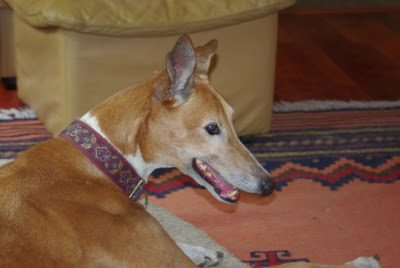
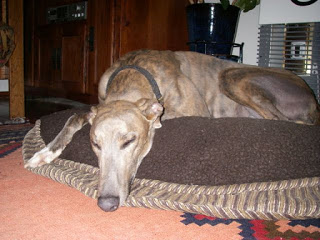
My friend, Tanya, and her husband, are a mini unit of Greyhound Rescue.  A visit to her house and you know how that mechanical rabbit feels.

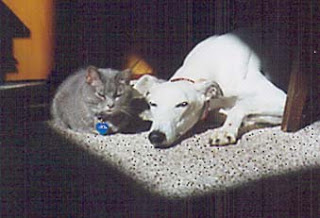
When I first met Tanya 12 years ago, she had Sable and Genny (and Needles--their landlord.) All the greyhounds then and since have been rescues from the dog racing industry, available either because they weren't fast enough to ever race, or had been retired. Greyhounds usually retire around the age 2 or 3. There are many greyhound adoption groups nationwide, and they are meeting with success (especially in Tanya's household.)

Any large-scale animal breeding operation for profit is a tragedy. It doesn't matter if it's dogs, horses, rabbits, or kittens. It used to be standard practice to "shoot and shovel and shut up," but because the dog racing industry is participating in the relocation (re-homing, re-cycling) of adult greyhounds, many have a good chance of finding a home. Their litter mates may not have been so lucky.  GR

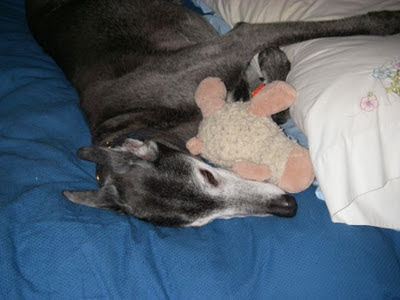
Sable and his lamb


Hello Everyone,

I wanted to tell you all about my new little brother.  As some of you know, my big brother, Sable, died just before Christmas and I’ve been very sad. I don’t like being an only dog. Sure, you get all the attention, but it doesn’t work if you aren’t winning and the cat doesn’t count. My humans have also been very sad and I thought they needed a distraction.

We tried to drive to the Greyhound Friends for Life place in Auburn (near Sacramento) on New Year’s Day but my female human’s truck got sick so we turned around. I thought it was sort of silly to drive all day and not get anywhere but back home. Sure, we greyhounds run in circles but there are cookies at the end. We drove back up on Thursday in my male human’s car. 

There were lots of dogs at the Greyhound Friends for Life shelter. I liked them all but some of them couldn’t be my new friends because they chase cats. I understand completely but Needles wouldn’t have if I’d brought one of them home. I visited with a pretty boy named Tango but he was so scared of my humans that it sort of scared me so I didn’t take him home. Susie didn’t like me – obviously a female dog with no taste. Foxy was really pretty and sweet and liked me but liked my humans more and that made me jealous so I didn’t bring her home either. Then this 2 year old black dog came out and told me that he really needed me to be his big brother. I had to gently remind him who was in charge when he got too close to my humans but he was appropriately respectful so we ran and played. I didn’t have to bite him once. It’s the first time I’ve ever been the alpha dog. Sable was a firm but gentle big brother to me, so I know what to do.

This dog was named U da Boi by his track people. We will all try to forget that as soon as possible.  Dr. Heather Weir (the very nice vet who brought me to my humans) rescued him from his training farm in Colorado and called him Speedy. Well, that didn’t make sense. If he was, then he’d be racing now wouldn’t he?  Besides, he’s not speedier than me. After spending a day with him my female human said that he was obviously a Moose. Since he didn’t know his name yet anyway, we renamed him. Moose is it, and a Moose he is.

My humans almost called him “Sable’s Revenge” because when we go outside, he follows me everywhere just like I did Sable. But unlike Sable, I sort of like it. I’m taller than him so I pee on his head which is fun.

Moose has had a few “issues." First of all, he’d never ridden in a car before. That scared him a lot and he tried to climb over the barrier into my Mom’s lap while we were on I80 at rush hour. This was sort of exciting. I tried to tell him it is just like running fast without working so hard but he wasn’t listening. A big storm hit as we were driving home and though we made it ok, the power went out and big trees fell down in our yard so our humans were outside a lot trying to fix things and he cried when they went out without him. He had to learn that the cat is not a squeaky toy. He’s also scared of thunderstorms. He tries to steal my food – actually he tries to steal everyone’s food – thus his name.  I don’t care if he steals my food but I’m NOT sharing the couch. He’s a little shorter than me, but is a bit bulkier and he’s really strong. He pushes through when he wants to go somewhere even if my Mom says “NO”. Thus his name again. Of course he doesn’t know his name yet and just looks puzzled when someone says “NO” as though it couldn’t possibly be him they are talking to but I’ve told him that the youngest dog gets blamed for everything. He doesn’t know much actually which is sort of fun because I get to teach him. This worries my humans for some reason.   
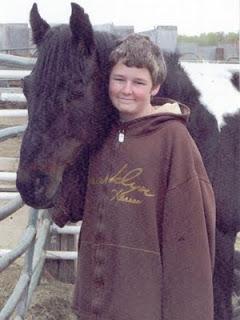
My mom had the hardest adjustment but she’s coming around. She really misses Sable and it was hard at first because Moose is black, too. I was sorry for that but he picked me and dogs don’t see colors. We all still miss Sable horribly and Moose is certainly not a replacement. However, when he’s following me around and I’m having to be patient with him, I imagine Sable looking down at us from the Rainbow Bridge laughing his tail off.

Love,
Mason
Mason, the author

Kopi, the most recent addition


Guest Blogger: Ronnie James "Not so Wild Goose Chase"

I've known Ronnie James for 20 years. When I was president of our local Audubon chapter, I would get frantic calls almost daily from people about injured birds. It's how I got into doing a bit of rehab myself, especially baby birds. For hawks, owls, pelicans, turkey vultures and baby mammals, I'd call Ronnie. She has a million stories, many of which are in her wonderful book, Touching Wings, Touching Wild.

 
Ronnie James has been doing wildlife rehab for 30 years. In
1987 she followed her heart to Mendocino and Woodlands Wildlife grew out of a visit to the local veterinary office to look for cat food. She holds both State and Federal licenses to posses wildlife and teach Environmental Education programs, and her clients range from river otters and fawns to eagles and chickadees. Her recently published book Touching Wings, Touching Wild about her wildlife rehab adventures in Mendocino is available from http://www.touchingwings.com/. Proceeds go to rescue, heal and release injured or orphaned wildlife.


NOT SO WILD GOOSE CHASE:  I began receiving reports of a tame Canada goose at Van Damme State Park. It was begging for food and flying behind bicyclists and cars as they drove along Highway One--a clear sign that this goose was imprinted, having bonded with the first living thing it saw as it emerged from the egg--in this case a human. It has since grown up not knowing it was a goose. This is a very sad state for any wildlife because it will never know its own kind,  never breed, and it will not know what its wild diet should be, so can never successfully feed itself.


The goose eventually flew north into Mendocino. The people loved it, but its feet were getting bloodied from landing on the asphalt, plus flying  up and down the streets behind cars is really not a safe occupation. It was also getting pretty hungry. Someone finally caught it and brought it to me. I’ve given it a swimming pool and its feet are healed. My guess is that someone raised it as a pet, then discovered that it was expensive to feed and it left pounds of slippery goose droppings around, so they let it loose at the state park thinking it would survive on its own.

I’ve networked with the specialists and learned that if a baby Canada goose is kept confined with wild Canada geese it will grow up with dual imprinting: human and goose, and can be released. But this is an adult, and will not adapt. I’m currently searching for a permanent (confined) situation for the goose. I write this to encourage all of us who find wildlife to please contact a local veterinarian to get a referral or get on the internet and find your closest rehab facility. The good news for this goose, is that it is fat, happy, and alive.


A Wish for Morgan and Levi


I received this letter from Morgan a couple years ago and saved a copy. I found it the other day and was just as touched so I wrote to ask her permission to share it. Hearing from young people whose lives my stories impact is why I write.

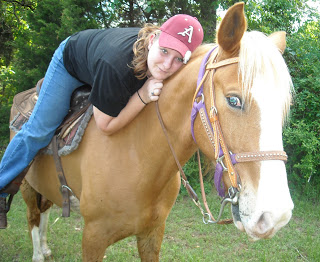
"Hello, my name is Morgan. I'm a sixteen year old girl from El Dorado, Arkansas. I just bought your book, The Outside of a Horse, when I was in Little Rock. When I got in the truck with my father and stepmother, I started reading it and I never took my eyes from the pages. The ride from Little Rock to El Dorado is about two and a half to three hour drive. I was on Chapter 15 by the time I got home. Later the night I finised the whole book! I was so inspired . . .! I know how Hannah feels during this whole story. My grandfather went to Vietnam, and my grandmother has told me about the times when he would sneak around the house with his gun having flashbacks. Both my grandfather and my father went to Iraq together at the same time. It was so hard for me because I was only a little girl back then. I did the same thing that Hannah did; I went to my horses and just watched them grazing and I felt like I was with my daddy and grandpa. I wanted to tell you that using horses for therapy works. I use it all the time, when I'm sad about something or just wanna talk to someone who will listen without teasing or mocking me, I go to the pasture to my old lazy boned horse and talk to him. His name is Levi, he is an 11 year old Tennessee Walker / Quarter horse mix. He has been with me since he hit the ground at birth, and he is the bestest friend anyone could ask for! I have four horses at my mother's place, and one at my father's. I ride Levi as much as I can! I would ride Big John, my dad's horse, but he's too fat to ride! The saddle we have for him is even too little for him now! He is at a family friend's place right now with his cattle. It's fun to watch John herd cattle. He thinks of them as his big, fat happy family, I guess. But I really wanted to tell you that you should make a movie based on The Outside of a Horse; it's so inspirational and heartbreaking. I cried at least 6 time while I read your amazing book. Though I must say, I have never heard of Parelli Training before 'till I read this book. If I would have known about it before I started training some of my horses, I would have used it instead of training them the old fashion way. I think it's really cruel now that you think about the way people train their horses. I know I don't have much to say, but I wanted to thank you so much for writing this book!"

That was then. When I wrote Morgan to ask if I could print this, I mentioned how much I loved her name and have used it for a character in my new book. I received this update.

"Sure I don't mind at all! I'm trying to get started in college for Art and Photography but haven't gotten to it yet. Levi is doing good. We sold all the other's since my mother passed away and my stepfather is never home anymore. Yeah well everyone likes my name it's funny to me because I really don't care for it too much. But thank you anyway. Your (new) book almost sounds like me and my life. My dad really doesn't have anything to do with me and my stepdad...he has changed since the whole thing...My mom took her own life she would be 38 now. Life is getting better but its still hard. Levi, well he was all skin and bones with little meat on him since we couldn't buy feed but I got him moved to a different place now. The man who is letting me keep him there is really nice, I only have to buy feed when he runs out. But he gets watered everyday, fed everyday, he has a stable now since he has never had one. I bought him a new winter blanket yesterday since it's really cold here and he hasn't grown his winter coat yet because the weather is so off. But he has gained so much weight he looks great! I'm happy he is doing better but his only problem is he is lonely. He is the only horse there and he is used to having at least one horse with him. My family friend suggested I get a goat to put out there with him but if I did get something it would be a donkey since Levi has never been around a goat. He is scared of alot of things like trash cans, ditches, water puddles, and cattle. And since he has been around donkeys and huge mules before I know he would do fine with a donkey instead of a goat. He is finally letting his mane grow out too! You know I've had Levi for 13 years now, well ever since he hit the ground from birth and I've never seen him with a long mane. It's kinda long up around his ears but farther down its short and sticks up like a mohawk. But its starting to get longer since he doesn't stick his head thru the fence anymore. My mom took this picture before she died and I just got it developed."

Dear Morgan,
I'd like to think it's your turn to have good things happen in your life, and now a lot of people are rooting for you. My love to you and Levi. GR      

Tanya and Terry

 
 I never met Terry, but feel like I knew her because Tanya loved her so much. She has pictures of her in her house, and a couple of her paintings. That's right. Terry, as many of us have, turned to art in her old age. Here's Tanya's story. Ginny

"I heard this week that an old friend had passed away. Though I wasn't able to visit her often, or talk to her in her language, I always considered her a very dear friend. She apparently died of natural causes after a long life, though we are about the same age (delicately put--both in our early 50s.) She was loved by many, including me. I first met her 24 year ago when I handed her a fish...

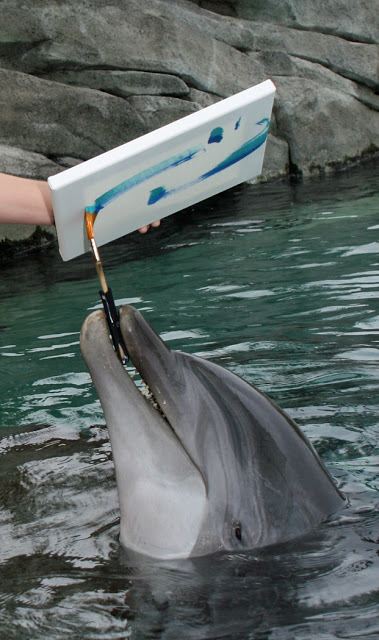
My friend was a dolphin named Terry. She was born in the wild but lived most of her life in a Marine Park. When I met her, she was part of a research gourp that was trying to understand more about language by seeing how well we could communicate with another species. In my opinion, the score was: human understanding dolphins, 2; Dolphin understanding humans, 10.

I had just started volunteering to help care for and entertain the research dolphins on weekends. I was being trained to feed Terry and Circe, two females in this group of four dolphins. The first time I tried to hand a fish to a very large animal with a very large mouth full of sharp gleaming teeth, I fumbled. Terry snatched the fish from the water and gave me a look that clearly said, "you aren't very good at this, are you?"

I got better as Terry trained me. If I tossed fish fast enough, she wouldn't clack her jaw at me. Terry was a Mom at that point. Her calf was Panama, and she was a loving but stern Mamma. Folks asked whether I petted Terry or went into swim with her. Nope. I saw how she disciplined Panama when he stepped out of line and not speaking dolphin, I figured I'd break and/or bleed.

Telling the dolphins apart was hard. Some humans looked at the dorsal fin or tail to see a distinct mark. Terry had a notch in her tail, but I could tell her apart from Circe by her facial markings, and especially her eyes. When Terry looked at you, you stood up a bit straighter, like you were about to get an order. You probably were.

Dolphins have no problem telling humans apart. I think I was known as the 'hula hoop girl.' I'm tall with long legs so I could run around the inside lip of their tank dragging a hula hoop in the water while dolphins chased me. If I turned to go the other way, the dolphins turned as a group, making a wave that I'm sure was intended to knock me in the water so they could capture the hoop. I don't know if any other volunteers played this game with them, but whenever I came in for my shift, Terry would grab the hula hoop and bring it to me. 

I stopped volunteering when life became too complicated. Many years later, after several moves and a marriage, I returned to California and reconnected with my friend, Mike, who worked at the park where Terry was still living. Mike made it possible for me to see Terry again.

We were both much older, of course. People asked if Terry remembered me. I'm not sure; she didn't say. If she had other distractions, she hardly noticed me. If she was bored or I hung around long enough, then she'd come over to visit and seemed as though she liked having me around. Maybe she remembered me, or maybe she was just trying to figure out why my eyes leaked.

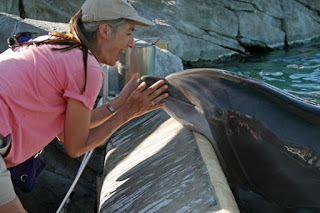
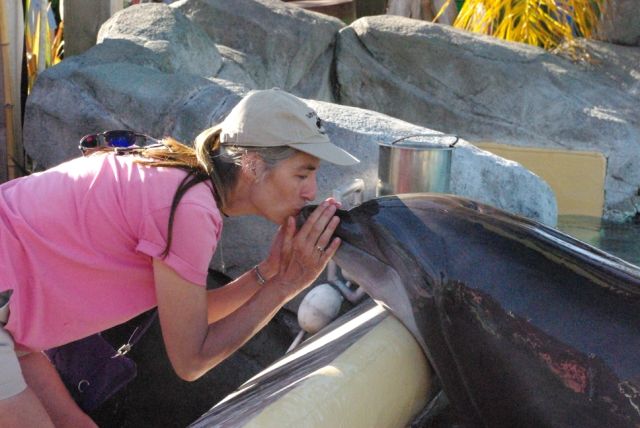
The last time I saw Terry, she was pink and chubby, with many less teeth, but she was clearly in her element. Her caretaking humans called her a 'lap dolphin' as like many of us, she'd mellowed with age and less child-rearing repsonsibilities. She was out where she got lots of attention, in a tank full of young males that she enjoyed bossing around. She was helping her humans with the 'swim along' program, primarily by allowing the young and/or scared humans to grab her dorsal fin and have their swim suit bottoms pulled off by the force of her wake. Old dolphin, my eye. I swear she laughed. In between swims, she slept--like any grandma. I got a kiss that I'm forever grateful for.

The desire to connect with other species drives many humans. I'm certainly one of them. I've traveled to distant places to just to look in the eye of an animal that doesn't know me to see if we can connect. It's a moving experience whether or not it is only in my imagination. Knowing and loving Terry is a huge part of who I am today. I'm honored that I was allowed to her friend, and know her name. In my vanity, I imagine that she knew mine."


Terry, the artist


Taj and Terry


These pictures were taken by Mike Owyang. (Look at my opening post for another of his wonderful pictures.)


Taj was 71 and, at the time of this picture, the oldest living Asian elephant in North America. Terry, who died two days ago was thought to be one of the oldest dolphins in captivity. She was 51.


Mike and my friend, Tanya, were very close friends of Terry and I asked Tanya to write about her. That will be in the next posting.

How do you breathalyse a whale?


http://news.bbc.co.uk/2/hi/science/nature/7723703.stm


This is too funny. This picture is of a miniature helicopter taking a sample of the 'blow' of a whale so scientists can analyse what all might be in whale-exhalations. Good project, and worthwhile, I'm sure, for whales other than gray whales. This picture was taken in the Sea of Cortez, just over that mountain range from San Ignacio lagoon. You now know as well as I do that if they'd take a jeep ride to the other side, they could fill their petri dishes with as much misty whale snot as they could ever want. I may still have a sample left on my camera lens. One of the baby whales actually took aim and fired when he/she saw a camera.


Thar she blows!


Mother Gray & Baby


This picture fills me with guilt for being human.


As late as 1975, we (American whalers) were still killing Gray whales. And it's not as if whaling has stopped. It hasn't. Iceland, Norway, Japan. I won't go there. No point in messing with my blood pressure.


This picture, taken in San Ignacio lagoon, Baja, is more meaningful to me than having a new mother, full or pride and adoration, place her baby in my arms. It's closer to how I feel when someone lets me hold a new puppy or kitten. I'm instantly smittened, and begin to worry about its future, and if this person can be trusted with a new life.


I saw my first whale of the season a couple days ago. I'm not sure if it was a Gray or even which direction it was headed. Just glimpsed the plume of mist as she/he surfaced for a breath and, as always happens, I found myself thinking I might have touched that very whale. If I did, I hope it remembers that moment, or another's hand reaching out, as I did, with one wish: Stay safe.

Old man and Dog


This is one of my favorite pictures. I know who sent it to me but he doesn't know where he got it. It looks just like our coast in the winter. I love that the old man is looking at the sea with longing, or love, and that the dog is looking at his (I hate the word 'master') with the such devotion.


If I did this correctly, the link below should have turned this picture into a jigsaw puzzle. If I didn't do it correctly, enjoy the moment.

http://www.jigzone.com/puzzles/21156A049B3?z=0

Kameryn & Quinn & Arty in the hat


This letter is from Kameryn's grandmother. I'm moved to share these from time to time because, as a writer, they represent my dream of impacting the lives of my readers. There's no greater gift.


Dear Ginny,


I just finished reading The Outside of a Horse. The book was passed on to me by my 12 y/o granddaughter, Kameryn. My heart is so filled, I felt I had to write to you.


I was raised in a very small town. We could have horses in our backyards when I was kid, so my sister (who is 8 years older) was blessed to be raised with her own horses at home. By the time I was 13 ordinances had changed and my parents had to pay to board my pony. That didn't last long and all the horses were gone from our family by the time I was 14. Becasue I had to give up my horse dreams at an early age, it has been a blessing for both Kameryn and me to connect with horses in the past few years.


For one year, Onyx, who had been rescued from euthanization, taught Kam about love and patience and the basics of how ride. . . We began our search for a horse that could help Kameryn develop her riding skills as well as be her friend.


After weeks of looking and 'tryin out' horses, Kam's heart was set on Quinn, a 22 y/o, flea-bitten gray QH. We visited Quinn three times and Kam had lessons on her twice to determine compatibility. The final decision was made when Quinn walked over (on her own) and put her head in Kam's lap. (The moment when Quinn chose Kam caught by Debbie.)


We didn't know we were actually being "interviewed" by Quinn's owners. Then that happened, the decision was made. She is truly a Godsend for all of us--kind, intelligent and just spunky enough to give Kameryn the challenge she needed. They won nearly every blue ribbon (in her age group) at their very first show.


Quinn can get pretty moody at times (as can Kameryn) and when she is mad she won't pay any attention to Kameryn. It's incredible. And if Kameryn wants one of her friends to ride Quinn, she will sometimes refuse, act tired and lazy. Then when Kam gets on her, they're cantering away in a heartbeat! She's a one-person horse for certain!


Knowing Quinn wasn't able to advance into jumping, we began looking for a younger horse. I connected with a woman who runs a small rescue about 3 hours from our home. We decided to take a day trip to meet 'Smarty Arty,' a rescued Standard bred harness racer. Underweight and absolutely expressionless, Arty stole our hearts with his sweet, yet 'mechanical' disposition. He did all that was asked of him when being groomed and saddled, but he did it all like a robot. He was well trained, but so unloved. He broke our hearts. Five y/o Smarty Arty joined our family in July 2009.


Because he was a pacer, he had much to learn. However, after about six weeks of training, Kameryn asked if she could take Arty to a show. Off we went (and Quinn, too, of course). He did remarkably well, acted like a kid--alert, funny mischievous--but still very loving and willing to do whatever was asked.


By September, he was huge, and absolutely gorgeous, attracting the attention of many who had see him previously.


They have worked incredibly hard. Kam has fallen off a few times, and each time, Arty stopped right at her side and waited. He follows her all over the ring and stands for long periods of time without being tied.


We currently board out horses, but we are just beginning to clear some land to put up a barn at home. We want our horses to be given all the love and care they rightly deserve. We visit them nearly daily, and they both know that we are their family. And from helping to heal their broken, tired hearts, we have seen healing in our own broken, tired hearts.


When Kameryn grows up she says she wants to be therapeutic riding instructor. She knows, but is not fully aware as I am, of the transformation that took place in her during these years with her horses. After reading your book, she was reawakened to how much she has learned from them and how much she depends on them when things are tough. Hurting people need a purpose and when the purpose involves the care and nurturing of another hurting life, the focus is shifted to the needs of the 'other' life. For Kameryn, this has meant helping Onyx become involved with people again; with Quinn it has meant showering her with the love and care she earned after a very hard and fast life; and for Arty, it has meant saving him from probable slaughter and showing him what it means to be loved and honored.


And even now, as I've taken over the care of a broken down elderly barrel horse, we are learning that love can heal a lot of pain and that the changes that take place while waiting for healing might require shedding everything this is dead (like hair) before true health is revealed.


Thank you for you willingness to search for the truths and for being 'real' as you tell a story that, although fictional, is true to many.


Debbie H


Here's looking at you.


I took this picture in the Everglades some years ago.


When I was growing up in Winter Park, FL, we used to see alligators in the lake in front of our house all the time. The only time we gave them a thought was if the dogs were down at the lake with us. They do love dogs.


In high school, I swam the lake every day--about 1/4 mile across and back. I'd get back, all tuckered out, and waiting for me was 'Big Foot,' our tame Purple Gallinule.


Purple Gallinules are migratory. Big Foot and her partner Limpy, would arrive every summer, nest and raise their young in the cattails along our lake front. We fed her bits of bread (what did we know?) She'd stand on the railing of the front steps of our house and peer in the kitchen window. The first person to spot her, got the bread, and opened the back door. She'd come up the back steps, right into the kitchen, snatch the bread, fly out the door and down to the lake.


I learned two things from our lake and Big Foot. When we moved to Lake Sue in Winter Park, my dad and I would row out every day after school to fish . The water back then was crystal clear. I would hang over the bow and spot bass for him. Within a few years, the lake became slitty. Daddy blamed the ski boats, but I know now it was the fertilizer everyone was using on the lawns that stretched down to the water's edge. By the time I graduated from high school, the lake was clogged with algae and plant life, some of which grew so tall it would tickle my stomach as I swam the lake.


From Big Foot, I learned to love birds. She was my first introduction to what turned into a passion for wildlife and conservation. Our poor lake, and that wonderful bird, informed my thinking, and eventually led me to pursue a degree in biology, and do a little writing. :-)


Guest Blog: My Life by Jeremy Cimino


Ahhh, my 7th grade year, that was a good time--laughing, joking and just having a good time. I must say the best part of my 7th grade year was finding my best friend.


Around the middle of 7th grade my mom and I decided to volunteer at Dream Catchers Equine Rescue. http://dcerinc.com Dream Catchers is the home of my best friend, Geronimo. I met him the first day of volunteering; he had been starved by his previous owner, without a bit of hay. I give all my thanks to my mom and Julie. If it hadn't been for them my dream wouldn't have come true. Julie is the one who found Geronimo and gave him a second chance at a better life. My mom found their ad in the newspaper and decided to go volunteer. If she didn't do that Geronimo and I wouldn't be one.


So this is where the adventure begins. The first day we connected was a feeling I very rarely feel. I could tell Geronimo needed me and I needed him. We would help each other through thick and thin, for better or for worse. It was meant to be, God brought me here for a reason--to help Geronimo get better and live a happy life. Geronimo is my best friend; he helps me. When we are together the whole world melts away. Everything is gone, it's just me and him together forever as one.


Throughout the days that have gone by we grew closer and closer. Everything got better, and they still are. He was born a stallion--a life of loneliness. He couldn't run or play with the other horses in the field, or be with another horse. But when he arrived he was put next to another stallion, Rae. Now, Rae was my mom's best friend. She loved him with all her heart. Rae became Geronimo's friend too, and they loved each other. Rae had cancer and had to be put down two weeks ago.


Geronimo keeps going strong. I don't think he knows Rae is in a better place now and is happy again. The relationship between Geronimo and me keeps building. Just a few days ago, Geronimo was gelded which means he can run and play in the vast fields that have been awaiting him. So this is where our adventure ends, with the horse that means the world to me and that I'd do anything for. Together now and forever in the future days that await us, with more adventures to come.

Jeremy Cimino

Age 13

Guest Blog: Shirley McGreal, Director of the International Primate Protection League


When I first started researching Hurt Go Happy, I heard about Shirley McGreal. She's been working to save primates from research facilities, protect them in their natural habitat, and conduct investigations into illegal trafficking in primates. The IPPL is headquartered and operates a sanctuary in Summerville, SC. I asked Shirley to tell us about her first rescue.


9 August 1981


Thirty long years ago. My friend, Kit, and I drove to the Atlanta airport to collect a new friend. We were scared he'd get lost because his move occurred during the turbulent days of the air (traffic) controllers' strike.


Our new friend was one of the first laboratory primates ever to escape a research lab. A California lab had lost its funding to continue its cruel cancer experiments on gibbons. Homes were quickly found for all but one of its gibbons, the fragile underweight little ape known only as HLA-98. The gibbon had been abandoned as a baby and reared with a wire 'surrogate mother.' He faced euthanasia until IPPL stepped in and offered him a home.


We had been told by the lab director that the little gibbon was 'mentally retarded' and 'metabolically abnormal.' Of course we didn't let that stand in our way because we exist to help the most needy primates. We contacted Thai Buddhist monks who gave him the name Arun Rangsi, which means, "The Rising Sun of Dawn."


We were nervous when we reached the Delta cargo shed. Did our gibbon make his flight? We asked the cargo manager to call the pilot, who said there was no gibbon on the plane, but there was a chimpanzee. We waited with bated breath while the 'chimpanzee' was unloaded. What we saw in the crate was a tiny gibbon with huge shining dark eyes. (Picture above. Arun Rangsi in his crate.) We brought him home. The poor little gibbon was neurotic and banged his head so hard it must have hurt. We worked hard to help him overcome his trauma and gradually he became a happy little ape.


9 August 2011


In the 30 intervening years, we found a girl gibbon named Shanti, who became Arun's partner in life. She was also a lab veteran. In contrast to the high-strung Arun, Shanti was very laid-back. They have produced several offspring. Arun Rangsi had not read the psychology textbooks that said an isolated-reared primate could never breed! He has now been vasectormized. (Picture: Arun Rangi now)


It takes very special people to work with veteran research primates and IPPL has been very lucky to have attracted wonderful caregivers for our gibbons, who now number 33.


Please visit the International Primate Protection League website http://www.ippl.org/


Got an itch?


Another picture from Baja. I was in the other panga when I took this picture. I know it looks like the whale has either been hit in the head by the little boat, or is trying to consume it bow first, but she's really just using in for a 'toothpick.' Or her baleen itched.


Gray whales are baleen whales. Orcas, dolphins, and Sperm whales are in the toothed whale family. Baleen functions like a giant sieve. The whale vacuums up microscopic organisms from the sea floor, and pushes the water and sand out through the baleen with its thousand pound tongue. What's left is dinner.

The Birthday Boys


I knew Grub, on the left, and Pongo, on the right, nearly twenty years ago when Patti Ragan first started the Center for Great Apes. Grub was a baby, and Pongo was a year old. Look at the old boys now.


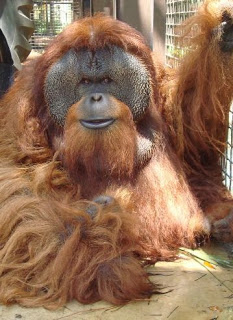
Pongo started life as an infant in a roadside tourist attraction and was Patti's first rescue. He is now a beautiful, fully developed male with red hair that is 3 feet long.


Grub, was born in Los Angeles, in an animal trainer's compound. He was pulled from his mother when he was just a few months old and sold to an tourist attraction in Florida. Grub is the alpha male in this group of great apes, and weighs 145 pounds.