Bird Safety


Luckily, my cat, Blue, isn't interested in birds. He's hell on chipmunks, but not birds. This morning, I received this email from a friend. 
"Talking about cats, Luna had become a bird killing machine (one, sometimes two, a day). In desperation I went on line and found a site - “Bird be safe.” Apparently birds can see bright colors - I bought a simple cotton collar from the site and- voila- no more dead bird gifts. I mean none. She seems almost proud of her collar and, although she can take it off easily, she generally doesn’t. If you have friends with a similar problem you might want to pass this along." 
pet cat kills between one and 34 birds a year, while a feral cat kills ... 
It's well known that cats kill millions of birds a year--Estimated at 3.7 million. If there is something that works to cut down on that number, it has to worth a try.
Want to Stop Your Cat From Killing Birds? Dress It Up Like a Clown
 If any of you try it, I'd love to hear back.

P.S. I got this from a bird-rehabilitater of the first order.
"That bright collar sounds like a fine idea. Yes, songbirds and many others can see ultraviolet light, for one thing, which creates a kind of neon glow. For another, most diurnal birds have at least four types of color cones in their retina, RGB and violet. We have three - RGB. Other non-primate mammals, most of them, have two- blue and green. Birds react strongly to color for display and possibly territory protection, and in hunters, in getting food. What a simple solution!"

A Case of the Pot calling the Kettle Black

Bumble bees pictures (1)
keepingbee.org
A few years ago, on one of our many chilly mornings, I found five or six bumblebees all snuggled together in a single flower. Though it was pretty obvious they were bundled  for warmth, I wanted to know why they'd chosen this method. I called my go-to person on all science questions, botanist Teresa Sholars. She said some species of plants actually increase their metabolism at night to attract bees. Bumblebees shiver to keep warm. A bunch of shivering bumblebees inside a flower insure they will become covered in pollen, and insuring pollination for the flower. How bloody cool is that!

keepingbee.org
 I, unlike bees, love sleeping in cold room with lots of blankets. This morning, I found a very numb bumblebee in my bathroom sink. At first I thought it was dead, but when a leg moved, I edged it onto a piece of toilet paper and carried it outside.

Nearly every morning, I'm awakened by ravens gathering to follow my animal-loving, but rather peculiar neighbor, who goes by, rain or shine, just at dawn, pulling a cooler full of stale bread, which she drags to the top hill to feed the assemblage. 

This morning, I'm on my upper deck trying to encourage my bee, which has crawled off the toilet paper and is now on my fingertip, into a nasturtium bloom, when I hear my neighbor coming along the road, talking to the ravens, which are flying along behind her, and I think aloud-- "Charlotte, you poor old thing, you're not all there," --then I catch sight of my reflection in the sliding glass door. Staring back at me is a seventy-plus-year-old woman, in her pajamas, with a severe case of bed-hair, and a bumblebee on the tip of her finger. 

P.S. I ended up carrying the bumblebee downstairs, put it on a piece of paper near a lamp, gave it a drop of honey, and covered it with plastic lid with a breathing hole. It drank the honey, and when it warmed up and started to buzz, I took it outside and let it go.


"The bumblebee is either sick, too old or too cold to fly. If it is sick or infected with a parasite then I'm afraid there is not much that can be done. However if you find a grounded bumblebee early in the year, just at the start of the first warmer days, then it is probably a queen. She may have been caught out in a sudden shower or a cold spell. If the temperature of the thorax falls below 30 oC the bumblebee cannot take off (see temperature regulation). The best thing you can do it pick her up using a piece of paper or card, put her somewhere warmer, and feed her. When she has warmed and fed she will most likely fly off. You can feed her using a 30/70 mixture of honey and water in a pipette or eye dropper, or just a drop of this on a suitable surface within her reach, but be careful not to wet her hair or get her sticky. By saving a queen you may have saved an entire nest. If the weather is really unsuitable for letting her go, or if it is getting dark, you can keep her for a day or so if you are willing to feed her." Bumblebee.org

Pretty Bird and then some, revisited.

Hopi
 I wrote this post last month then came across this video today. Too cute not to share.
 

As someone owned lock, stock, and barrel by this parrot for the last 35 years, I found this article a fun read. It was sent to me by Bill Bonvie, a fellow writer and author of Repeat Offenders.

Parrots Are a Lot More
Than ‘Pretty Birdfrom the NYTimes by Natalie Angier.

‘Feathered Primates’ 

"Parrot partisans say the birds easily rival the great apes and dolphins in all-around braininess and resourcefulness, and may be the only animals apart from humans capable of dancing to the beat."


"The most celebrated dancing parrot is Snowball, a sulfur-crested cockatoo with a trademarked name whose YouTube dance performances to Queen, Michael Jackson and the Backstreet Boys have been viewed some 15 million times."


Hopi was hand-raised and came from a breeder. India, Mexico, South Africa are the source of many illegally imported parrots, none of which, if they survive, will ever make good pets. The stress alone can cause them to sicken and die. If you want to own a parrot, please get one that is hand-raised, preferably by you, and purchased from a breeder. Also recognize, it will be lifelong commitment. They can live 80 or more years, and are messy to a fault. Ask any of my friends.

 Parrots make up for almost 50% of bird trade in India, experts say


  Unsustainable Grey Parrot Trade in South Africa | National Geographic ...

Makes me ashamed of my attempt to grow my own potatoes


Snow Crab
Last night a group of friends got together for an Alaskan snow crab dinner. Here on the north coast of California it is dungeness crab season, except it isn't. Because of domoic acid poisoning, a deadly neurotoxin, this year's crab season remains closed. I brought all the shells home to compost. This morning, I read this story about a family raising 6000 lbs of food on a tenth of an acre. They make their own gasoline out of cooking oil and only use $12 a month in electricity. I was already feeling ashamed about how much crab I ate last night, then wake up to a reminder of what we each could do to become less of a burden on the planet. I'll be out composting the crab shells while you enjoy the video.

 
Dungeness crab

 "Domoic acid, which can cause seizures or death in humans, began showing up in crabs after colossal algae blooms caused by unusually warm ocean waters started disgorging the neurotoxin in April. Recent state testing still detected it in a few northern areas such as Fort Bragg, and it’s those test areas that commercial crabbers are hoping will come up clean soon so the season has a chance of finally starting." SFGate story  By Kevin Fagan and Jenna Lyons

feature_image_templategard

story by Seth M

Left to Starve

If you've read this blog even once, you know that I come down on the side of animals whether it's to rant against the horrors we inflict when we lock them in cages to test our drugs, cosmetics, pesticides, and chemicals on them, or make them do tricks for our amusement. If any of these things make your stomach turn, you're my choir. I can only hope that once in a while a potential new member stumbles upon one of these posts and wants to help. And it's why I write for children, who are our last best hope to make us a more moral species.

Left to Starve
"Ponso is one of dozens of chimps who were stranded on a string of abandoned islands after the New York Blood Center (NYBC) finished years of painful testing on them."

Chimp Abandoned On Island Welcomes Rescuers With Open Arms

 By Ameena Schelling for the Dodo

 "The decision was met with widespread condemnation. At the time, Jane Goodall called the announcement "completely shocking and unacceptable." Duke University primatologist Brian Hare told the New York Times, "Never, ever have I seen anything even remotely as disgusting as this."

Oddball and the Fairy penguins

From my friend, Molly, in Australia
 
Adding this to my bucket list.
 
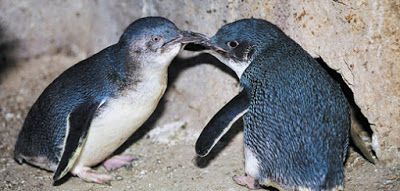
"Tomorrow we are going camping to a little island called Phillip Island. It is home to these cute Fairy penguins  There is a movie called Oddball that I watched. It's a true story (that takes place on a different island near us). All the penguin were getting eaten by foxes, which had learnt to swim over to this island. So the sent a dog called Oddball to scare away the foxes. Oddball did that and he loved those penguins. I don't know if you have heard of it before, but it was really cute. I found this picture for you of Oddball the dog with a penguin and, of some fairy penguins too."

I looked on Netflix w/out luck.


Parrots and PTSD


Exciting news (for me anyway.)
How to Speak Dolphin is an


Parrots and PTSD


Hopi
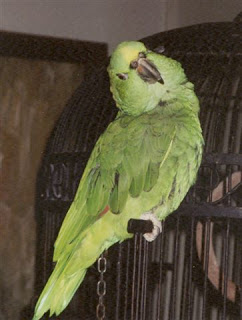
I've lived with a Yellow-naped Amazon parrot for 35 years. I bought Hopi in a pet shop in Winter Park, Florida, in 1981. I'd been looking for a parrot for some time, but it had to be hand-raised, not captured in the wild for a number of reasons:  
  • the practice has decimated wild populations worldwide.
  • many are smuggled into the country and most die on the journey.
  • a wild caught bird rarely makes a good pet. 
When the pet shop owner called to say he thought he had what I was looking for, I flew up from Miami to meet her. She didn't hesitate and neither did I--in spite of the size of her beak. She walked up my arm and nestled down on my shoulder. We've been together ever since.

Hopi'd had another owner, a man who worked nights and slept during the day. Not a good mix. She knew how to say Hello, Bye-bye, T-Th-That's Nice, the Wee-Wee-Wee part of "this little piggy", and I love you, Bird. About a month after I got her, I left for a pre-planned two week vacation. Since then I've always had someone come visit and feed her every day, but I didn't have anyone back then, so I left her at my vet's office. He gave her a nice big cage which I filled with her toys, and left him a supply of pistachios, still her favorite.

Hopi is able to add inflections to her bye-byes. There have been times when I was sure, if she could, she would add, 'and don't let the door whack you in the ass on your way out.' That day, her repeated bye-bye had a devastatingly sad tone. I'm sure she thought she was being deserted once again. I was in tears as I walked to the door with her pitiful bye-byes echoing across the room. When I turned to tell her once again that I'd be back. She hooked her beak and feet around the bars of the cage, pulled herself against them, and called out loudly, "I love you, bird." 

I was a Pan Am flight attendant back then, so over the years, she got used to me leaving and reappearing once a week. She liked the young man in my apartment building whom I hired to come in every day to feed her. Her bye-byes, when she heard the zipper on my suitcase, were cheerful. She even learned to associate my rare use of the vacuum cleaner with an imminent departure, usually for a vacation. She'd see the vacuum come out and cheery bye-byes ensued. She was fond of my house-sitter, too.


A few days ago, a friend sent me this article from the NY Times. What Does a Parrot know about PTSD? It's long, but worth the read. I Googled Serenity Park, which is a home for unwanted and abandoned parrots, or parrots, whose owners have died. When I got Hopi (pronounced Hoppy) I knew parrots were long-lived--possibly as long as 85 years--but 35 years ago, I didn't give much thought to my own mortality.  I've since arranged for her to go to a close friend, who is considerably younger than I am. And now, there is this safety net in case that friend can't take her when the time comes.

My novel, The Outside of a Horse, is specifically about the therapeutic benefits of a relationship with horses, and honestly, our kinship with animals is the underlying theme of nearly all my books. It's odd, that it didn't occur to me that parrots count.

As for Hopi and me, other than screaming her head off when I'm on the phone, I think we  have a good relationship. Thank heavens she can't weigh in.
  
Video
Website

Recommended Daily Dosage: Take a moment with your morning coffee

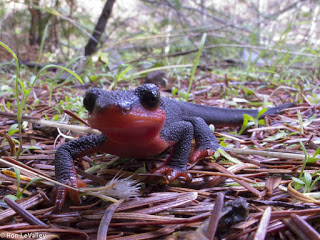
Rough-skinned Newt
The stock market is tanking; Sarah Palin and the Donald insist the sky is falling; China's economy is circling the porcelain bowl; the oil companies are shaking in their rubber boots. How do we cope?

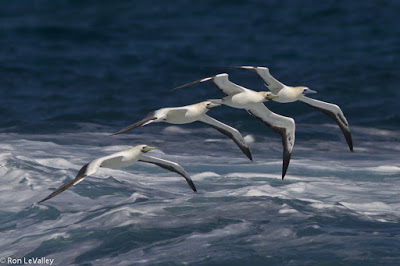
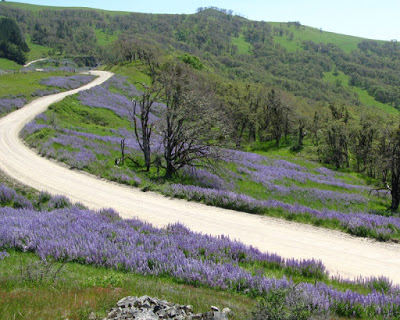
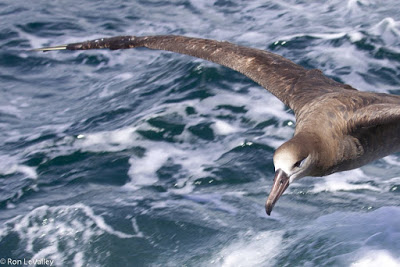
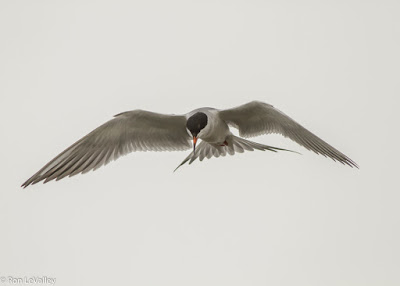
You might try what I do. Every morning, to put things in perceptive, I look for Ron LeValley's "Outside My Window" picture of the day. Starting with a reminder that we are surrounded by beauty puts me in the right frame of mind to deal with whatever the next 24 hours brings--good, bad, or the same old, same old.

I got permission from Ron to share a few of my favorites and invite you to join his list.

  To join Ron's List
Red-footed Boobies
Lupines Galore
 

Black-footed Albatross

 Ron's website
Forster's tern

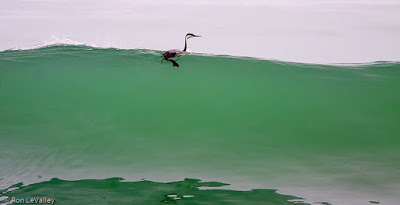
Western Grebe


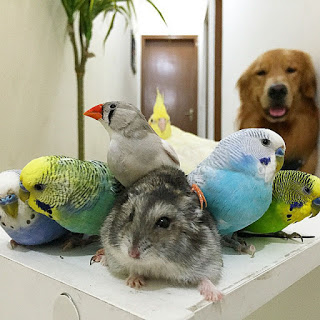
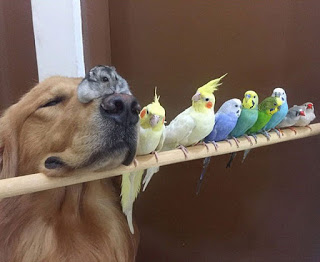
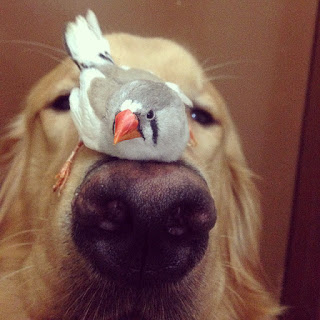
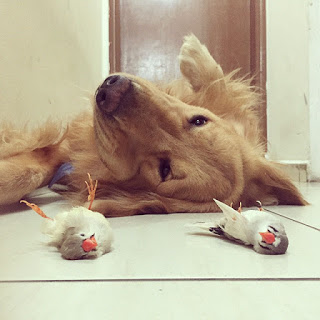
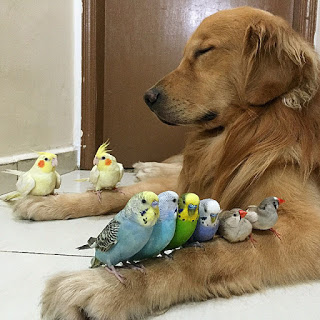
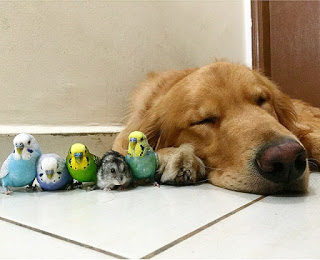
Bob...and his "siblings"

PetaPixel
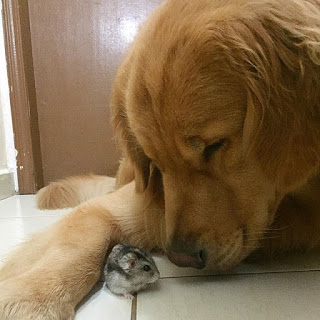
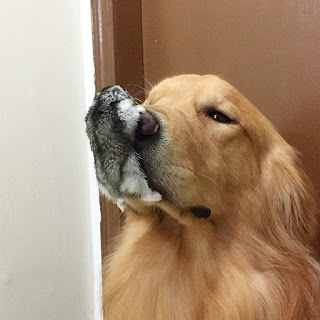
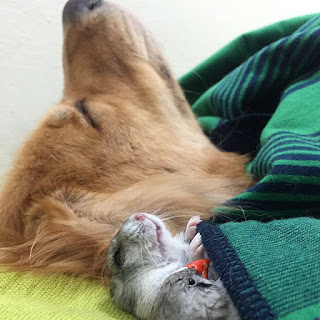
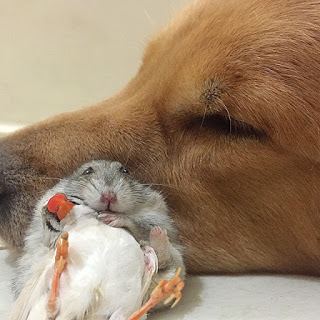
An eccentric but tight-knit group that consists of one golden retriever, one hamster, and eight birds. Thirty-one year old Luiz Higa of São Paulo, Brazil, says Bob, his golden retriever, is a little less than two years old. In the beginning, he just had Bob, a cockatiel and a parakeet.
     “Since the beginning I put them together to see their behavior,” he tells us. “It was nice,so I decided to have them play together during my free time.”
      He then added more birds and a hamster to the group.
      Higa’s photos show the group posing, playing, exploring, and resting together.


Hurt Go Happy, 10th anniversary edition

I'm proud to announce that Tor Teen has issued a tenth anniversary edition of Hurt Go Happy, my novel based on the true story of Lucy Temerlin, a chimpanzee raised as if she were human. HGH is the story of a deaf child's unique friendship with a sign-language using chimpanzee.


For years, I believed the original story that Lucy, the real Sukari, was killed by poachers. I Googled her and found this article. As it turns out, the truth will never be known, but the story is no less sad.

This is 20 minutes and includes a story about another chimp. It also doesn't go into what happens after Lucy's sexual awakening. 

Vimeo

 
Lucy Temerlin, Lucy's pet cat

Y'all Qaeda in Oregon

The last time I visited Malheur National Wildlife refuge was October 2013. Some of you might remember. I was Schlepping Sully V,  the ring-billed gull I bird-napped from Holland Lake, MT. Malheur, one of my favorite places on the planet, was my first choice of where to release him. I spent the night in Burns with Sully in the bathtub.

As it turned out, the next day was cold, windy, and raining. I couldn't find a single bird much less a population of gulls to introduce him to, so I drove on.

Fotos de Frenchglen - Imágenes de Frenchglen, Oregón - TripAdvisorMy first visit to Malheur was long before I moved to California. I was still a student at University of Miami, finishing up a degree in Biology. I'd started writing by then and I was into photography and birds, birds, birds--thanks to Dr. Owre, a professor of ornithology. On that first trip, I "discovered" Frenchglen, a wonderful little B&B, and spent the next day or two driving round and round the refuge.

After that, I visited every chance I got. I took my friend, Janice, when we drove my husband's old SUV back to Miami from San Francisco, and broke down 5 times in 4 states. We learned to pee on the side of the road by sitting on the running board between two open doors.

When I moved to California, I drove hundreds of miles out of the way because I wanted to see it again. I'd bought an RV for the move and was hauling Hopi, my parrot, now 35 years old, Rosie, my albino red rat snake, Lovie, a tame white dove, and Nauvoo, the coal black kitten I acquired on the way. We stopped for lunch under a stand of cottonwoods in Malheur. The RV door was open and I was making a sandwich when a young deer stuck his or her head in. While I ate, sitting in the doorway, the yearling munched the apple I gave it and let me rub its neck, then broke my heart chasing after me as I drove away. 

My friend, Janice, sent this NYTimes story to me this morning. It's a reminder, Malheur NWR belongs to all of us. Anyone can visit. This B.S. about 'returning it to the people' is just that. It was never theirs. What they want is to take it from the many for the use of the few.  


Sperm Whale Rescue

We can help. 
Ted's Photo 

I have it on good authority that the biologist heading up this rescue is well known. This email came in from a friend of mine and expert on marine mammals.


Hi Everyone,
I have gotten a few inquiries about an entangled sperm whale in the waters off Dominica ( an island country in the Lesser Antilles region of the Caribbean Sea, south-southeast of Guadeloupe and northwest of Martinique.) I am fortunate to have met Ted Cheeseman of Cheeseman’s Safaris at various Marine Mammal meetings. He has been kind enough to send me information on this whale.

Digit has been entangled since March. Despite what you may have seen on the web – whale disentanglements are difficult and dangerous for both the whale and the rescuers. It is essential that they be attempted only by well-trained people with the right equipment. It is very easy to do more harm than good for the whale. As most of you know, sperm whales can dive deep and long – making any disentanglement effort even more difficult and dangerous for both the whale and the rescuers. There is also the issue of permitting and coordinating in a less developed country.

Here’s some images of Digit.  http://www.happywhale.com/individual/1828. It is amazing that she appears to be in good health, because the rope is unquestionably cutting into her tail.

Cheeseman’s Safari Company has set up fundraiser website: https://www.crowdrise.com/SpermWhaleRescue — it will take money to get a team there. So far, they have raised just over $5000 of the $8000 needed. This is the sort of thing – much like donating to PCLK (Point Cabrillo Lightkeepers) -- where you know even a small donation will make a difference. We all have contact lists – feel free to edit and send this out to yours.

The good news is that not only are funds being raised, but three locals from Dominica received disentanglement training.

Thanks to Ted Cheeseman and all that are helping this whale,

Ted Cheeseman is crowdrising for Rescue a Sperm Whale: https://www.crowdrise.com/SpermWhaleRescue

Girl Under Glass Introduction

Meat Eating Plants 
kids.nationalgeographic.com

 In 1966, FBI polygraph instructor, Cleve Backster, solely on a whim, hooked his undernourished, and often ignored, office plant to a lie detector. He was curious about whether he could record its physiological reaction to receiving water. He expected increased electrical conductivity as the water reached its leaves. Instead, the polygraph needle trended in the opposite direction, equivalent to a sigh of relief. Backster was so surprised by this reaction that the possible explanation began to consume him and, until his death, he pursued what he believed happened that day, that he had established contact with the plant kingdom.
            I think it was 1974, when I first read about this experiment and many others in a book entitled The Secret Life of Plants, which is still available and selling well on Amazon—perhaps even your local bookstore. I found it fascinating, as did others. It launched an era of people talking to their plants and playing them classical music. Funny now. Kind of. The thing is, poor Cleve Backster was ridiculed by the scientific community for the rest of his life, but he never conceded defeat. He studied plant communication right down to a cellular level until the end of his life. I spoke with him some years before his death, and he sent me the book he’d written on the subject, which he called Primary Perception.
            The most remarkable experiment Backster performed went (as well as I can remember) as follows: He put two plants in his lab, one of which was hooked to a polygraph. He then had his students draw straws. The one with the short straw—and no one knew who that was—went into the lab and destroyed the plant not attached to the lie detector. He torn it out of its pot, ripped its leaves off, and stomped on it. Afterward, Backster filed his entire class through the lab and when the “murderer” passed by, the witness-plant had a violent reaction—recorded on the polygraph.
            I love gee-whiz biology.
           In 1974, I was not a writer. The idea of becoming a writer had never crossed my mind. I was a college drop-out who failed English numerous times. In 1974, I was a flight attendant, and recently married. At that time, Colombo was a wildly popular detective series, featuring a rumpled-trench-coat wearing Peter Falk as Colombo. The twist was, viewers got to see how the perpetrator planned and carefully carried out the murder, then watched Colombo try to figure out how it was done, and how he was going to prove it.
            I was so enamored of The Secret Life of Plants, I thought it would make a great Colombo episode. Imagine the perfect murder with a house plant as the only witness. I did something I’d never done before, or since, I wrote the producers, and received a short reply: “We have writers.”
            In 1977, I went back to college. In 1982, I wrote an editorial for a local newspaper about an abandoned dog. It was published and one of the editors called me and said, if I could write like that, they’d publish anything I wrote. The phone called that changed my life! At the time, I was a biology major and had Organic Chemistry, Physics, and Calculus yet to take. I signed up for a creative writing class instead. Really. That’s how this thirty-year plus odyssey began.
            The first story I wrote in my first creative writing class was the one about my husband sinking his airboat and walking out of the Everglades. The second was entitled, The Greenhouse, about a young girl whose biology professor is murdered and she figures out the plants in his lab are witnesses. It was, frankly, crap. I still have it around here somewhere, in case I ever get to thinking I was blessed with a story-telling gene.
            And the point is? I have five published novels, and five unpublished novels. One of them is entitled Girl Under Glass. It’s The Greenhouse with 30 years of writing experience under my belt. I love this book, but no publisher (and I’ve had four different ones) has ever shown any interest in it. I like to think it’s because Marketing doesn’t believe kids (my main audience) will be interested in reading about plants. I think anyone who enjoys a good mystery, or sci-fi (even if it's not,) will like this book.
By now, you get where I’m going.
I’ve had nearly 80,000 hits on this blog. I realize that may well be 100 of my best friends who have dutifully clicked on each and every post over the last four years. Still it's a place to start.
When Backster did his experiments, he was unaware of the recent research into plant communication. In The Botany of Desire, by Michael Pollan, explores the way plants have for centuries maneuvered us into protecting and propagating them, how they lure us with beautiful blooms to provide food, water and space to grow. They enlist us as allies to ensure their survival. But what if it goes beyond the exchange of nutrition, transportation and space? What if they form attachments—perhaps care enough to use their defenses to attempt to warn us of danger?  
In Daniel Chamovitz’s recent book, What Plants Know, he delves into the mystery of how they can warn each other of predation; how carnivorous plants know when to spring the trap. It's another fascinating read.

This is the Girl Under Glass “elevator speech,” sent to disinterested editors.

When Kelsey McCully, shoplifts a gardenia for her mother, she steps across a line and discovers how deep a relationship with the botanical inhabitants of this planet can go, but the question remains will Kelsey McCully, a troubled teenager, find—in a cranky old man, a roly-poly cat, and a greenhouse full of plants—the support she needs to straighten out her life?

Maybe this will work out, and Girl Under Glass will find an audience. Maybe it won’t. Either way, it will be out there for a few to enjoy, and that will make me, and my philodendron happy.  
I’ll start with this Introduction, and post a chapter a week. Tuesday's with Kelsey. At the beginning of each chapter will be a link to the Intro and any preceding chapter.   
             

GIRL UNDER GLASS / Synopsis

Girl Under Glass builds on the intriguing scientific research into plant communication as detailed in the still popular, best-selling The Secret Life of Plants, and more recently The Botany of Desire, and What Plants Know. 

Kelsey McCully, 13, is fatherless and living with an alcoholic mother. When she gets arrested for shoplifting, the judge sentences her to community service with a local botanist who is trying to duplicate experiments done with plants. When the botanist is severely beaten and robbed, Kelsey discovers the secret of these communications but must convince the police that the greenhouse plants are witnesses to the crime.  

Girl Under Glass weaves the themes of family alcoholism, family secrets, and the everyday struggles facing most teens with the mystery and intrigue of our relationship to the natural world. It moves Kelsey from coping with her loneliness and self-doubt expressed through bad behavior and association with other outcast kids, to learning to trust enough to ask for help for herself and her mother.     

*

Despite not having brains or nervous systems in the traditional sense, plants are surprisingly sophisticated. They can communicate with each other and signal impending danger to their neighbors by releasing chemicals into the air. Plants constantly react to their environment — not only light and temperature changes, but also physical stimuli.       
                                                                                  Washington Post.com 7/10/14

... cleve backster primaryperception com cleve backster wikipedia backster 
The Backster Effect: If plants can communicate, what are they saying?

Non-Human Persons. Cheers for India!


 Animal Minds 
A thought-provoking TED talk.


 In a policy statement released Friday, the ministry advised state governments to reject any proposal to establish a dolphinarium “by any person / persons, organizations, government agencies, private or public enterprises that involves import, capture of cetacean species to establish for commercial entertainment, private or public exhibition and interaction purposes whatsoever.”

To the Baby in Front of Me by Jessica Kotnour


FYI. Two years ago Jessica won one of the 5 Under 25 scholarships to the Mendocino Coast Writers Conference. Here is a good example of why.

To the Baby in Front of Me

You don’t know me. I don’t know you. Our paths seem to have crossed. You’re in the seat in front of me, on a flight from Columbus to Orlando. I’m sure you’re going to Disney. Or maybe to visit your grandparents. You are in your mother’s arms. You are laughing, even if you were crying, it would be okay. You are in a flying tube. You are allowed to cry.

You’re standing up now on your mother’s legs. Stand there as long as you can. Let her be your rock. Your foundation. Grip your tiny toes into her quads. Dig deep. Leave marks.

You keep looking around. Observing. I wish the top of the plane were glass so that you could see all of the clouds. They’re so much prettier when you are in them than they are from the ground. Well, they are still pretty from the ground as well. 

Your sister keeps peaking her head back and smiling at me. She’s reading a book. I hope that she never stops reading.  If she ever needs a book, you call me and I’ll make sure you get one. 

Your sister just handed your dad a sticker. What a special gift. I pray that he saves it. Sticks in on the car window. Sticks it on his phone. Sticks it on his heart.

You are so very young, too young to be forming memories. By the time you’re my age, you’ll have formed so many memories, but you’ll have even more to form. Some of them will be good. Some will make you cry.  Most of them will involve your favorite people, maybe your parents, or your friend, or your first dog. I want to tell you to form memories of every moment. But you can’t. I am sorry about that. Try to remember the small things. The way your mom’s legs feel underneath your feet right now.  The way your sister gives the most meaningful gifts, like stickers. If you have a dog, remember the way it feels when he falls asleep on your feet. Hug him often. Hug everyone often.

When you get older, scary things might start to happen. Tumors will be found in your best friend’s leg. You won’t be able to shower because the floor has MRSA. You will be so scared, but you will never be alone. 
I’m on this flight now, heading back from college. Heading back home. Back to my mother’s legs. I’ll lay on the couch with her tonight and my unshaven legs and hers will be next to each other, with the dog laying on both of our feet. 

You are crying now.  I am crying now. 

Your sister keeps smiling at me. And I keep smiling back.  She’s missing some teeth. She is not fully formed, but neither am I. Neither is anyone. 

The flight attendant is coming through now. We are about to land. I hope that you enjoyed your flight, but if it was scary and stressful, that is okay. No one expects you to be able to handle everything. 
For now, all we are asked to do is to stand on our mother’s legs and take it all in.